







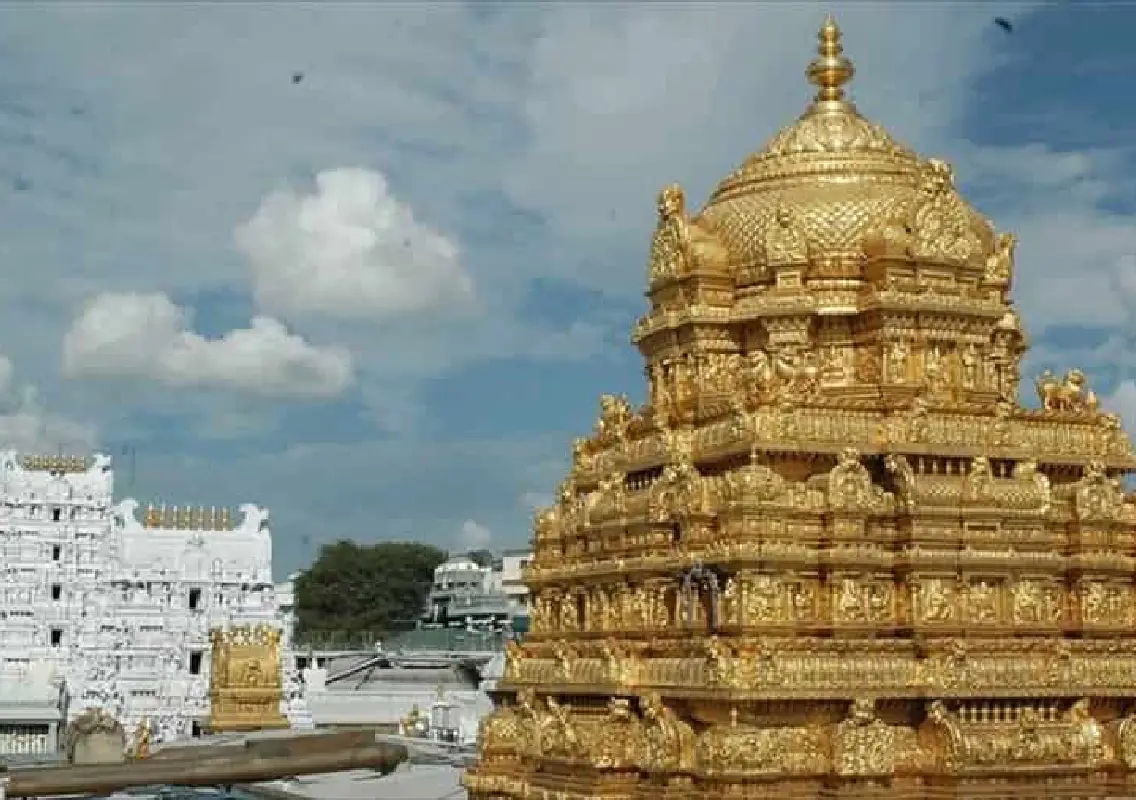


Thirupathi:For more than three decades, CV Ravi Kumar lived a double life — by day, a quiet clerk at the sacred Lord Venkateswara temple in Tirumala, by night, a man building secret fortunes off stolen offerings. His story reads like a cautionary tale of how devotion and trust were exploited within India’s richest shrine.
From humble beginnings to trusted clerk
Ravi Kumar joined the Pedda Jeeyanagar Mutt in the early 1990s, barely in his 20s. The Mutt is responsible for the spiritual affairs of the famed Tirupati Balaji temple, where donations from millions of devotees flow in daily.
By the 2000s, Ravi Kumar had become a key employee in the temple’s money-counting centre. His role was crucial: supervising the counting of offerings that often ranged from ₹4 crore to ₹6 crore each day. With such access came both opportunity and temptation.
For years, his life seemed routine. He clocked in, did his duties, and returned home without raising suspicion. But behind this ordinary façade, Ravi Kumar was quietly skimming from the temple coffers.
The April 2023 revelation
The carefully constructed mask crumbled in April 2023. A vigilant security guard, scanning CCTV footage, noticed Ravi Kumar acting suspiciously inside the counting hall. On conducting a search, temple authorities discovered nine $100 bills hidden between his buttocks.
The revelation shocked both devotees and administrators. How could such theft go unnoticed for decades in one of the most tightly guarded temples in India?
Decades of quiet looting
Subsequent investigations uncovered a disturbing pattern. Ravi Kumar had allegedly been stealing small amounts of cash, mostly in foreign currency notes, from donations for years. These amounts seemed negligible against the massive daily offerings, but over time they accumulated into a fortune.
Officials say he invested the stolen money in real estate, amassing properties far beyond the means of a temple clerk’s modest salary. Yet, despite suspicions over the years and even past warnings, punitive action was rarely taken.
A culture of impunity
This was not Ravi Kumar’s first brush with scandal. Reports suggest he had been caught on earlier occasions, but the consequences were minimal — a warning here, a transfer there. The absence of strong disciplinary action allowed him to continue siphoning funds with a sense of impunity.
Temple insiders point to systemic weaknesses. The vast flow of donations, often in cash, made pilferage easier. Security measures like CCTV and strip checks were either lax or inconsistently enforced. Above all, an entrenched culture of trust, rather than vigilance, prevailed in the temple’s administrative ecosystem.
Devotee outrage and institutional embarrassment
News of the theft has unsettled devotees worldwide. The Tirupati temple, one of the holiest pilgrimage sites in Hinduism, is sustained by faith and offerings. Discovering that a trusted insider diverted these offerings has left many hurt and angry.
The Tirumala Tirupati Devasthanams (TTD), which oversees the temple administration, has faced sharp criticism for failing to monitor its staff more closely. Questions are being raised over whether others could be involved, and how much money might have been lost over decades of silent siphoning.
Legal consequences and future reforms
Following the April 2023 incident, Ravi Kumar was arrested and charged with theft. Authorities have begun tracking his assets to trace the scale of his illegal wealth. Officials within the TTD have also promised tighter security and accountability measures to prevent such breaches in the future.
However, critics argue that unless systemic reforms are introduced — including biometric checks, stricter audits, and rotation of sensitive staff — the risk of theft remains.
Faith versus betrayal
The Ravi Kumar case underscores a larger question: how to balance faith with vigilance in managing India’s vast temple economies. At the heart of the scandal lies a betrayal of trust — not just of the TTD, but of millions of devotees who placed their offerings in the belief they reached the deity.
As the investigation unfolds, one thing is certain: the sanctity of one of India’s holiest shrines has been shaken, and restoring that trust will take far more than arrests and audits.