







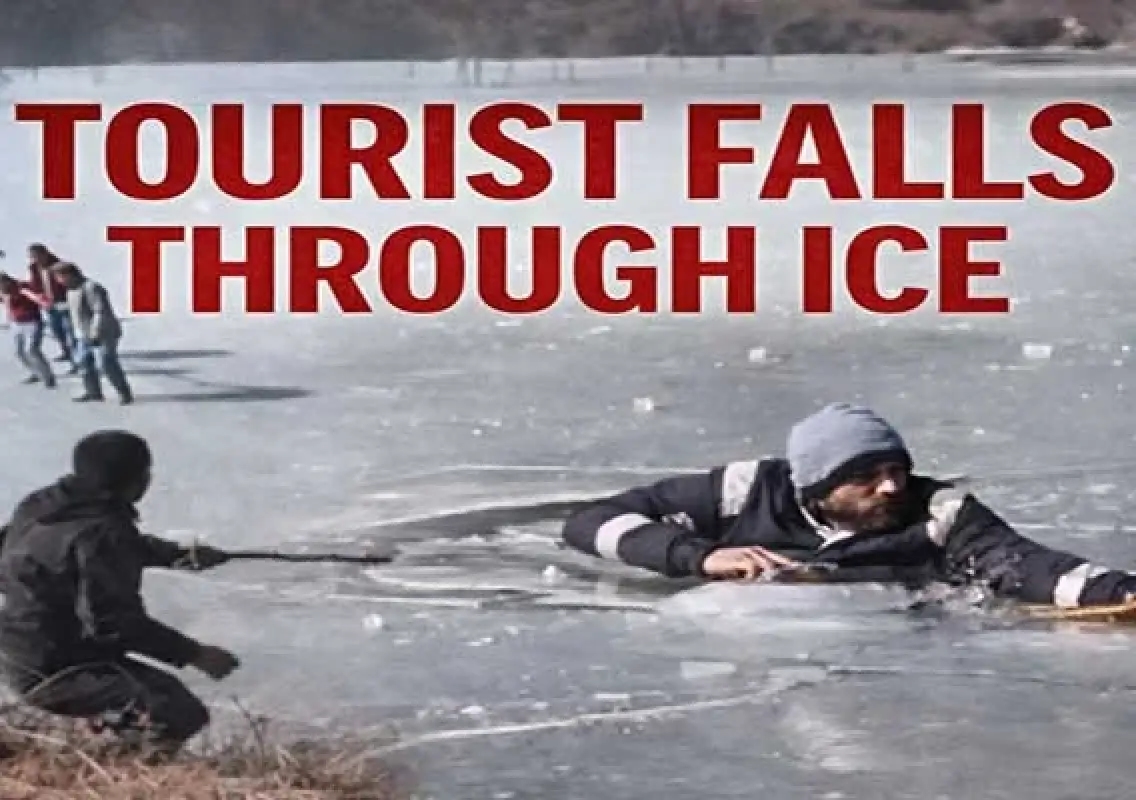


A near-fatal incident at Madhuri Lake in Arunachal Pradesh’s Tawang district has once again highlighted the dangers of tourists ignoring safety advisories in high-altitude and climatically sensitive regions.
A video that recently went viral on social media shows tourists walking, playing, and posing for photographs on the frozen surface of the lake, treating it as a recreational area despite clear risks. During the footage, one individual is seen slipping through weakened ice and plunging into the freezing water.
Army rescues tourist in time
According to reports, the person was rescued promptly by personnel of the Indian Army stationed nearby. Officials said timely intervention prevented a potential tragedy. The individual’s condition was not officially disclosed, but sources confirmed that immediate assistance was provided.
Local authorities have reiterated that frozen lakes are extremely dangerous, especially during winter, when fluctuating temperatures weaken ice layers and make them prone to sudden collapse.
Incident follows recent Sela Lake tragedy
The episode comes just days after two tourists from Kerala lost their lives at Sela Lake, also linked to unsafe conditions around frozen water bodies. The back-to-back incidents have intensified scrutiny of tourist behaviour and safety enforcement across popular destinations in Arunachal Pradesh.
Officials have expressed concern that viral videos and social media trends are encouraging risky behaviour in ecologically fragile areas.
Calls for stricter safety measures
The incident has renewed calls for stronger enforcement of safety protocols, clearer warning signage, and regulated access to hazardous zones. District officials and security agencies have repeatedly warned visitors against stepping onto frozen lakes, stressing that such actions can be fatal.
With tourist inflow increasing steadily in the region, authorities have urged visitors to practise responsible tourism and strictly follow local advisories. They emphasised that safety guidelines are meant to protect lives and preserve fragile high-altitude ecosystems.