







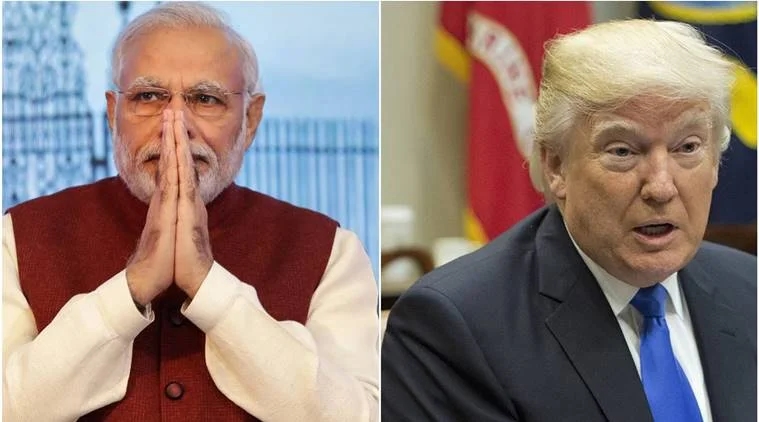


US President Donald Trump’s latest comment claiming that Prime Minister Narendra Modi once approached him saying, “Sir, may I see you please”, has caused visible discomfort in New Delhi, though the Indian government has so far chosen not to issue an official response.
The remark comes amid heightened tensions over trade and defence issues between India and the United States. Speaking earlier this week, Trump said Modi was “not that happy with me” after Washington imposed additional tariffs on India over its purchase of Russian oil. A 25 per cent penalty reportedly took overall US tariffs on Indian goods to 50 per cent.
Disputed claims on Apache helicopters
Trump also claimed that India had been waiting five years for the delivery of Apache helicopters, stating that India had ordered 68 aircraft. However, government sources in Delhi firmly contradicted this, clarifying that India has purchased only 28 Apache helicopters from the US — 22 for the Indian Air Force and six for the Indian Army — and that all have already been delivered.
The first deal for 22 Apaches was signed in September 2015 during the Obama administration, with deliveries completed during Trump’s first term. The second deal for six helicopters was signed during Trump’s visit to India in February 2020. While this second batch faced delays, deliveries were completed by December 2025, not in early 2024 as suggested by Trump.
Why Delhi is choosing restraint
Despite political pressure to respond sharply, India’s diplomatic establishment has advised restraint. Sources said reacting publicly to every statement by the US President could prove “counter-productive”, especially when sensitive India–US trade negotiations are still underway.
“There is no need for ball-by-ball commentary on what the US President says. Our focus should remain on trade talks and long-term interests,” a senior source said.
This is not the first time Trump has made sweeping claims about India. In August 2025, he had asserted that he threatened India with massive tariffs and even claimed credit for defusing tensions between India and Pakistan — claims New Delhi later fact-checked but did not aggressively counter.
Jaishankar’s broader message
Speaking in Luxembourg, External Affairs Minister S Jaishankar offered a broader perspective, noting that countries far removed from regional conflicts often issue advice without introspection.
“People sitting far away will say things — sometimes thoughtfully, sometimes carelessly,” Jaishankar said, adding that nations ultimately act in their own interests and that India has learned to navigate such commentary with maturity.
For now, Delhi appears determined to prioritise diplomacy and negotiations over public sparring, even as Trump’s remarks continue to attract attention.