







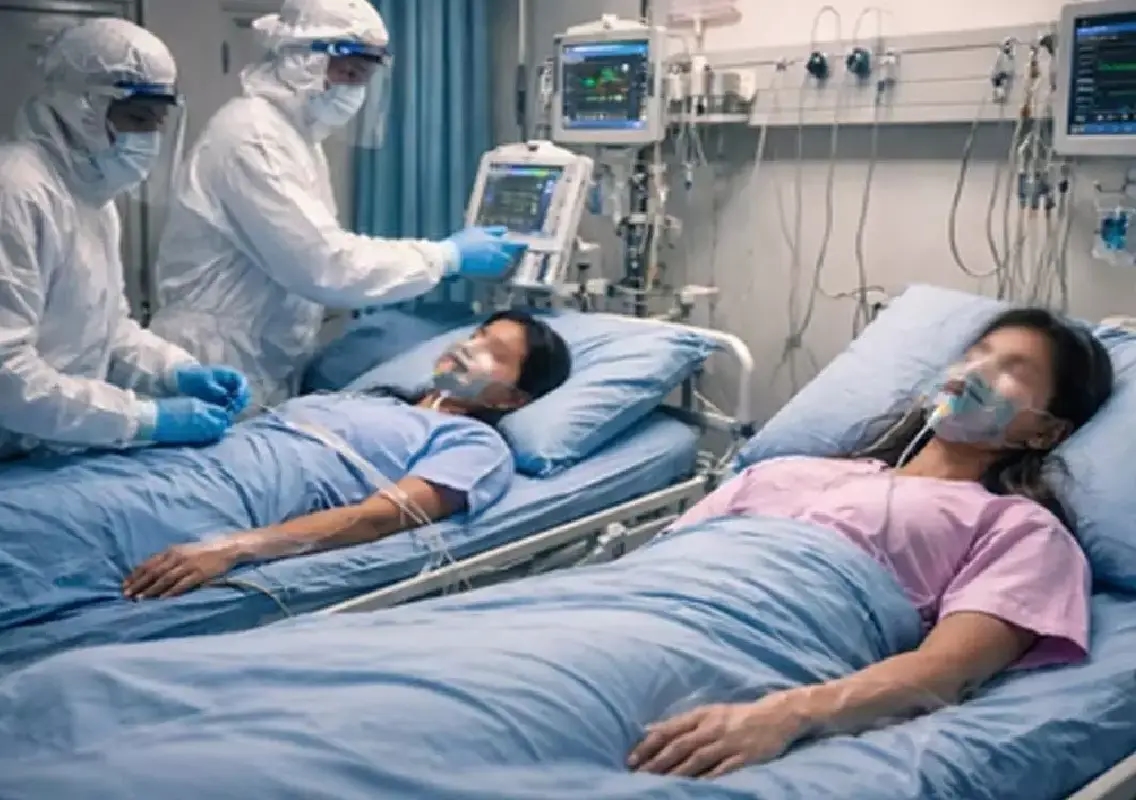


The West Bengal government on Monday confirmed the detection of two Nipah virus cases in the state, triggering heightened surveillance and emergency health measures. Both patients are medical staff members of a private hospital in Barasat, North 24 Parganas district, and are currently undergoing treatment at the same facility.
Chief Secretary Nandini Chakraborty said the affected individuals — a man and a woman aged between 22 and 25 — had no history of travel outside West Bengal. “They had travelled to Purba Bardhaman for personal reasons, but there is no interstate or international travel history,” she told mediapersons.
Contact tracing and surveillance intensified
The Health Department has initiated contact tracing to identify people who may have come into contact with the patients. A state government team has visited the Barasat hospital, while a high-level meeting with infectious disease specialists has been held. Chief Minister Mamata Banerjee is personally monitoring the situation, officials said.
Family members of the patients have been placed under close medical observation. Health Secretary Narayan Swaroop Nigam urged people not to panic, stating that adequate testing facilities, nodal hospitals and emergency protocols are in place.
Centre steps in with support
A National Joint Outbreak Response Team is being sent to West Bengal, sources in the Union Health Ministry said. Union Health Minister J P Nadda spoke to the Chief Minister and assured full support from the Centre.
The response team includes experts from the National Institute of Virology, National Institute of Epidemiology, AIIMS Kalyani and other agencies, following a ‘one health’ approach.
Public advisory issued
Authorities have issued standard operating procedures advising people to avoid consuming fruits or food items potentially contaminated by bats, known carriers of the virus. Helpline numbers — 033-2333-0180 and 98747-08858 — have been activated.
Nipah virus is a zoonotic infection that can cause severe illness, including brain inflammation, and has a high fatality rate. India currently has access to an experimental monoclonal antibody that may prevent severe disease if administered early.