







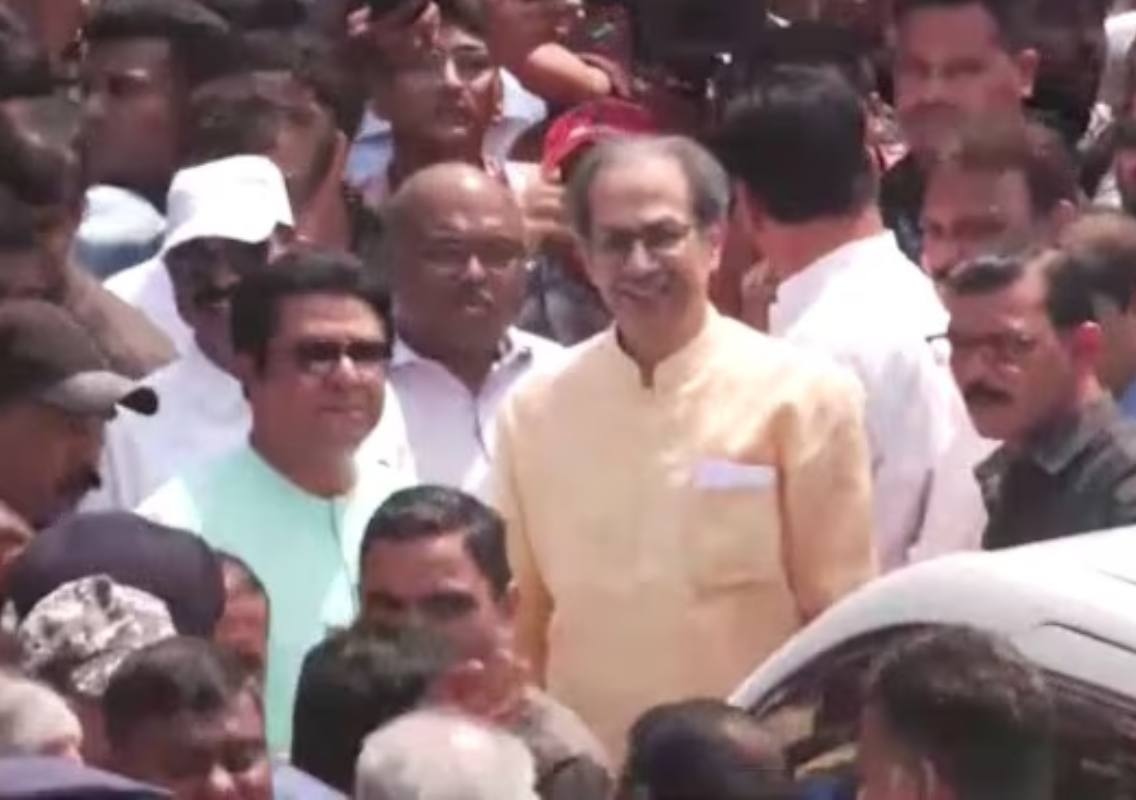


Mumbai: Shiv Sena (UBT) chief Uddhav Thackeray and Maharashtra Navnirman Sena (MNS) chief Raj Thackeray on Sunday led a joint protest march in Mumbai against Chief Election Commissioner Gyanesh Kumar, with opposition parties alleging irregularities in the electoral process and demanding his resignation.
The Virat Garjana Morcha, or Grand Roar March, was organised around concerns over the Election Commission’s Special Intensive Revision (SIR) of electoral rolls. Congress and Sharad Pawar-led NCP (SP) leaders and workers also participated in the protest.
The Thackeray cousins had announced the October 4 protest last month and appealed to opposition parties and citizens to join. Organisers also decided that party flags would not be carried during the march, with participants instead asked to carry the national Tricolour.
Thackerays lead march towards BMC headquarters
The protest began from Metro Cinema in south Mumbai and proceeded towards the Brihanmumbai Municipal Corporation headquarters.
The march was focused on alleged irregularities in the SIR exercise and the functioning of the Election Commission. Protesters demanded the removal or resignation of CEC Gyanesh Kumar.
The participation of Uddhav and Raj Thackeray marked a joint public appearance by the two cousins, whose parties have separately been active in Maharashtra politics. Congress and NCP (SP) leaders also joined the demonstration after the organisers invited opposition parties to participate.
The decision to keep party flags away from the march was presented by the organisers as an effort to give the demonstration a broader civic character. Participants were instead asked to carry the national flag.
Raj Thackeray targets Gyanesh Kumar
Addressing the gathering, Raj Thackeray directly criticised the Chief Election Commissioner and demanded changes to the electoral revision exercise.
Taking a jibe at Kumar, Raj said, “Gyanesh Kaka, don’t loot the vote.”
He demanded that the SIR exercise in Maharashtra be cancelled and also called for elections to be conducted using ballot papers rather than electronic voting machines.
Raj alleged that a large number of voters had been added during the Maharashtra Assembly elections and claimed that the ongoing SIR process could result in the deletion of around two crore names.
These figures and allegations were made by Raj Thackeray and were not independently established in the reports of the protest.
He appealed to opposition parties to approach the Centre and seek cancellation of the SIR exercise.
Opposition raises concerns over electoral rolls
The main focus of the protest was the Special Intensive Revision of electoral rolls.
The Election Commission has been conducting SIR-related exercises and has also provided an online facility through its voter services portal to allow citizens to search their names in previous SIR electoral rolls. The Commission says the historical electoral-roll data is hosted as received from the concerned state Chief Electoral Officer.
The Thackeray-led protest, however, centred on allegations that the revision process could lead to the wrongful exclusion of eligible voters.
Opposition parties have repeatedly questioned the manner in which electoral rolls are being revised and have demanded greater transparency from the Election Commission.
The Election Commission’s position and the allegations raised by opposition parties are separate matters, and claims of wrongful deletion would require verification through the electoral-roll process and relevant official records.
Sanjay Raut attacks Election Commission
Shiv Sena (UBT) leader Sanjay Raut also addressed the issue before the march.
Raut described the protest as a collective response to what he alleged were attempts to undermine democratic institutions and electoral processes.
He accused the Election Commission and other institutions of enabling what he described as the manipulation of elections. These were political allegations made by Raut and were not established as factual findings.
Raut also demanded action over alleged irregularities in elections conducted during the tenures of former CEC Rajiv Kumar and current CEC Gyanesh Kumar.
He further criticised the Union government over the alleged mistreatment of a woman journalist during a protest at Jantar Mantar and questioned the role of Union Home Minister Amit Shah.
Congress and NCP (SP) join protest
The protest received support from opposition parties in Maharashtra.
Leaders of the Congress and the Sharad Pawar-led NCP (SP) participated in the Mumbai demonstration, in line with the organisers’ earlier appeal to opposition parties to join the march.
The participation gave the protest a broader opposition presence beyond the Shiv Sena (UBT) and MNS.
The two Thackeray-led parties had earlier invited all opposition groups to participate, with the organisers seeking to make the issue of electoral-roll revision the central focus of the demonstration.
Protest follows earlier Mumbai demonstration
Sunday’s march came shortly after another protest against CEC Gyanesh Kumar in Mumbai.
The youth-led Cockroach Janta Party held a demonstration at Shivaji Park on October 2, demanding the Election Commission chief’s resignation and raising allegations about electoral-roll manipulation. Reuters reported that the protesters accused the Election Commission of removing eligible voters, while the Commission has taken steps related to voter inclusion and revision.
The earlier demonstration was followed by the Thackeray-led march, making Mumbai a focal point for protests over the Election Commission and electoral-roll revision.
Thackeray cousins make joint political appearance
The October 4 protest also brought Uddhav and Raj Thackeray together on a common public platform.
The two leaders had announced the march jointly in September, with the Election Commission’s handling of the SIR exercise at the centre of their concerns. The organisers had subsequently sought the participation of Congress and NCP (SP), among other opposition groups.
The decision to use only the Tricolour during the march distinguished the event from conventional party rallies, where individual party flags and symbols are generally prominent.
The protest also comes amid wider political debate over electoral-roll revision and the role of the Election Commission, with opposition parties demanding greater scrutiny of the process.
Demand for SIR cancellation remains central
For the Thackeray-led protest, the principal demand remains the cancellation of the SIR exercise in Maharashtra and the resignation of CEC Gyanesh Kumar.
Raj Thackeray also called for a return to ballot-paper voting, while other leaders used the platform to raise broader concerns about elections and democratic institutions.
The allegations made during the protest remain political claims unless established through official investigations, electoral records or judicial findings.
The Election Commission’s voter services platform allows electors to check historical SIR-roll information, providing one mechanism for voters to examine their electoral details.
The Mumbai march therefore puts electoral-roll revision, voter inclusion and the functioning of the Election Commission at the centre of a fresh political confrontation in Maharashtra.