









Lucknow: In a bid to tackle the rising number of dog bite incidents, the Uttar Pradesh government has introduced a new rule that places stricter accountability on stray and pet dogs involved in unprovoked attacks.
The rule, notified on September 10, mandates that any dog involved in an unprovoked bite incident will be taken to an animal care centre for a 10-day observation period. During this time, the animal will be sterilised, microchipped, and later released back into the same locality.
Repeat offenders face ‘life imprisonment’
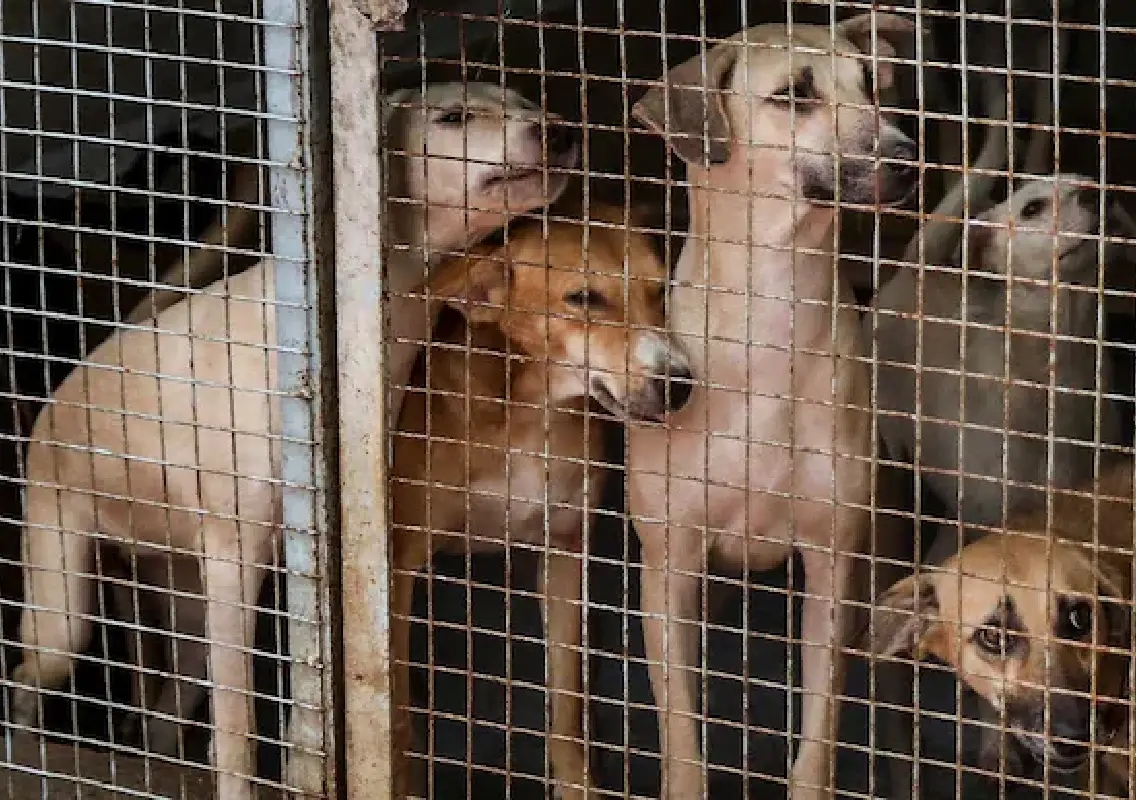
If a dog bites a human twice without provocation, it will face permanent confinement in an animal shelter — a move officials are calling ‘life imprisonment’ for dogs. However, such dogs may still be adopted by individuals willing to provide lifelong care. Adopters will be required to sign an affidavit committing to the dog’s lifelong welfare.
3-member panel to decide provocation
To determine whether the bite was unprovoked, a three-member committee will be constituted, comprising:
View this post on Instagram
- A veterinary doctor
- An animal behaviour expert
- A municipal representative
In cases where dogs show aggression due to stress or provocation, authorities will mandate behavioural training instead of permanent confinement.
“If someone is found repeatedly provoking a dog to attack, action will be taken against them,” said Dr Vijay Amritraj, Veterinary and Animal Welfare Officer with the Prayagraj Municipal Corporation.
Ethical and legal questions
The law, however, has sparked ethical debate. Critics point out that terms like “life imprisonment” anthropomorphise animals, assigning them human-like responsibility within a legal system designed for people.
Questions also remain around defining and proving provocation — and whether such judgments can be fairly applied.
Globally, most countries rely on a mix of sterilisation, relocation, and in some cases, euthanasia to control aggressive dogs. Permanent confinement, as proposed in UP, is being viewed as a unique social experiment in animal management.
Conclusion
While the move reflects the government’s attempt to address public safety concerns, it also opens up complex questions about animal rights, legal ethics, and the balance between human safety and animal welfare.