







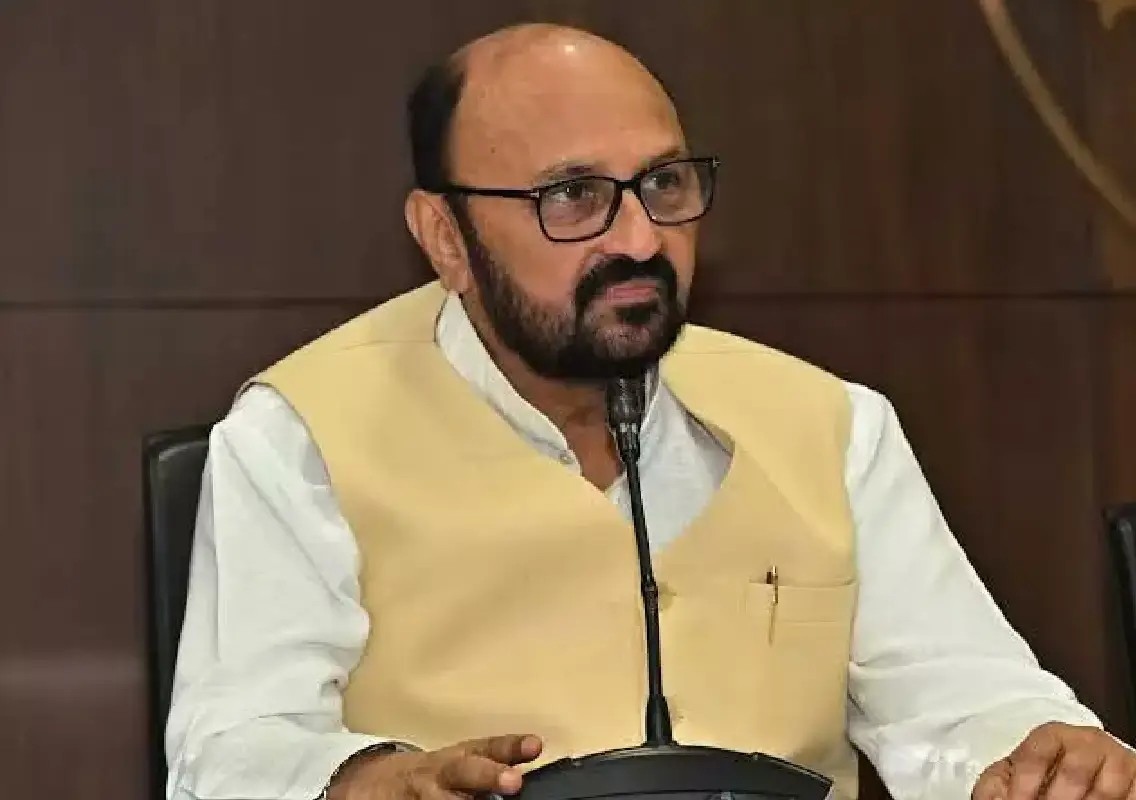


Lucknow: Uttar Pradesh Higher Education Minister Yogendra Upadhyay has sparked a fresh public debate after objecting to popular English nursery rhymes such as “Rain, Rain, Go Away” and “Johny Johny Yes Papa,” claiming they promote values contrary to Indian culture.
The minister’s remarks, made during a public programme and later reiterated before journalists, have drawn criticism from writers, academics and social commentators, many of whom described the arguments as exaggerated and misplaced.
Upadhyay argued that the rhyme “Rain, Rain, Go Away” teaches selfishness because it asks rain — essential for agriculture and life — to disappear merely so that “Little Johnny” can play.
According to the minister, Indian culture is rooted in the principle of “Sarvajan Hitaya, Sarvajan Sukhaya” — welfare and happiness for all — whereas the nursery rhyme promotes individual pleasure over collective good.
Minister links rhymes to moral values
The minister also criticised another widely known rhyme, “Johny Johny Yes Papa,” saying it normalises dishonesty among children because the character Johnny lies to his father after eating sugar.
Addressing a gathering of Shiksha Mitras in Kanpur earlier, Upadhyay reportedly said such rhymes introduce children to false values at an early age and therefore should not be part of educational material.
He suggested that Indian rhymes rooted in local traditions and nature should replace such English nursery poems in schools.
As an alternative, he referred to traditional Hindi rhymes such as “Kale Megha Pani De,” which welcomes rain instead of asking it to go away.
The minister’s comments quickly attracted attention on social media and triggered strong reactions from educationists and political observers.
Critics call remarks unnecessary
Several critics accused the minister of overanalysing simple children’s rhymes and diverting attention from more serious educational concerns.
Writers and commentators argued that nursery rhymes are generally playful and imaginative rather than ideological lessons intended to shape moral philosophy.
Some also pointed out the irony that the Sanskrit phrase “Svāntah Sukhāya,” which refers to acting for one’s own satisfaction or happiness, itself originates from Indian literary tradition.
Critics noted that many celebrated Indian poets and writers historically used the expression positively in literature and devotional works.
The controversy also revived earlier debates around attempts to reinterpret or replace English educational content with culturally “Indianised” alternatives.
Similar debate linked to academic circles
The issue has also drawn comparisons with earlier remarks made by former academic administrators questioning the logic and cultural relevance of English nursery rhymes.
One example frequently cited in public discussion involved criticism of the rhyme “Jack and Jill Went Up the Hill,” where it was argued that fetching water uphill was scientifically irrational.
Such arguments were used to advocate replacing English rhymes with Indian-language poems that promote environmental awareness and traditional values.
Supporters of this approach claim educational material should better reflect Indian social realities, local traditions and cultural identity.
However, opponents argue that imposing ideological interpretation on nursery rhymes risks trivialising education and limiting exposure to global literature and language learning.
Debate expands into politics and ideology
The controversy has gradually moved beyond nursery rhymes and entered wider political and ideological discussions.
Some critics linked the minister’s remarks to broader debates around nationalism, educational reform and cultural identity in India.
Others argued that such statements reflect attempts to reshape school curricula according to ideological preferences rather than educational priorities.
Political commentators also pointed out that decisions made by ministers and educational authorities can directly influence textbooks, syllabi and institutional policies.
As a result, seemingly symbolic remarks can eventually impact classroom teaching and learning materials across schools and universities.
Social media reactions pour in
Social media platforms witnessed a flood of reactions after videos and reports of the minister’s remarks went viral.
While some users supported the idea of promoting Indian-language rhymes and cultural content in schools, many others mocked the controversy and described it as unnecessary moral policing.
Several users questioned whether nursery rhymes should be interpreted literally, while others joked about applying ideological scrutiny to children’s literature.
Memes, satire posts and opinion columns discussing the issue continued trending throughout the day.
Larger discussion on education priorities
Education experts said the debate highlights larger questions regarding curriculum reform, cultural representation and the balance between global and local educational content.
Some academics argued that introducing more Indian-language rhymes and culturally relevant material can be beneficial, but warned against framing foreign nursery rhymes as threats to Indian values.
Others stressed that foundational education should prioritise creativity, language skills and critical thinking rather than ideological debates over children’s poems.
The controversy comes at a time when discussions around educational reforms, curriculum revision and cultural representation in textbooks remain politically sensitive across several states.
For now, the minister’s remarks have once again turned nursery rhymes into the centre of a national debate — one involving culture, politics, education and public perception.