







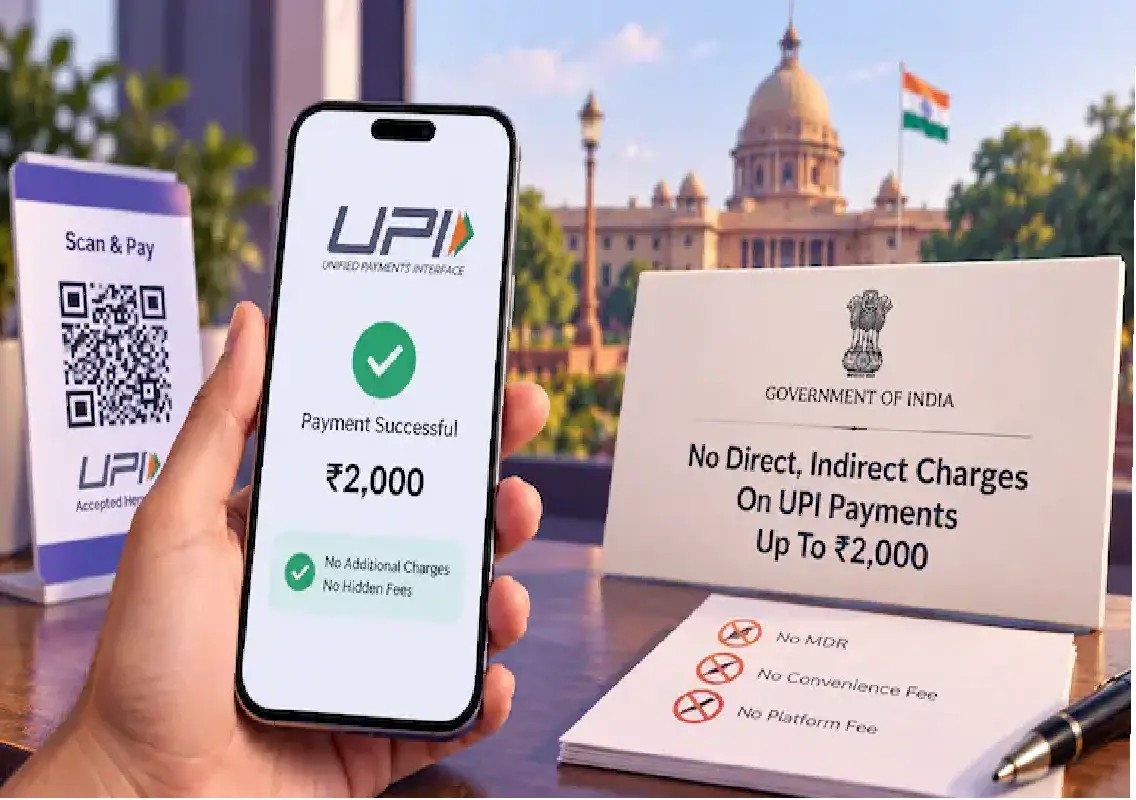


New Delhi: The government has prohibited banks and payment system providers from imposing charges on UPI transactions of up to Rs 2,000, offering continued relief to consumers and small merchants using digital payments.
The Finance Ministry, in a notification, specified UPI transactions up to Rs 2,000 and payments made using RuPay-powered debit cards as electronic payment modes on which neither direct nor indirect charges can be imposed.
No charges on small UPI payments
The latest notification ensures that users will not face transaction charges on eligible UPI payments up to Rs 2,000.
The move is particularly significant for everyday digital transactions, where UPI has become a widely used payment method for purchases, services and transfers.
By preventing banks and payment system providers from levying charges on these transactions, the government has sought to keep digital payments accessible and affordable.
Higher-value payments may see a new framework
While the notification protects UPI transactions up to Rs 2,000, it leaves open the possibility of a separate fee structure for higher-value merchant transactions.
This could allow policymakers and the payments industry to explore a framework for larger transactions while ensuring that small-value digital payments remain free.
The distinction could become important for merchants and businesses handling high-value UPI payments, particularly as digital transactions continue to expand across the country.
RuPay debit card payments also protected
The government has also included payments made through RuPay-powered debit cards among the electronic payment modes on which charges cannot be imposed.
The decision reinforces efforts to encourage digital payments while protecting users from additional costs on specified transactions.
For consumers, the immediate message is straightforward: eligible UPI payments up to Rs 2,000 and RuPay debit card payments cannot carry direct or indirect charges under the government’s latest notification.