







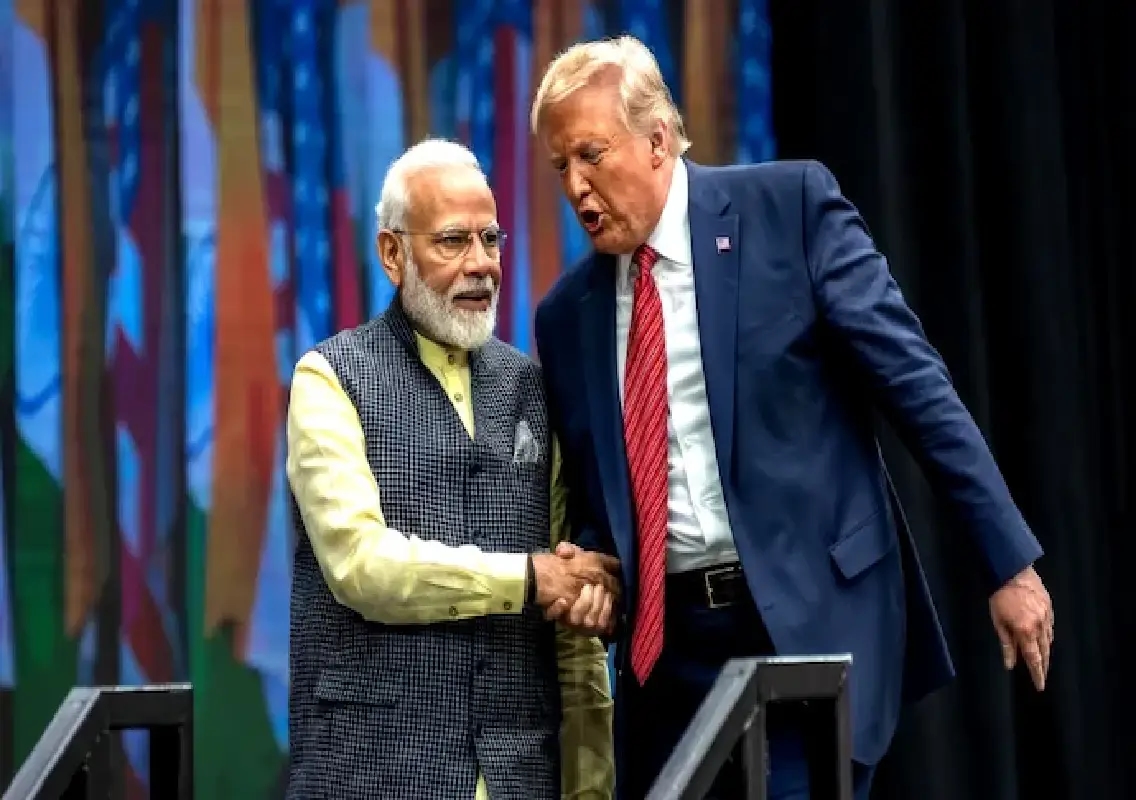


New Delhi: The United States has allowed India a temporary window to purchase Russian crude oil that is currently stranded at sea, signalling a notable shift in Washington’s stance amid rising global energy concerns triggered by the ongoing Iran conflict. The development comes after months of criticism from the administration of Donald Trump over India’s continued imports of Russian oil.
For most of the past year, the US had sharply criticised India for purchasing discounted Russian crude, accusing New Delhi of indirectly supporting Moscow’s war effort and even imposing tariffs of up to 50 per cent on certain imports. However, with tensions in the Middle East disrupting global oil supply chains, Washington has now encouraged India to step in and absorb excess Russian crude to stabilise global markets.
The shift highlights India’s growing importance in the global energy system, particularly as a major refining hub and one of the world’s largest oil consumers.
30-day window for Russian oil purchases
The US has effectively granted India a 30-day window to purchase Russian crude that is currently floating on tankers near South Asia.
US Treasury Secretary Scott Bessent described India as a “very good actor” for cooperating with Washington’s broader energy strategy. In an interview with Fox Business, he said India’s purchases could help ease pressure on global oil markets at a time when supply routes are under strain.
The crisis intensified after the Strait of Hormuz — a key global energy chokepoint through which nearly 20 per cent of the world’s oil passes — faced disruptions due to the ongoing conflict involving Iran.
With the shipping route affected, oil markets have experienced heightened volatility and prices have climbed to their highest levels since the summer of 2024.
India has not completely stopped Russian imports
Despite claims by Trump that India had agreed to halt purchases of Russian oil, data suggests that New Delhi has continued to import crude from Moscow.
After Russia’s invasion of Ukraine in 2022, India and China emerged as the largest buyers of Russian oil, taking advantage of discounted prices offered by Moscow.
At one stage, Russian crude accounted for nearly 40 per cent of India’s oil imports. Following sanctions imposed by the US on two Russian energy companies, India briefly reduced imports to around 21 per cent in January this year.
However, the share rebounded to nearly 30 per cent in February, according to reports by Reuters.
These figures indicate that India never fully halted Russian imports despite international pressure and ongoing geopolitical tensions.
Waiver offers strategic advantage to India
The US waiver could prove beneficial for India, which relies heavily on imported energy to meet domestic demand.
India imports nearly 90 per cent of its crude oil needs, with around 40–50 per cent of these supplies traditionally coming from the Middle East. Disruptions in the Strait of Hormuz therefore pose a major risk to the country’s energy security.
By purchasing Russian oil currently stored on tankers, India can quickly offset potential supply shortages caused by instability in the Gulf region.
According to a report by Bloomberg, Indian refiners have already purchased more than 10 million barrels of Russian crude.
Additionally, around 15 million barrels are currently stored on tankers in the Arabian Sea and the Bay of Bengal, which could reach Indian ports within a week.
India’s petroleum reserves also provide some buffer. Union Petroleum Minister Hardeep Singh Puri said the country currently has crude stocks that can last about 25 days, along with petrol and diesel reserves sufficient for another 25 days.
Why the US changed its stance
Washington’s sudden shift reflects broader concerns about maintaining stability in global energy markets.
US Energy Secretary Chris Wright explained that encouraging India to purchase stored Russian crude would help release oil into the market quickly.
He said the strategy would allow Indian refineries to absorb the excess supply, thereby easing competition among other countries trying to secure crude oil.
By diverting these shipments to India, other global refiners would face less pressure in the international market, potentially helping stabilise oil prices.
Analysts say the move underscores the strategic role India now plays as a major energy consumer and refining centre.
India’s role in the global oil trade
India is currently the world’s third-largest importer of crude oil, the fourth-largest refiner and the fifth-largest exporter of petroleum products.
Since 2022, Indian refiners have purchased discounted Russian crude, processed it and exported refined products such as diesel and petrol to markets in Europe and elsewhere.
The practice had drawn criticism from figures such as Peter Navarro, a former adviser to Trump, who accused India of “profiteering” from Russian oil.
However, critics often overlook the fact that the US administration under Joe Biden had earlier encouraged such imports to ensure global energy stability following sanctions on Moscow.
India’s refineries are also technically optimised to process Russian crude efficiently, making the country a natural destination for these shipments.
Alternative routes reduce dependence on Hormuz
Another advantage for India is the flexibility of its supply routes.
Russian oil can reach Indian ports through multiple maritime pathways, including the Mediterranean Sea, the Suez Canal and the Red Sea, reducing dependence on the Strait of Hormuz.
In some cases, shipments have also arrived from Russia’s Far East ports through longer routes.
This diversified logistics network has allowed India to maintain relatively stable supplies despite geopolitical disruptions in traditional energy corridors.
Conclusion
The US decision to allow India to purchase stranded Russian oil reflects the shifting dynamics of global energy politics. While Washington previously criticised New Delhi for buying Russian crude, the current crisis in the Middle East has highlighted India’s strategic role in stabilising global oil markets.
As tensions continue to disrupt energy supplies, India’s ability to refine large volumes of crude and redirect petroleum products to global markets has made it an indispensable player in the international energy system.