







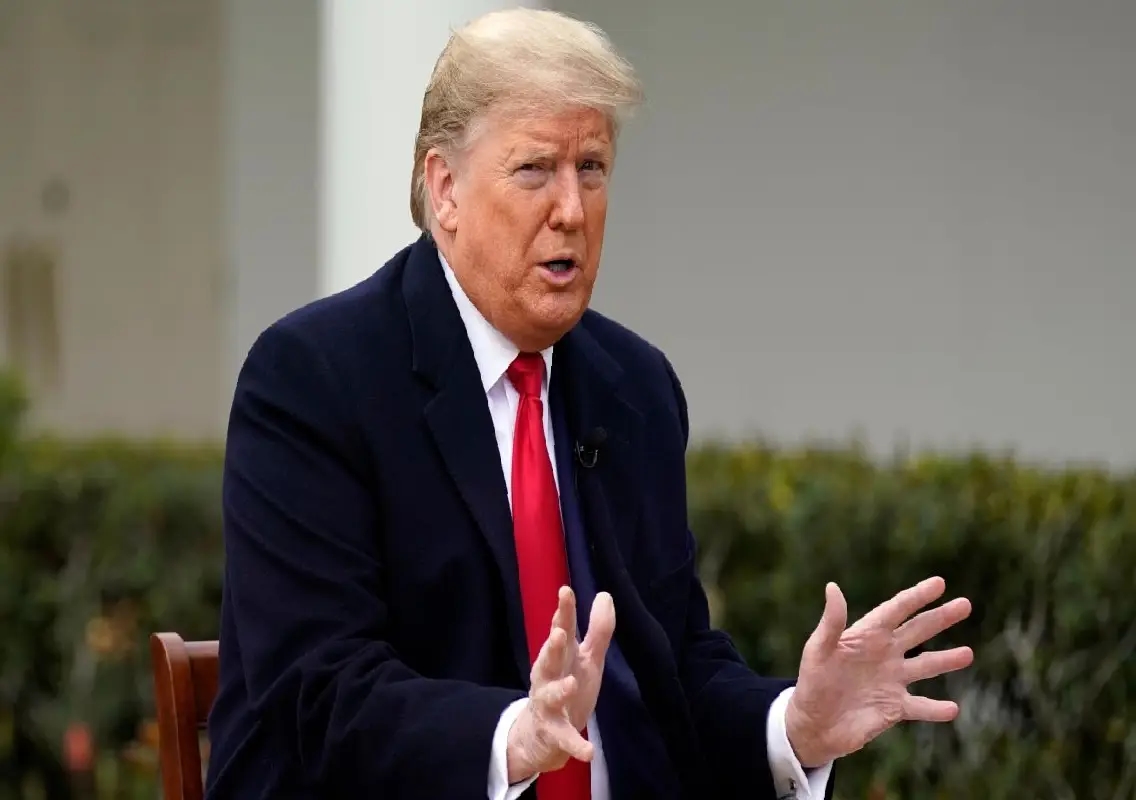


Three members of the US House of Representatives on Friday introduced a resolution seeking to terminate President Donald Trump’s national emergency declaration that led to tariffs of up to 50 per cent on imports from India, describing the measures as illegal, economically damaging and harmful to bilateral relations between the two countries.
Resolution challenges emergency powers
The resolution has been spearheaded by Congresswoman Deborah Ross of North Carolina, Congressman Marc Veasey of Texas and Indian-American Congressman Raja Krishnamoorthi of Illinois. It aims to rescind the additional 25 per cent “secondary” duties imposed on Indian imports on August 27, 2025, under the International Emergency Economic Powers Act (IEEPA).
These secondary duties were imposed on top of earlier reciprocal tariffs, effectively raising import duties on several Indian-origin products to as high as 50 per cent. The lawmakers argue that the President’s use of emergency powers to impose such sweeping trade measures exceeds executive authority and bypasses Congress’ constitutional role in trade policy.
Linked to broader Senate push
The House resolution follows a bipartisan measure passed earlier in the US Senate that sought to end similar emergency-based tariffs imposed on Brazil. Lawmakers backing the India-focused resolution said it is part of a broader effort to rein in the President’s unilateral use of emergency declarations to raise import duties without congressional approval.
According to a statement issued by the sponsors, the resolution is intended not only to lift the tariffs on India but also to set a precedent against the misuse of emergency economic powers for routine trade disputes.
Economic impact highlighted by sponsors
Congresswoman Deborah Ross said the tariffs have had a direct and negative impact on US states with strong economic ties to India. “North Carolina’s economy is deeply connected to India through trade, investment and a vibrant Indian American community,” she said.
Ross pointed out that Indian companies have invested more than a billion dollars in North Carolina, creating thousands of jobs in sectors such as life sciences, information technology and advanced manufacturing. At the same time, manufacturers from the state export hundreds of millions of dollars’ worth of goods to India every year. She argued that the tariffs threaten these mutually beneficial economic ties.
‘Tax on American families,’ says Veasey
Congressman Marc Veasey described the tariffs as a direct burden on American consumers already struggling with rising living costs. “India is an important cultural, economic and strategic partner, and these illegal tariffs are a tax on everyday North Texans who are already dealing with inflationary pressures,” he said.
Veasey added that higher import duties disrupt supply chains and raise prices for a wide range of goods, ultimately hurting American families and small businesses rather than achieving any meaningful foreign policy objectives.
Krishnamoorthi stresses strategic partnership
Congressman Raja Krishnamoorthi said the tariffs were counterproductive and undermined both economic and security cooperation between the United States and India. “These duties disrupt supply chains, harm American workers and drive up costs for consumers,” he said.
He emphasised that ending the tariffs would help strengthen US–India cooperation at a time when both countries face shared strategic challenges in the Indo-Pacific region. “Instead of advancing American interests or security, these measures weaken a key partnership,” he added.
Background to the tariff decision
President Trump first imposed a 25 per cent tariff on Indian goods starting August 1, 2025. Days later, this was followed by an additional 25 per cent increase, taking the total tariff burden to 50 per cent on many Indian products.
The administration justified the move by citing India’s continued purchase of Russian oil, claiming that such transactions indirectly supported Moscow’s war efforts in Ukraine. India has consistently defended its energy policy, arguing that its purchases are driven by domestic needs and global market conditions.
Earlier calls to reverse tariffs
The latest resolution builds on earlier efforts by congressional Democrats to reverse the India tariffs. In October, Ross, Veasey and Krishnamoorthi, along with Congressman Ro Khanna and 19 other members of Congress, wrote to the President urging him to reconsider the policy and repair strained relations with India.
That letter warned that prolonged trade tensions could damage long-term strategic ties and reduce trust between the two democracies, particularly at a time of growing geopolitical uncertainty.
Congressional authority over trade
According to the sponsors, the resolution is also about reasserting Congress’ constitutional authority over trade policy. The statement accompanying the resolution said that ending the India tariffs was part of a broader effort by Democrats to prevent the President from using emergency powers to impose what they termed “misguided trade policies” without legislative oversight.
Lawmakers argued that while emergency powers are meant for extraordinary situations, their use for sustained tariff regimes risks undermining democratic checks and balances.
Implications for US–India relations
Trade experts say that lifting the tariffs could help reset economic relations between Washington and New Delhi, which have been strained in recent months. India is one of the US’s key trading partners and a central pillar of its Indo-Pacific strategy.
Analysts note that continued tariff disputes could complicate cooperation in areas such as defence, technology transfer and supply chain resilience, all of which are priorities for both governments.
Conclusion
The introduction of the House resolution marks a significant political challenge to President Trump’s India tariff policy. As the debate moves forward in Congress, the outcome could have far-reaching implications not only for US trade policy but also for the future of US–India economic and strategic relations. Whether the resolution gains sufficient support remains to be seen, but it has already reignited discussion over executive power, trade authority and the cost of unilateral tariff actions.