







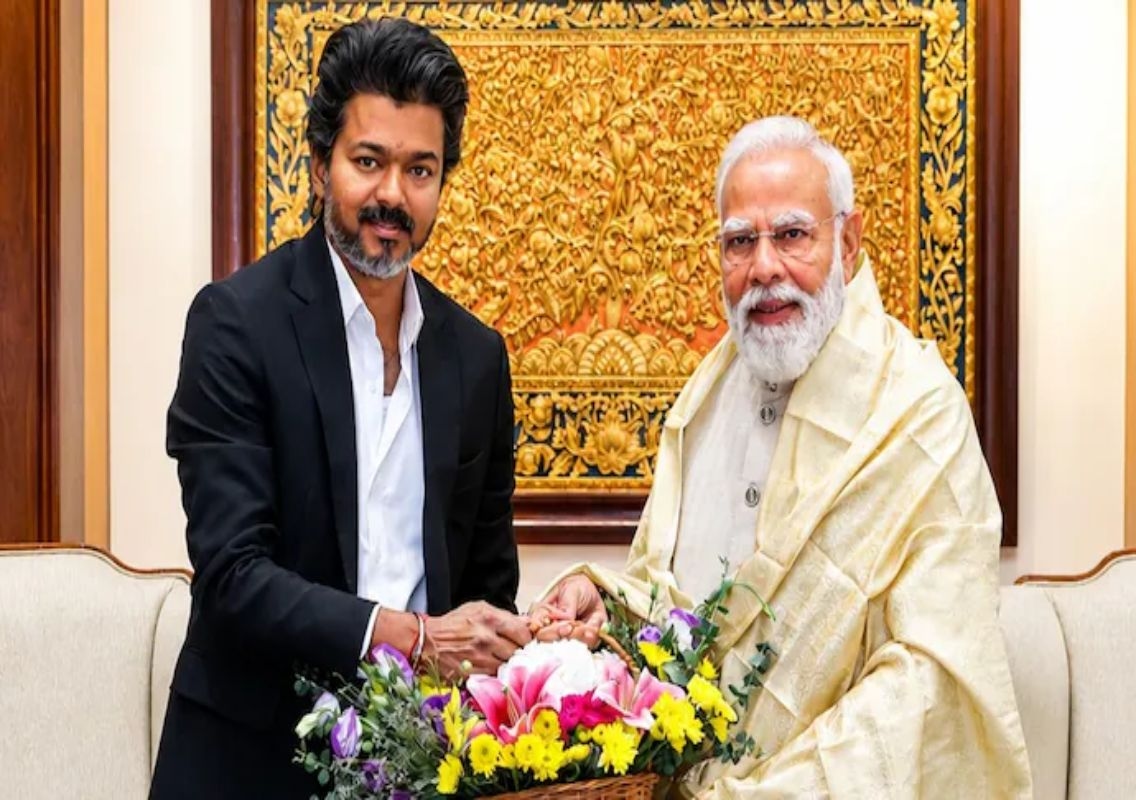


Chennai: Tamil Nadu Chief Minister C Joseph Vijay has urged Prime Minister Narendra Modi to amend the Constitution and permanently retain the Lok Sabha’s strength at 543 members, while also keeping the existing state-wise distribution of seats unchanged. The demand comes amid a growing political debate over the proposed delimitation of Parliamentary and Assembly constituencies following the next Census.
Vijay’s request follows a resolution passed by the Tamil Nadu Legislative Assembly on Wednesday. The resolution expressed concern that applying population-based criteria after the Census could alter the existing allocation of Lok Sabha seats and potentially reduce the representation of southern states.
In his letter to Prime Minister Modi, Vijay also sought the implementation of 33 per cent reservation for women in the upcoming Lok Sabha elections and the Assembly elections that follow. The Tamil Nadu government has therefore linked the delimitation issue with the long-pending question of women’s reservation in legislatures.
Vijay seeks constitutional amendment to protect existing seat allocation
Vijay wrote to the Prime Minister on Thursday, enclosing a copy of the resolution adopted by the Tamil Nadu Assembly. He asked the Centre to consider constitutional amendments that would fix the total strength of the House of the People at 543 and retain the number of seats currently allotted to each state.
According to the resolution cited in the letter, the total number of Lok Sabha members should be made permanent at 543. It further argues that the existing distribution of seats among states should remain unchanged.
The demand is significant because delimitation determines how Parliamentary and Assembly constituencies are redrawn and how seats are distributed based on population. The issue has become particularly sensitive for states that have successfully implemented population-control measures over several decades.
Tamil Nadu’s Assembly resolution argued that changing the existing seat allocation on the basis of post-1971 population figures could result in lasting disadvantages for southern states. The resolution said these states had made substantial progress in population control while also advancing economic development, healthcare and public welfare.
Why southern states are concerned about delimitation
The central issue in the debate is the relationship between population and political representation.
Population-based delimitation can potentially result in states with faster population growth receiving a larger share of Parliamentary seats, while states that have successfully controlled population growth could see their relative representation decline.
Tamil Nadu has cited its own history to underline the concern. The Assembly resolution pointed out that the state’s Lok Sabha representation had already fallen from 41 seats to 39 in 1967.
The state now fears that another delimitation exercise could alter the political balance between different regions of the country.
Southern states have generally recorded lower population growth compared with several northern and central states. They have also invested heavily in education, healthcare and family planning. The argument advanced by Tamil Nadu is that states should not effectively lose political representation because they succeeded in implementing population-control policies.
The delimitation question is consequently not simply about redrawing constituency boundaries. It also involves the broader issue of how political representation should evolve as India’s population changes.
Vijay also raises women’s reservation
Alongside the demand to protect the existing allocation of seats, Vijay has asked the Centre to ensure 33 per cent reservation for women in the next Lok Sabha elections and the Assembly elections that follow.
The Tamil Nadu Assembly had specifically called for one-third reservation for women in future Parliamentary and Assembly elections. Vijay reiterated that demand in his communication to the Prime Minister.
The two issues are closely connected because any change in the number and distribution of seats could affect the implementation of women’s reservation.
Vijay’s letter therefore seeks three broad measures: maintaining the Lok Sabha’s strength at 543, preserving the current state-wise distribution of seats and implementing 33 per cent reservation for women in the upcoming elections.
What the Tamil Nadu Assembly resolution said
The Assembly’s resolution came after lawmakers discussed the possible implications of applying Article 81(2)(a), which deals with the allocation of seats in the Lok Sabha.
The resolution expressed concern that a delimitation exercise based on population figures after the 1971 Census could change the current distribution of Parliamentary seats. Tamil Nadu argued that such a change would disproportionately affect southern states that had followed population-control programmes.
The state also emphasised that population control had been accompanied by improvements in economic development, healthcare and social welfare. From Tamil Nadu’s perspective, maintaining the existing allocation would prevent states from being politically penalised for demographic policies pursued over several decades.
The issue could therefore become an important part of the wider national conversation around delimitation as India prepares for the next Census and the political discussions that could follow it.
What happens next?
Vijay has formally requested Prime Minister Modi to consider constitutional amendments to address the concerns raised by Tamil Nadu. The request does not itself change the existing constitutional framework or the allocation of Lok Sabha seats.
Any constitutional amendment would require consideration and passage through Parliament in accordance with the constitutional procedure. The Centre’s response will therefore be important in determining how the concerns of Tamil Nadu and other southern states are addressed.
The debate could also extend beyond Tamil Nadu, particularly if other states with similar demographic trends raise concerns about the consequences of population-based representation.
For now, the key demand from Chennai is clear: the Lok Sabha should continue to have 543 members and the existing state-wise distribution should remain intact. At the same time, Vijay wants the government to ensure 33 per cent reservation for women in the upcoming Parliamentary and Assembly elections.
Conclusion
Tamil Nadu’s latest intervention adds a fresh political dimension to India’s impending delimitation debate. Vijay’s appeal to Prime Minister Modi seeks to protect the current balance of Parliamentary representation while ensuring that states that pursued population control are not disadvantaged by future changes.
The demand for 543 Lok Sabha seats, unchanged state-wise allocation and 33 per cent women’s reservation will now place the Centre under pressure to respond to concerns that could have significant implications for India’s electoral map and federal political balance