







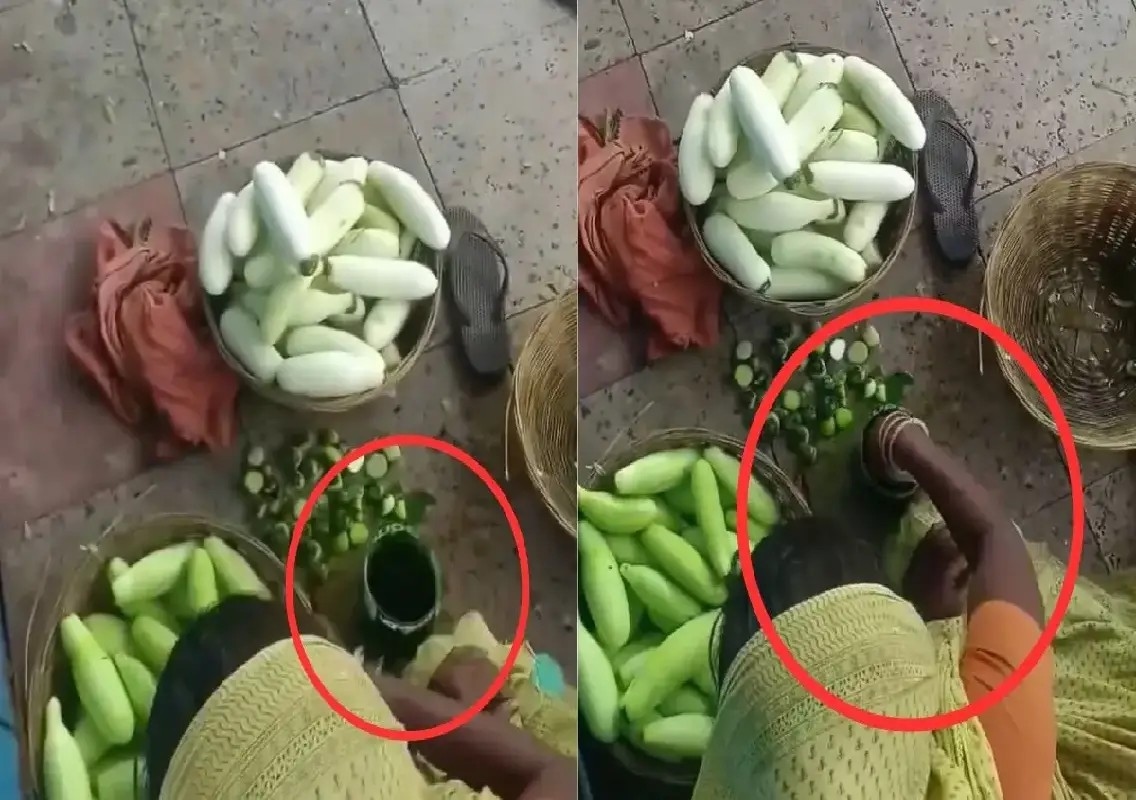


Katihar: A viral video allegedly showing a woman coating cucumbers with a green-coloured liquid at a railway station in Bihar has triggered widespread concern on social media, with many users questioning food safety standards and demanding action from authorities.
The incident reportedly took place at Katihar Junction railway station, where the woman was seen sitting beside containers filled with water while handling cucumbers.
In the widely circulated video, another woman is seen washing the cucumbers before they are allegedly dipped into a green liquid believed by viewers to be paint or colouring material.
The visual contrast between the untreated cucumbers and the allegedly coloured ones drew strong reactions online after clips from the incident began spreading across social media platforms.
However, the exact nature of the liquid used in the process remains unclear, and the authenticity of the video has not been independently verified.
Social media users express outrage
The video quickly sparked outrage among social media users, many of whom raised concerns about public health and food safety practices.
Several users criticised the alleged act and called for immediate intervention by authorities to investigate the matter.
One social media user commented that strict action should be taken against anyone found endangering public health, regardless of economic background.
“The issue is not about rich or poor. Anyone caught risking public health like this should face action,” the user reportedly wrote online.
Another user accused the woman of prioritising sales over consumer safety and questioned the lack of awareness regarding the health risks involved.
The video also led to discussions regarding the monitoring of food products sold in public places such as railway stations and roadside markets.
Some users urge caution before conclusions
While many users reacted with concern, others urged caution and said assumptions should not be made without verifying the substance seen in the video.
A section of social media users pointed out that the liquid may not necessarily be harmful and stressed the importance of establishing facts before drawing conclusions.
One user questioned whether the colouring material used was actually dangerous, noting that many food products already contain approved food-grade colours.
The differing reactions online reflected broader concerns over food adulteration, hygiene practices and the spread of unverified information through social media.
Experts often caution that videos circulating online can sometimes lack context and should be investigated thoroughly before official conclusions are reached.
Food safety concerns remain significant
The viral clip has nevertheless renewed public discussion surrounding food safety and hygiene practices in local markets and transportation hubs.
Food adulteration and artificial colouring of fruits and vegetables have periodically surfaced as concerns in several parts of the country, prompting authorities to conduct inspections and awareness campaigns.
Health experts generally warn that the use of industrial paints or non-food-grade chemicals on edible items can pose serious health risks if consumed.
Consumers are often advised to wash fruits and vegetables thoroughly before consumption and purchase food items from trusted sources wherever possible.
The incident has also led to calls for stricter surveillance and regular inspections at railway stations, marketplaces and roadside vending areas.
No official statement issued yet
As of now, no official statement has been issued by railway authorities, local administration or food safety officials regarding the viral video.
It also remains unclear whether any investigation has been initiated into the incident.
Officials have not yet confirmed whether the substance seen in the video was harmful or whether the cucumbers were intended for sale to the public.
The absence of official clarification has further fuelled debate online, with many users demanding immediate verification and appropriate action if violations are found.
The incident once again highlights how viral social media content can rapidly amplify public concern, particularly when issues related to health and food safety are involved.