









FARIDABAD: In a significant counter-terror breakthrough, Haryana and Jammu & Kashmir Police have unearthed a massive cache of explosives and weapons from a rented accommodation in Faridabad, believed to be part of a Pakistan-backed Jaish-e-Mohammed (JeM) terror module. The recovery, made roughly ten days after the arrest of a Pulwama-based doctor, is being hailed as a major success in preventing potential large-scale attacks in northern India.
360 kg explosives, weapons, and bomb materials recovered
Officials confirmed that 360 kilograms of highly inflammable material, suspected to be ammonium nitrate, was recovered from an apartment in Faridabad’s Dhouj area. Alongside the explosive substance, police also seized an extensive cache of arms and bomb-making components, including:
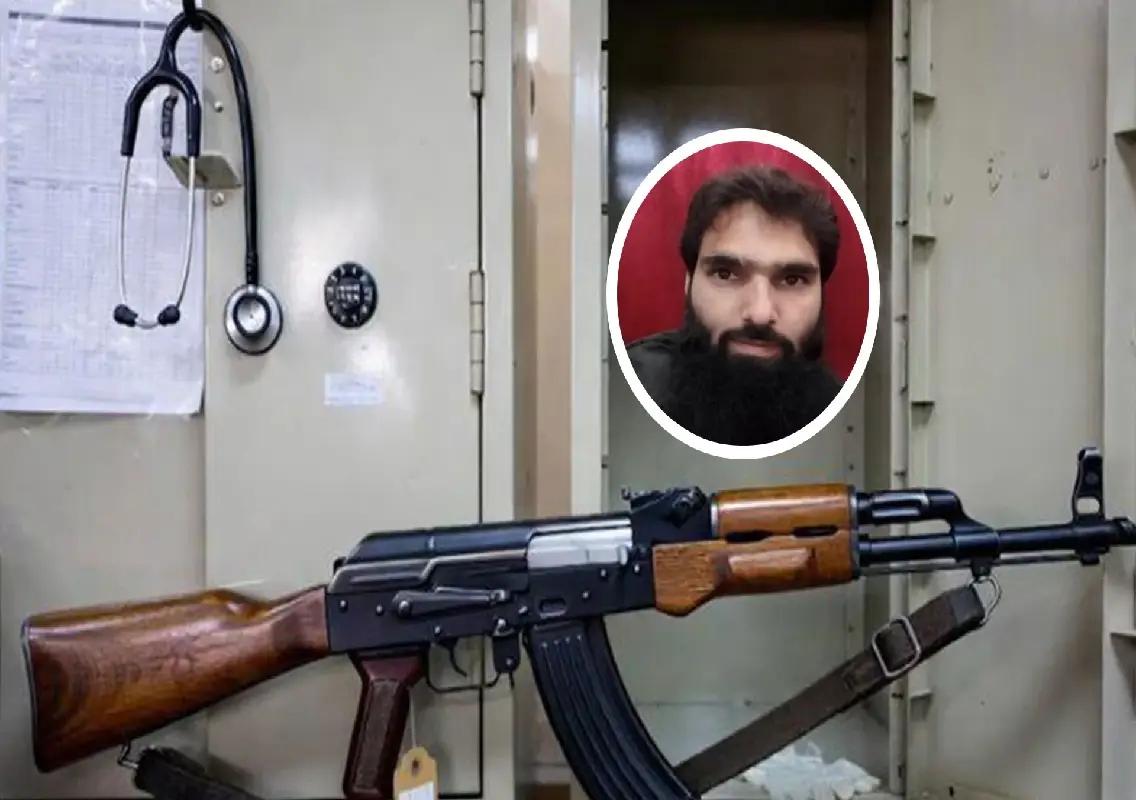
- One assault rifle with three magazines
- 83 live cartridges and a pistol with eight rounds
- Two empty cartridges and two additional magazines
- 12 suitcases and a bucket containing the explosive material
- 20 timers, four batteries, and remote devices
- Five kilograms of heavy metal
- A walkie-talkie set
Officials believe these items were being assembled for large-scale terror attacks in northern India, possibly targeting crowded urban centres.
Link to Pulwama-based doctors under probe
The massive seizure followed the earlier arrest of Dr Adil Ahmad Rather, a Pulwama-based doctor, detained by J&K Police from Saharanpur in Uttar Pradesh. His interrogation reportedly led investigators to Dr Muzammal, an assistant professor at Al-Falah University, Faridabad, who was arrested nearly ten days ago.
Subsequent raids at Muzammal’s rented accommodation yielded the explosive haul. Investigators revealed that he had rented an additional room near the university around 15 days earlier, specifically to store the contraband materials.
Woman doctor’s car linked to the case
Police sources said that an assault rifle linked to Muzammal was discovered inside a Swift Dzire car belonging to a woman doctor employed at Al-Falah University. “We have not yet taken any action against her. It’s possible that the accused may have borrowed her vehicle without her knowledge. However, since the weapon was recovered from her car, her role remains under investigation,” a senior police official stated.
The woman doctor is currently in Jammu & Kashmir for questioning as part of the ongoing probe into the module’s wider network.
Joint operation dismantles major terror module
Confirming the breakthrough, Faridabad Police Commissioner Satender Kumar Gupta said that the joint operation between Haryana Police and J&K Police had successfully dismantled a major JeM module.
“Though I cannot share operational details due to national security concerns, I can confirm that a major terror plot has been foiled. Earlier, another operative of this module was arrested from Saharanpur, and further arrests are likely,” Gupta stated.
Investigators suspect that JeM handlers based across the border were in direct contact with the arrested individuals, guiding them to plan coordinated attacks across multiple locations in North India.
Forensic examination underway
Forensic teams have been deployed to determine the exact chemical composition of the seized explosives and the potential destructive capacity of the materials. Early reports indicate the use of ammonium nitrate mixed with metallic compounds, a combination often used in high-intensity improvised explosive devices (IEDs).
Officials added that digital evidence, including communication records and online traces, is being analysed to uncover the full extent of the network’s reach. Security agencies are also probing whether the arrested suspects had logistical or financial support from cross-border operatives.
Tightened security, ongoing investigation
The seizure has prompted security agencies in Haryana, Delhi, and neighbouring states to tighten surveillance and enhance intelligence-sharing. The discovery of such a large cache of explosives so close to the National Capital Region (NCR) has raised alarms, prompting a review of potential terror threats across northern India.
Authorities have assured that more arrests are imminent, and that the crackdown on JeM-linked sleeper cells will continue. The case underscores the growing challenge of identifying educated recruits being lured into extremist networks through digital propaganda and ideological indoctrination.