







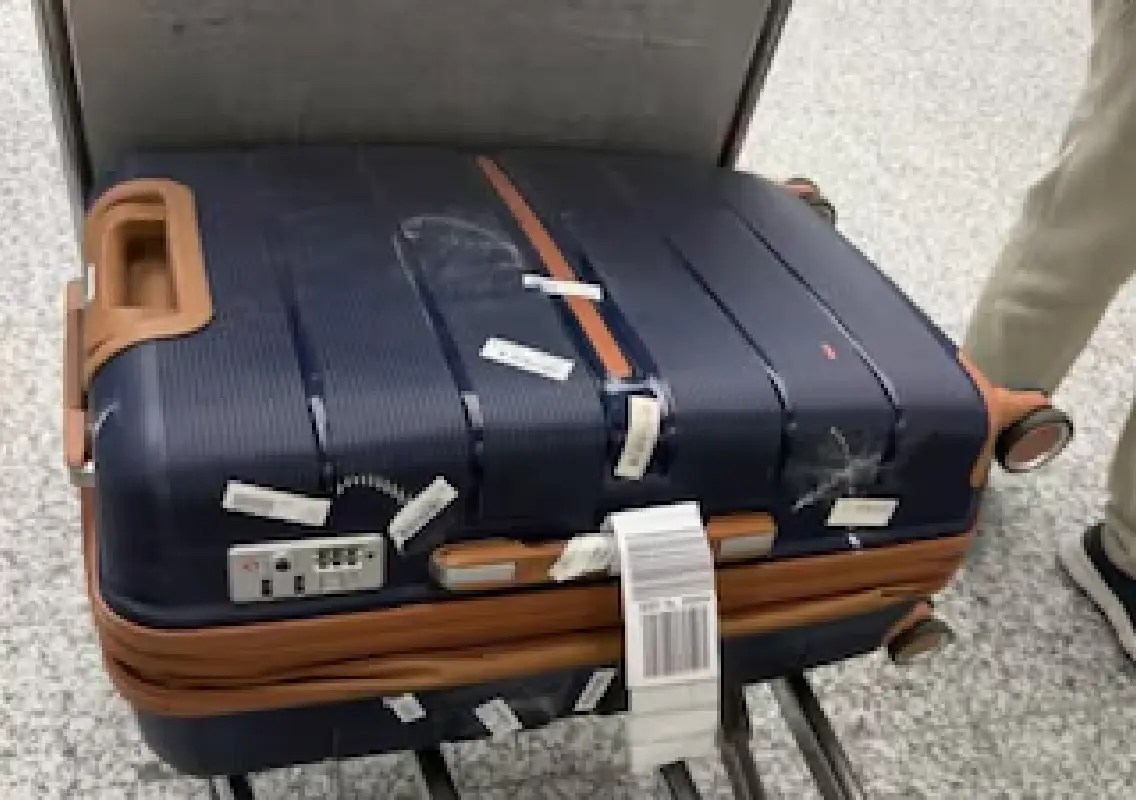


Many travellers remain unaware that their checked-in baggage is screened multiple times before reaching the carousel. At several Indian airports, the post-flight screening process works differently from many international hubs. Once luggage is unloaded from the aircraft, it is passed through an X-ray machine operated by customs officials to check for suspicious or restricted items.
If the X-ray scan shows anything that requires further verification, officers mark the bag with quick chalk symbols such as X, A, or C. These marks serve as internal indicators, helping customs staff decide whether a bag needs to be inspected again in the presence of the passenger. Most travellers, however, never notice these marks or understand their purpose, even though they play a key role in airport security and customs checks.
What these chalk markings indicate
Airport officials familiar with the screening process explain that chalk markings are used for internal tracking and sorting. They help officers identify bags that require:
- Clarification of certain items
- Verification of dutiable goods
- Random or risk-based checks
- Further inspection after unclear X-ray scans
These markings do not automatically imply wrongdoing. In many cases, bags are cleared after a quick check, and passengers proceed without additional delays.
Viral post sparks debate about chalk symbols
A post shared on X (formerly Twitter) recently went viral after showing a traveller’s bag marked with chalk and claiming that these symbols function as codes. The post alleged that:
- “A-marked bags are released last on the carousel”
- “Such passengers are escorted to customs”
- “Bags marked with C or A are handled differently from others”
However, these claims remain unverified. Airport sources note that procedures vary across airports, and the idea of markings determining baggage-release order or escorts does not align with standard customs protocols. Chalk markings are primarily for sorting and follow-up checks, not for passenger labelling or punitive handling.
Why passengers rarely notice the markings
Travellers usually overlook chalk markings because:
- They are small and made quickly
- They rub off easily
- Bags often receive marks only if something triggers officer scrutiny
- Many passengers clear customs without their bags being rechecked, making the markings irrelevant to their experience
Even when a bag is marked, an officer may decide that no further check is needed after interacting with the passenger.
Role of customs screening in passenger safety
Customs screening helps officials manage high passenger volumes at international terminals. With thousands of bags arriving within short timeframes, chalk markings support officers in:
- Ensuring compliance with customs regulations
- Identifying restricted or undeclared goods
- Maintaining security standards
- Speeding up clearance procedures
- Minimising delays at the green and red channels
These practices are part of routine airport operations and are not meant to alarm passengers.
Should travellers wipe off the markings?
The viral post suggests wiping off the chalk marks using wet tissues. However, airport officials say markings are temporary and not harmful. They also note that the purpose of marking is operational, and while wiping them off is not illegal, it may cause confusion during customs checks if officers are expecting to identify certain bags.
Passengers are encouraged to simply follow regular customs procedures and cooperate with officers if a bag is selected for inspection.
Conclusion
Chalk markings on baggage at Indian airports are a routine part of customs screening and internal communication. Though recent viral posts have drawn attention to them, many of the online claims remain unverified or exaggerated. For most travellers, these symbols will have little impact on their airport experience, serving mainly as a behind-the-scenes tool to help customs maintain efficiency and security.