







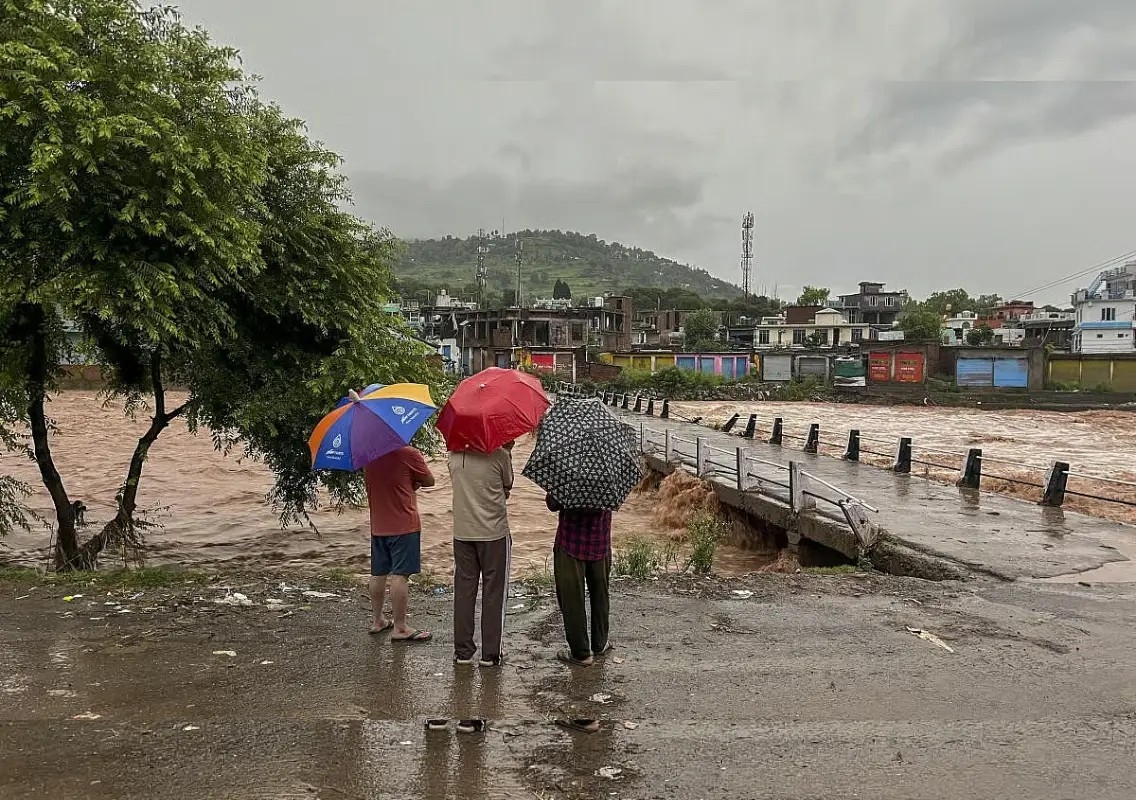


Kashmir: In the mountains of Kashmir, dark clouds are no longer viewed simply as a sign of rain. For many residents, they now bring an uneasy question: could another cloudburst be on the way?
Recent weather events and sudden flooding have changed how communities across the Himalayan region look at the skies. In mountain villages, where roads, homes and livelihoods remain closely tied to weather conditions, an intense spell of rain can quickly turn into a serious threat.
Weather uncertainty weighs on mountain communities
The fear is particularly strong in areas vulnerable to flash floods, landslides and cloudbursts. A cloudburst can release an extraordinary amount of rain over a very small area in a short period, causing streams and rivers to rise rapidly.
Kashmir’s mountainous geography makes several communities particularly sensitive to such changes. The Kashmir Valley is surrounded by the Pir Panjal and Greater Himalayan ranges, while the region’s rivers and steep slopes can amplify the impact of sudden rainfall.
The growing uncertainty is also being felt beyond Kashmir. Scientists and authorities have increasingly highlighted the unpredictable nature of hazards in the Himalayan region. An ISRO study, for instance, found that the devastating 2025 Dharali flash flood in Uttarakhand was linked to the collapse of an ice patch rather than a cloudburst initially believed to have caused it.
Communities remain resilient
Despite the anxiety, people continue to live and work in these mountains, adapting to changing conditions while depending on timely warnings and emergency preparedness.
The Jammu and Kashmir State Disaster Response Force has also strengthened preparedness through rescue operations and large-scale disaster-awareness programmes, including training thousands of citizens.
For residents watching another bank of clouds gather over the mountains, however, the question remains painfully simple: Will it bring rain, or another disaster?