







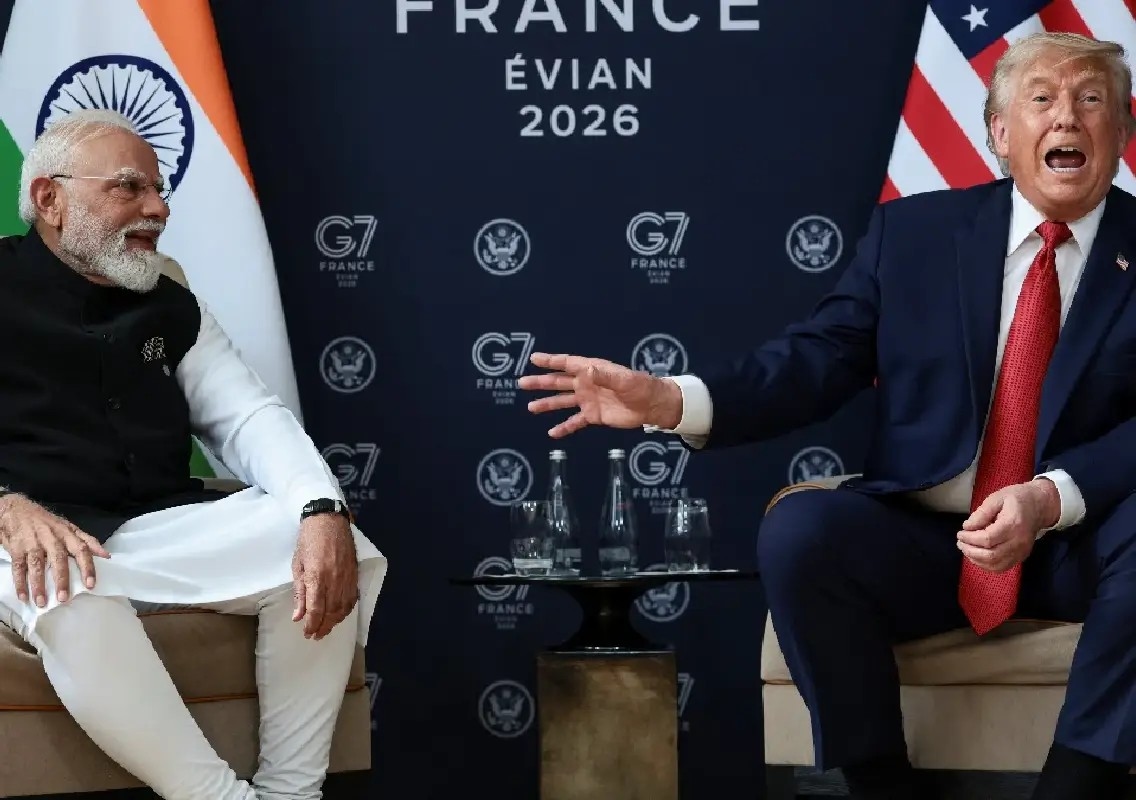


New Delhi: India chose not to hold a joint media interaction after Prime Minister Narendra Modi‘s meeting with US President Donald Trump in France in June, with government sources citing concerns over what they described as Trump’s unpredictable behaviour.
According to sources quoted by PTI, foreign delegations meeting Trump are often cautious about how interactions with the US president may unfold in front of the media.
India preferred a controlled media interaction
Modi and Trump held bilateral talks on June 17 at Evian-les-Bains on the sidelines of the G7 summit.
The meeting was seen as an effort to stabilise India-US relations after tensions between the two countries had increased over the preceding year.
Government sources said India’s decision to avoid a full joint media interaction was part of a cautious approach.
They referred to Trump’s public interactions with other leaders, including the presidents of South Africa and Ukraine, as examples of why foreign delegations may be wary of unpredictable exchanges.
US envoy reveals what happened
The explanation came after US Ambassador to India Sergio Gor discussed the arrangements at the Economic Times World Leaders Forum.
Gor said India had informed the US ahead of the meeting that it wanted media access but did not want a full-fledged press conference involving questions.
According to Gor, he discussed the matter with Trump before the meeting.
He recalled that Trump asked what the Indian side wanted to raise during the discussions and whether India had any specific requests.
Gor said the Ministry of External Affairs had one request — to allow the media into the interaction but avoid a full press conference.
Trump agreed to India’s request
Gor said he conveyed India’s preference to Trump and told him that the Indian side did not want questions from the media.
According to the ambassador’s account, Trump responded that he had no problem with the arrangement.
The format therefore allowed media access while avoiding an open question-and-answer session between the two leaders.
What the decision indicates
The episode highlights the careful planning that can surround high-level diplomatic meetings, particularly when leaders have different approaches to public interactions.
For India, the decision appears to have been aimed at keeping the focus on the bilateral discussions while limiting the possibility of an unpredictable public exchange.
The June meeting was part of wider efforts by New Delhi and Washington to manage differences and maintain engagement despite strains in the relationship.