







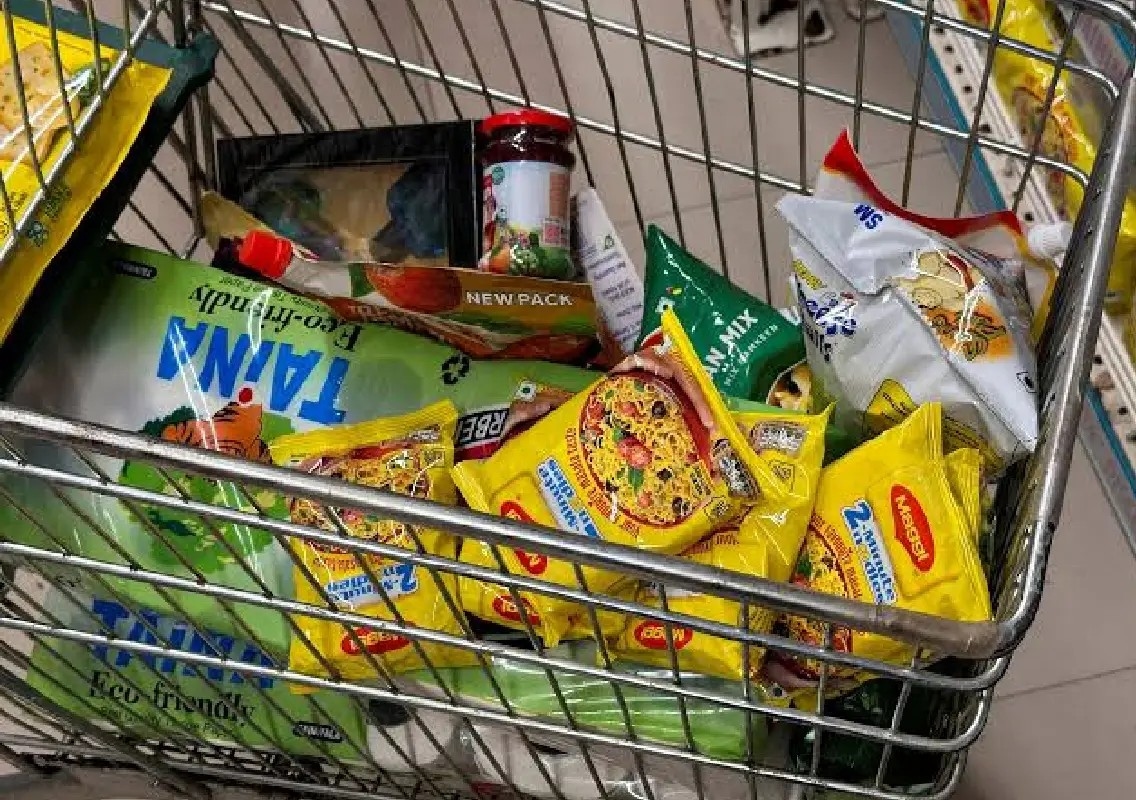


New Delhi: India’s proposal to introduce health warning labels on certain packaged foods has opened a wider debate about the country’s growing dependence on affordable processed food and whether consumers are receiving the same quality of ingredients available in other markets.
The discussion has gained momentum as the Food Safety and Standards Authority of India (FSSAI) considers tougher red warnings for products exceeding government-set limits for added sugar, salt and saturated fat.
Cheap food has become a daily habit
Packaged foods have become deeply woven into everyday Indian life, particularly because they offer convenience at relatively low prices.
Products such as Maggi instant noodles and Thums Up have developed enormous consumer bases. Reuters reported that around 6 billion meals consumed in Indian households and on Indian streets every year are Maggi two-minute masala noodles.
India’s packaged food market is also expanding rapidly, reaching an estimated $137.25 billion in 2026, according to IMARC Group.
However, health experts have raised concerns about the nutritional consequences of increasing consumption of foods high in sugar, salt and unhealthy fats.
Different markets, different ingredients
The debate has also focused attention on differences between products sold in India and comparable versions available overseas.
Reuters reported that Maggi variants in India are made using palm oil, while some versions sold in Britain use sunflower oil. Nestle’s KitKat products have also been reported to contain different proportions of cocoa in different markets.
Nestle has said such variations reflect local tastes, consumer expectations, ingredient availability and climatic conditions, and stressed that its products comply with Indian food safety regulations.
Warning labels face industry resistance
India has discussed front-of-pack warning labels for years, but the proposal has faced resistance from parts of the food industry.
Health advocates argue that clear warnings could help consumers make informed choices, particularly as diabetes and other lifestyle-related conditions become major public health concerns.
The proposed labels have therefore become more than a regulatory issue. They have sparked a larger question about affordability, corporate responsibility and whether Indian consumers should have to choose between low prices and healthier food.