







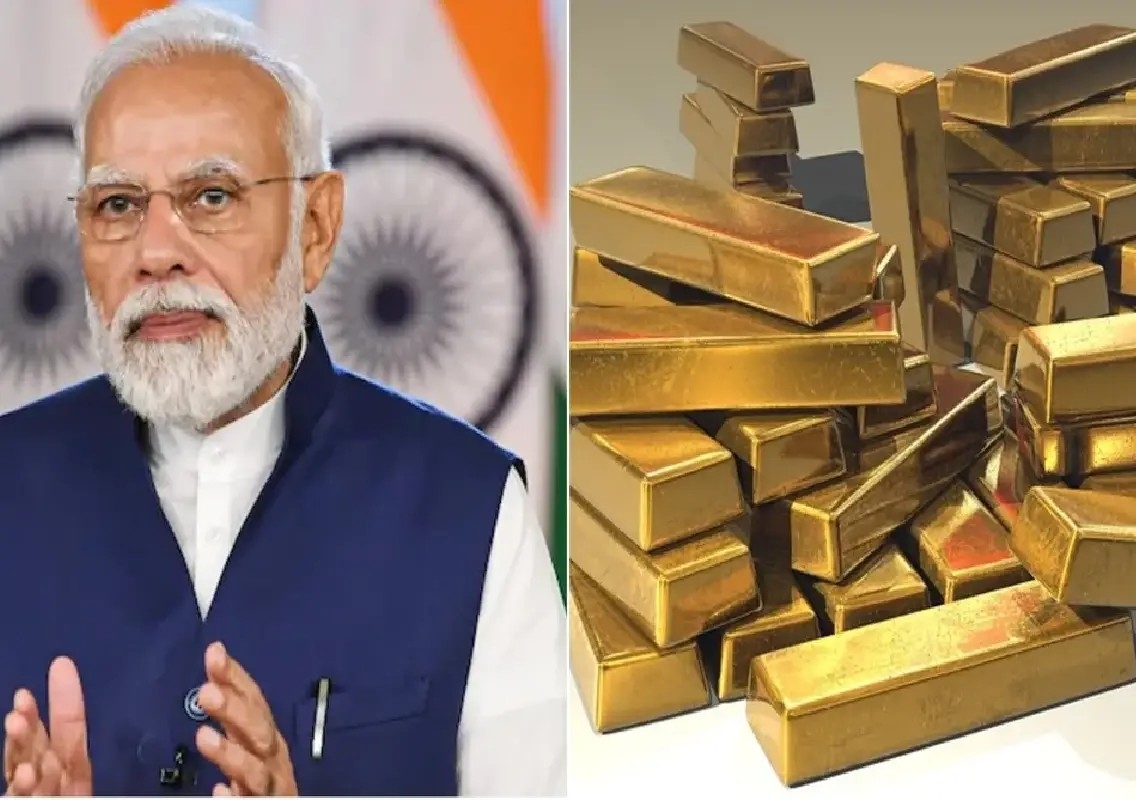


Prime Minister Narendra Modi’s renewed appeal to Indians to avoid buying gold unless necessary has brought the country’s growing dependence on imported gold back into focus.
The September 1 appeal was his second such request this year. It also came just before the festival and wedding season, an important period for jewellery sales. Jewellery stocks reacted sharply after the remarks.
India buys far more gold than it produces
India is among the world’s biggest consumers of gold, but domestic production is very small compared with demand. Much of the gold used for jewellery and investment therefore comes from imports.
According to Moneycontrol, India’s gold imports rose more than 24 per cent to a record $71.98 billion in 2025-26, compared with $58 billion the previous year. Imports had stood at $45.54 billion in 2023-24 and $35 billion in 2022-23.
Gold imports put pressure on the rupee
Gold imports require foreign currency, particularly US dollars. When imports rise, demand for dollars increases and this can add pressure to India’s foreign exchange position and the rupee.
Gold imports also add to the country’s trade deficit. Cutting unnecessary purchases or increasing the recycling of existing gold can therefore reduce the need for fresh imports and dollar outflows.
Jewellery firms felt the impact
The Prime Minister’s appeal immediately affected jewellery shares. Titan and Kalyan Jewellers were among the companies whose stocks fell following the remarks.
The timing is particularly significant because September to February is an important period for the jewellery industry, covering the festival season followed by weddings.
Why the message matters to families
Gold is not simply jewellery for many Indian households. It is also treated as savings, security and a long-term store of wealth.
The government is therefore trying to reduce fresh imports while encouraging the recycling and reuse of gold already held by households. The larger aim is to conserve foreign exchange and ease pressure on the rupee.