







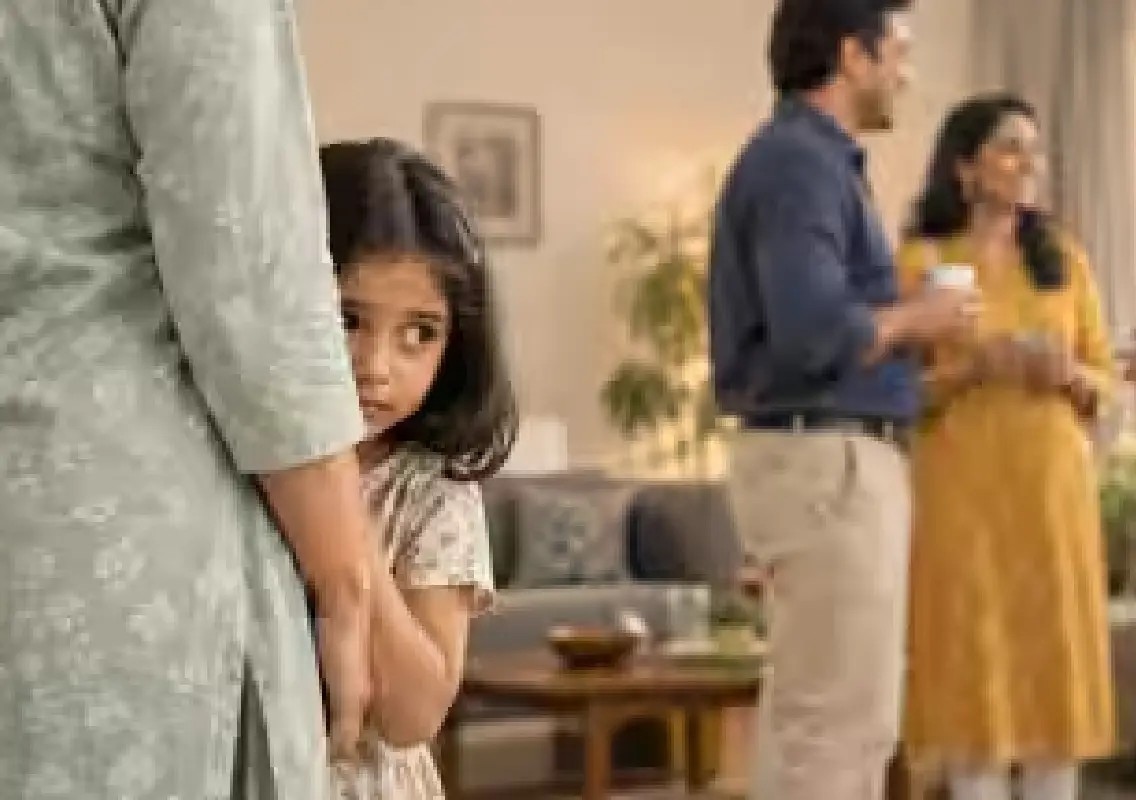


A child hiding behind a parent when relatives or guests arrive may look like shyness, but psychology suggests that such behaviour can have several explanations. For some children, unfamiliar people and sudden social attention can simply feel overwhelming.
It may be more than shyness
Children respond differently when they encounter unfamiliar people. Some quickly greet guests and begin talking, while others need time to observe before feeling comfortable.
A child who buries their face in a parent’s shoulder, refuses to greet relatives or quietly stays behind a parent may be communicating discomfort rather than deliberately being rude.
New people, unfamiliar surroundings, loud conversations or being immediately asked questions can create pressure for children who need more time to adjust.
The comfort of a familiar parent
Parents often provide children with a sense of safety in unfamiliar social situations. Staying close to a parent can help a child regulate their emotions while they observe what is happening around them.
Instead of forcing a child to greet or speak immediately, giving them some time and space can help them gradually become comfortable.
Simple approaches such as introducing guests calmly, allowing the child to remain close to a parent and avoiding comments such as “Why are you so shy?” can reduce unnecessary pressure.
Every child has a different pace
Not every quiet child is socially anxious, and occasional hesitation around unfamiliar people is common, particularly among younger children.
Parents can pay attention to the broader pattern. If a child consistently struggles with social situations, avoids everyday interactions or appears significantly distressed, discussing the behaviour with a qualified child-health professional may be helpful.
The important message is that children do not all enter social situations in the same way. Sometimes, hiding behind a parent is simply a child’s way of saying, “I need a little more time.”