







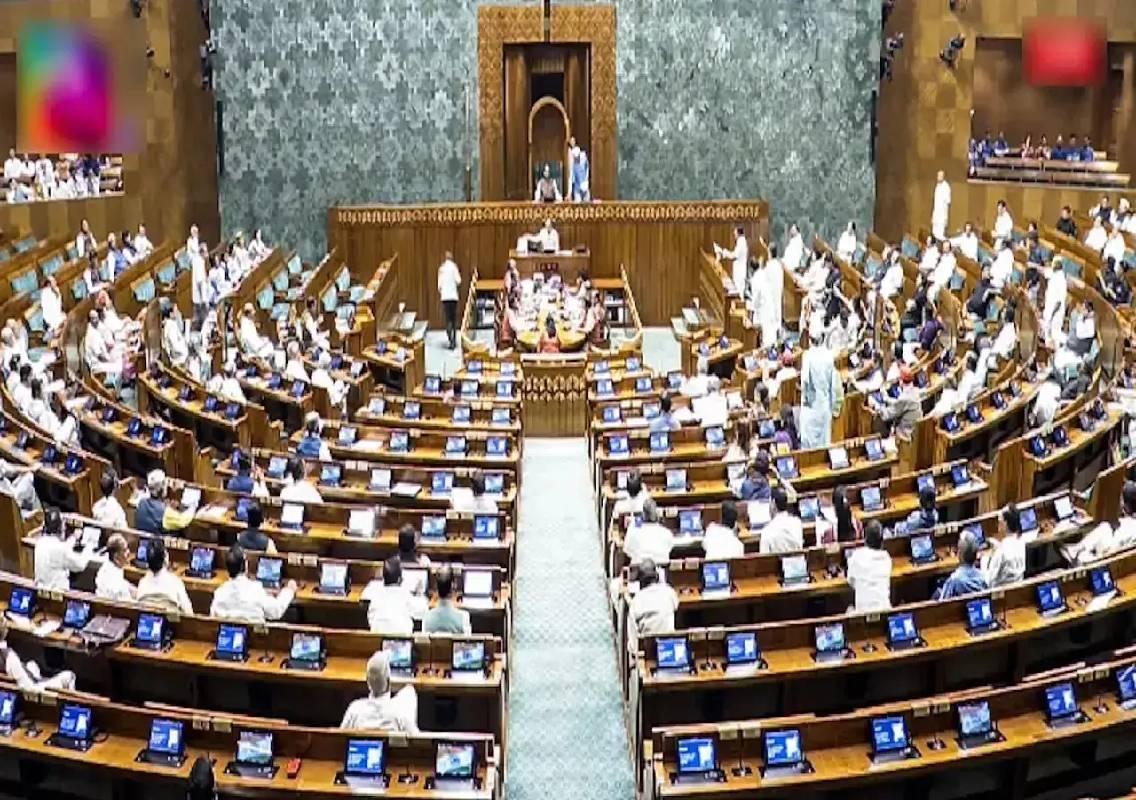


The Union government is expected to introduce the Delimitation Bill during the upcoming Monsoon Session of Parliament, a move that could pave the way for the implementation of the Women’s Reservation Bill, officially known as the Nari Shakti Vandan Adhiniyam. According to sources, the government is considering bringing the two measures separately, with delimitation likely to be taken up first, followed by efforts to secure political consensus on women’s reservation.
The proposed Delimitation Bill aims to increase the number of seats in the Lok Sabha and redraw the boundaries of parliamentary and assembly constituencies. The exercise is mandated under the Constitution to ensure that representation remains proportionate to population changes reflected in the Census.
Government plans separate route for two key reforms
Unlike earlier discussions about introducing both measures together, sources indicate that the government has decided to pursue a phased approach. The Delimitation Bill is expected to be tabled first, after which the government may move ahead with the Women’s Reservation Bill.
Officials believe that completing the delimitation process is an important precursor to implementing the reservation of one-third of seats for women in the Lok Sabha and state assemblies. Sources said the Centre has already begun reaching out to opposition parties to build broader political consensus on the women’s reservation framework.
The government reportedly views the ongoing Census process as a critical factor in moving forward with both reforms. Sources claim the Census exercise has gained momentum, and discussions are underway with various political stakeholders to address concerns linked to representation and seat allocation.
Why delimitation remains a crucial exercise
Delimitation refers to the process of redrawing constituency boundaries and allocating seats based on population figures. The Constitution requires that parliamentary and assembly constituencies reflect demographic changes after every Census.
However, the allocation of seats among states was frozen through the 42nd Constitutional Amendment in 1976 to encourage population control measures. The freeze was later extended in 2001 until the first Census conducted after 2026.
With the current freeze nearing its end, the government is preparing to initiate a fresh delimitation exercise. Sources suggest the Centre is considering a proposal that could increase the number of Lok Sabha and assembly seats by around 50 per cent across states.
Supporters argue that expanding the number of seats would improve representation in a country with a significantly larger population than when the current seat structure was established. Critics, however, have raised concerns about how seat redistribution could affect the political balance among states with differing population growth rates.
Political consultations underway
According to sources, the Bharatiya Janata Party (BJP) has been engaging with several political parties to assess support for both the Delimitation Bill and the Women’s Reservation Bill. Since constitutional amendments require a special majority in Parliament, securing sufficient backing remains essential.
Sources claim parties such as the Samajwadi Party and the Dravida Munnetra Kazhagam (DMK) may be open to discussions on the delimitation framework, though no official positions have been announced.
The government is also reportedly exploring support from regional parties that have recently distanced themselves from the Congress-led opposition bloc. Political observers believe these outreach efforts could play a key role in determining the legislative future of both reforms.
Women’s Reservation Bill remains a major milestone
The Nari Shakti Vandan Adhiniyam, passed by Parliament in 2023, provides for 33 per cent reservation for women in the Lok Sabha and state legislative assemblies. However, its implementation is linked to the completion of the Census and subsequent delimitation exercise.
As a result, the proposed Delimitation Bill is being viewed as a significant step towards operationalising one of the most consequential political reforms aimed at increasing women’s representation in India’s legislative institutions.
Conclusion
With the Monsoon Session approaching, the government’s push for delimitation is expected to dominate parliamentary discussions. If political consensus can be achieved, the move may also clear the path for the implementation of women’s reservation in legislatures, marking a major milestone in India’s democratic and electoral framework.