







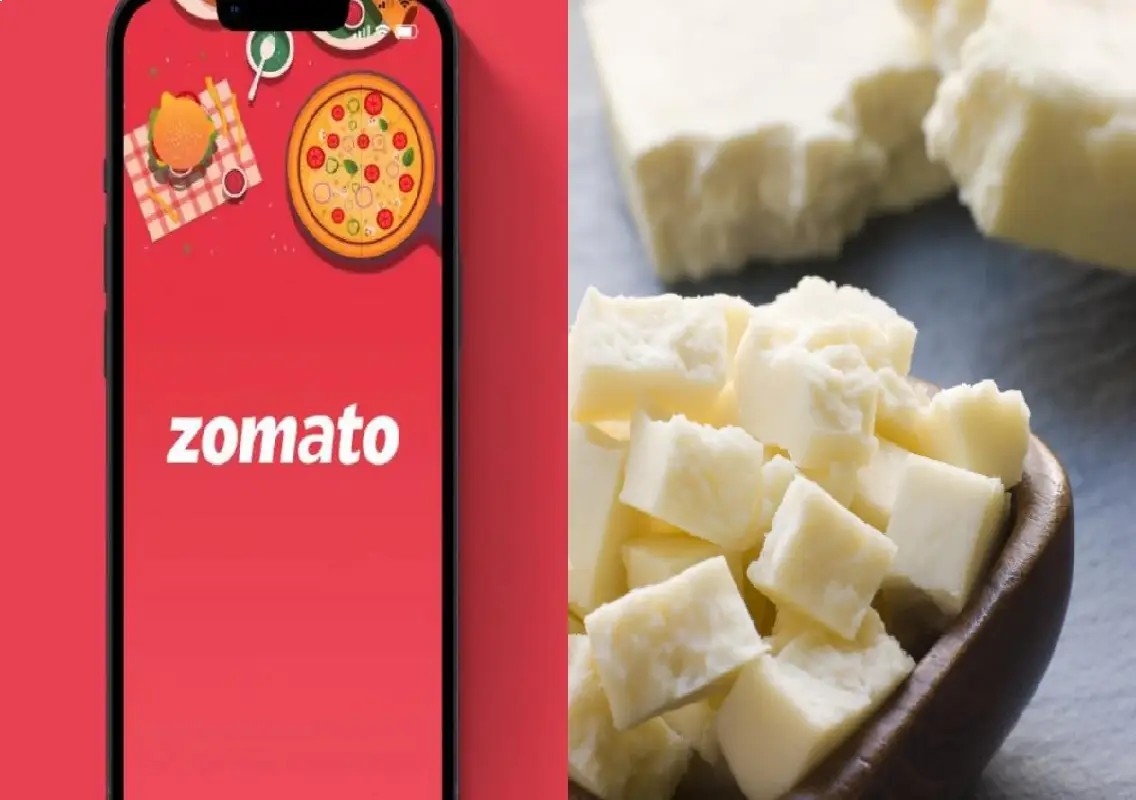


New Delhi: Food delivery platform Zomato has announced a zero-tolerance policy against restaurants listing or selling dishes containing analogue cheese, analogue paneer and other analogue dairy products, with immediate effect.
The company said it will remove dishes that restaurants have declared as containing analogue dairy products from its platform. Restaurants found to be violating the policy could also face delisting.
The move comes amid renewed scrutiny of food safety and the authenticity of ingredients used by restaurants across the country.
What are analogue dairy products?
Analogue dairy products are substitutes designed to resemble traditional dairy ingredients in appearance, texture and usage while using alternative ingredients.
For instance, analogue cheese or paneer may use plant-based oils, fats or other substitutes in place of conventional milk-derived ingredients. Such products can be used by food businesses as lower-cost alternatives while retaining characteristics similar to traditional dairy products.
Zomato’s latest policy focuses specifically on ensuring that customers are not served products that are inaccurately represented on restaurant menus.
Zomato removes declared analogue dishes
In a communication issued to restaurant partners on Monday, the company said dishes already declared by restaurants as containing analogue cheese, analogue paneer or other analogue dairy products would be turned off from the platform immediately.
Zomato said its priority was to ensure that food ordered through its platform was accurately represented, safe and met expected quality standards.
The company added that the initiative was intended to strengthen transparency and food quality while supporting food safety and regulatory requirements.
Restaurants that continue to remain non-compliant could be removed from the platform.
Restaurants asked to review ingredients
Zomato has called on its restaurant partners to take several immediate steps to comply with the new policy.
Restaurants have been asked to transition to natural dairy products wherever possible.
Where an immediate transition is not feasible, restaurants have been advised to remove dishes containing analogue dairy products from their menus on the platform.
The company has also asked restaurant partners to review product labels and ingredient declarations supplied by their vendors.
This is intended to help restaurants verify the ingredients actually being used in their kitchens and ensure that the products listed on Zomato accurately represent what customers receive.
The policy therefore places greater emphasis on ingredient verification and transparency between restaurants, suppliers and consumers.
Non-compliant restaurants face delisting
Zomato said it reserves the right to delist restaurants that fail to comply with the policy.
The company also said it could take any other action available under its internal policies and applicable law in cases where restaurants are found to be selling non-compliant products.
In addition, Zomato has reserved the right to recover losses, costs, damages or expenses it may incur as a result of non-compliant products being delivered to customers.
The announcement signals a stricter approach towards the products and ingredients being offered through the food delivery platform.
Move follows food safety scrutiny
The policy comes at a time when food safety and ingredient quality have received increased attention.
The announcement follows a reported statewide crackdown by the Food and Drug Administration in Maharashtra and inspections carried out by the Food Safety and Standards Authority of India (FSSAI) at five-star hotels in Delhi.
The increased scrutiny has brought renewed focus on the ingredients used by food businesses and how products are represented to consumers.
For online food delivery platforms, the issue also involves ensuring that restaurant menus provide customers with accurate information about the food they are ordering.
Zomato stresses customer protection
Zomato CEO Aditya Mangla said the company’s mission of providing better food to more people also involved protecting customer health and maintaining clear standards for food listed and served by restaurant partners.
He said the policy reflected the company’s commitment to those standards and described it as an effort being undertaken alongside restaurant partners who share the same approach.
The policy could prompt restaurants listed on the platform to conduct closer checks of their ingredients and supplier declarations.
For consumers, the move is expected to bring greater emphasis on transparency around the ingredients used in popular dishes, particularly products such as cheese and paneer that are widely used across restaurant menus.
Conclusion
Zomato’s zero-tolerance policy places responsibility on restaurants to verify their ingredients and accurately represent the food offered to customers. Restaurants using analogue dairy products will either have to shift to natural dairy ingredients or remove the affected dishes from the platform.
With food safety and ingredient authenticity receiving greater attention, the move could also encourage wider scrutiny of how restaurants disclose the products used in their kitchens.