







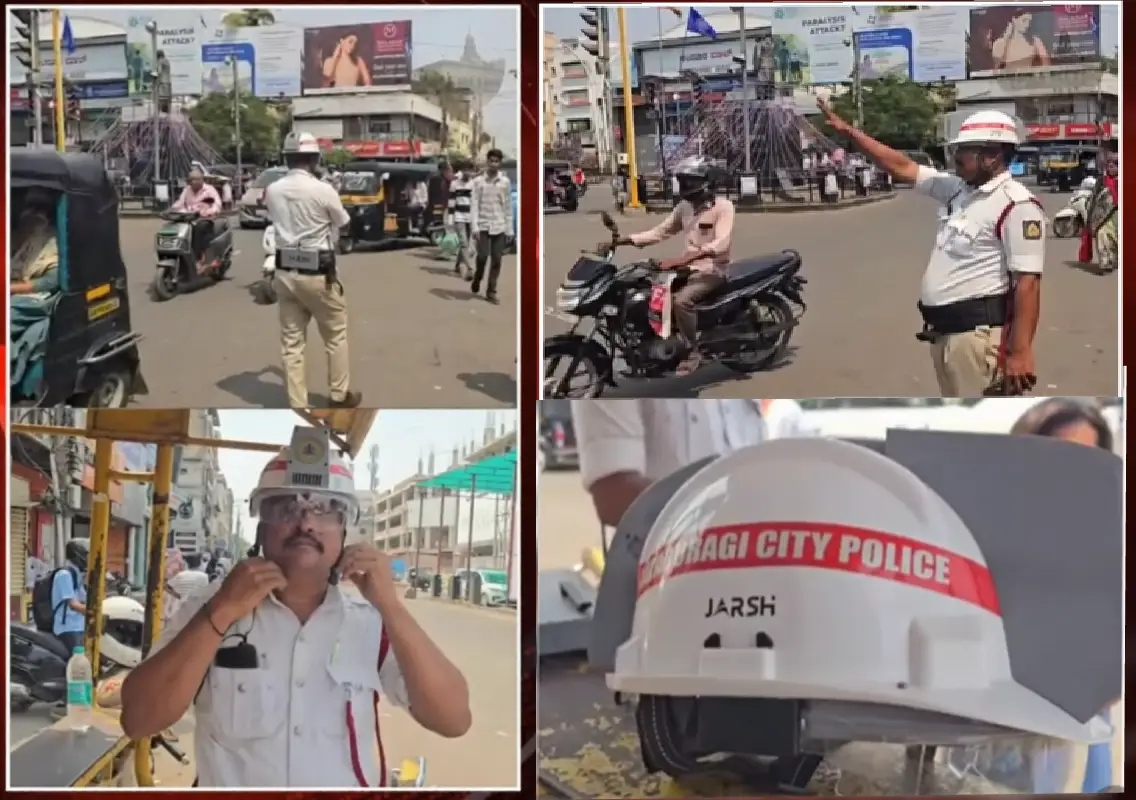


Kalaburagi: In a proactive move to address the challenges posed by extreme summer heat, Police Commissioner Dr. Sharanappa S D has introduced air-conditioned (AC) helmets for traffic police personnel in the city. The initiative is aimed at protecting officers who spend long hours on roads managing traffic under intense sunlight.
The step reflects a growing emphasis on the welfare of frontline personnel, especially during peak summer months when temperatures in Kalaburagi often soar to high levels, making outdoor duties physically demanding.
Relief for traffic personnel
Traffic police officers are required to remain stationed at busy intersections for extended periods to ensure smooth vehicular movement. Continuous exposure to heat can lead to fatigue, dehydration, and other health-related issues.
The AC helmets are designed to reduce heat exposure by maintaining a cooler temperature inside the helmet, thereby offering relief to personnel. This is expected to significantly improve their comfort levels while on duty.
Officials believe that such protective gear will help personnel remain focused and perform their responsibilities more effectively, even during extreme weather conditions.
Enhancing efficiency and safety
Apart from improving comfort, the initiative is also aimed at enhancing efficiency in traffic management. By reducing physical stress caused by heat, traffic personnel are likely to remain more alert and responsive.
Kalaburagi, known for its high summer temperatures, often poses challenges for outdoor workers. The introduction of AC helmets is seen as a practical and humane approach to addressing these difficulties.
Positive impact expected
The initiative is expected to receive a positive response from traffic police personnel, who regularly face harsh working conditions. Ensuring their well-being is crucial for maintaining effective traffic control and public safety across the city.
Conclusion
The introduction of AC helmets by the Kalaburagi Police highlights a thoughtful approach towards improving working conditions for traffic personnel. Such measures not only prioritise the health and safety of officers but also contribute to more efficient public service delivery.