







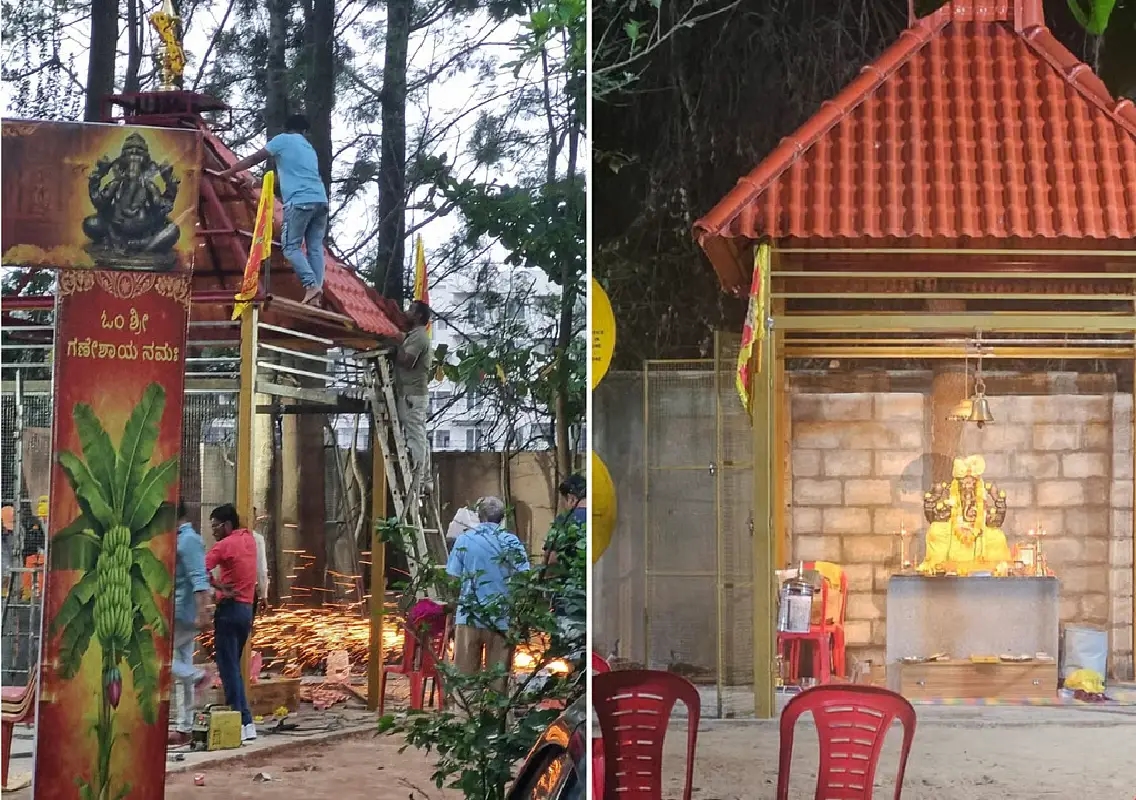


Bengaluru: A dispute over the alleged construction of a temple within a residential complex has reached court, with a section of residents claiming that the structure was built overnight without approvals in an apartment complex in south Bengaluru.
Four residents of SNN Raj Serenity, located in Yelenahalli in Begur, have filed a case in a local court, alleging that a makeshift temple was constructed in a common area without consent from residents or approval from authorities.
The court has directed that status quo be maintained until the next hearing scheduled for April 16.
Allegations of illegal construction
According to the petitioners, the structure—a small enclosure housing a Ganesha idol—was erected without mandatory permissions from the Greater Bengaluru Authority (GBA) and other regulatory bodies.
Residents claim the temple was built in the early hours of March 20 near Block A by a group led by members of the apartment association.
They argue that the common areas are jointly owned by all residents and cannot be altered or repurposed without collective consent and legal approvals.
Residents raise concerns over approvals
The issue has caused a rift among residents, with some supporting the temple while others strongly opposing it.
Petitioners stated that earlier general body meetings held in December 2024 and August 2025 had resolved that no place of worship should be constructed in common areas without proper regulatory clearance, including modification of the master plan approved by planning authorities.
They warned that unauthorised construction could lead to penalties or even cancellation of occupancy certificates by authorities such as the fire department.
Incident sparks tension
Tensions escalated further after a television report alleged that a woman had “insulted” the idol by entering the makeshift temple wearing slippers. The woman later clarified that several people, including police personnel, were wearing footwear at the time and alleged she was being targeted due to her family’s involvement in the legal case.
Meanwhile, residents who opposed the construction said they had earlier intervened in November 2024 to stop a similar attempt to install the idol in another common area due to lack of approvals.
Police complaint and legal demands
Following the construction, some residents approached the Begur police station, leading to the registration of a Non-Cognisable Report (NCR).
In their petition, the residents have sought a permanent injunction against any alteration or change in the usage of common areas without due approvals. They have also requested removal of the structure and restoration of the site to its original condition.
Additionally, they have urged the court to restrain the association from conducting religious rituals or gatherings at the site and from creating any third-party or religious rights linked to the structure.
Association cites majority support
However, a member of the management committee claimed that during a general body meeting in December 2024, around 480 residents had voted in favour of having a temple, while over 200 had opposed it.
The member also stated that informal discussions with civic officials suggested that approvals might not be required for temporary structures, though he admitted that no written confirmation was available.
Not an isolated issue
The dispute reflects a broader pattern seen across Bengaluru, where similar conflicts have emerged in apartment complexes over the construction of religious structures in common or civic amenity spaces.
In several instances, authorities and courts have intervened, emphasising that such spaces cannot be altered without adherence to planning regulations and legal procedures.
Conclusion
The ongoing case highlights the complex intersection of community sentiment, legal norms, and urban governance in Bengaluru’s rapidly growing residential spaces. The court’s decision in the coming hearings is likely to set an important precedent on how common areas in apartment complexes can be used and regulated.