







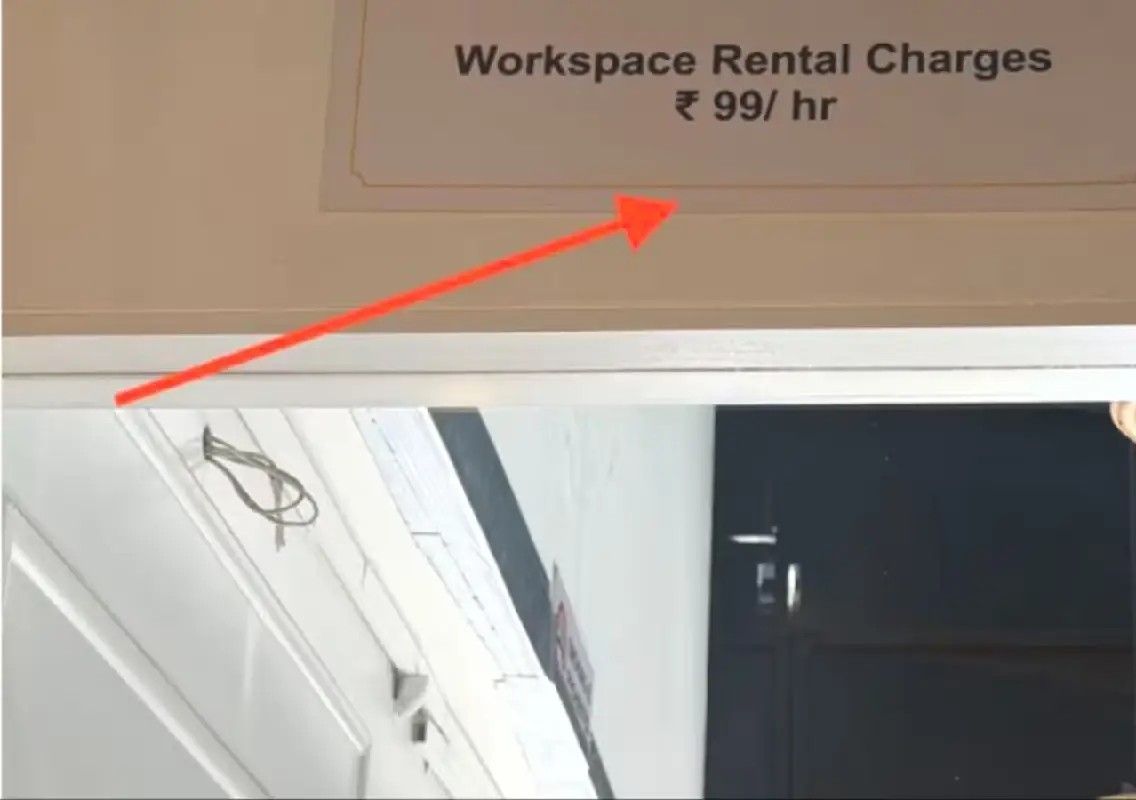


Bengaluru: A Bengaluru café’s decision to introduce a ₹99-per-hour workspace fee for customers using its premises as a workstation has triggered a lively debate on social media, highlighting the growing challenge cafés face in balancing the needs of remote workers and regular diners.
The discussion began after Karthik Suroju, a Bengaluru-based entrepreneur, shared a photograph on LinkedIn of a sign displayed at a café in Indiranagar announcing, “Workspace Rental Charges: ₹99/hr.”
Founder questions the approach
While acknowledging that cafés cannot be expected to accommodate customers who occupy tables for hours after ordering just one beverage, Suroju questioned whether charging an hourly workspace fee was the right solution.
He argued that most people working from cafés usually stay for two to three hours and continue placing food and beverage orders, making them valuable customers. According to him, only a small number of patrons who spend an entire day over a single order create the real problem.
Suroju also noted that many independent cafés hesitate to confront such customers due to fears of negative online reviews and reputational damage. He added that he intended to speak with the café owner to better understand the reasoning behind the policy, pointing out that the establishment is known for its food and positive customer ratings.
Internet divided over the policy
The LinkedIn post drew mixed reactions. Several users backed the café’s decision, saying customers who occupy tables for extended periods reduce seating availability for others, especially during peak hours.
Others suggested alternative solutions, including introducing laptop-free hours, creating screen-free café zones, setting minimum spending requirements, or clearly communicating table usage policies instead of charging by the hour.
Work-from-café culture evolving
The debate reflects a broader shift as cafés across India increasingly serve as informal workspaces for freelancers, entrepreneurs and remote employees. While many continue to operate under a traditional food-and-beverage model, some businesses are exploring time-based workspace charges and dedicated work plans to better manage customer expectations.
The discussion has reignited questions about whether cafés should primarily function as social spaces, workplaces, or a combination of both.