


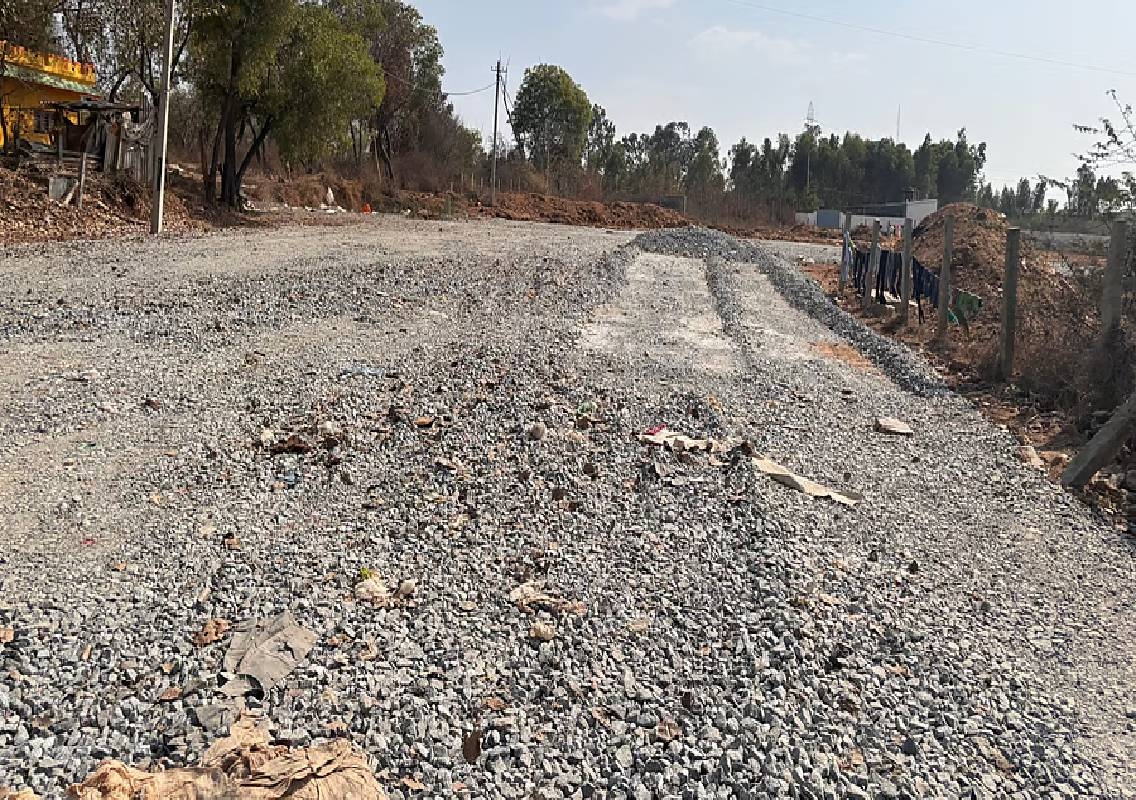


BENGALURU: Around 85% of the roads identified under Bengaluru’s Comprehensive Development Plan (CDP) remain unbuilt nearly two decades after they were proposed, highlighting the gap between urban planning and infrastructure development in the rapidly expanding city.
The plan had earmarked approximately 1,000 km of roads to improve connectivity and support the city’s growth. However, much of the proposed network has yet to materialise, contributing to traffic congestion in neighbourhoods where residential development has outpaced road infrastructure.
Panathur–Gunjur–Varthur road highlights the problem
The proposed 5.5-km Panathur–Gunjur–Varthur road in east Bengaluru illustrates the challenges associated with delayed infrastructure projects. According to the report, around 30,000 flats were approved near the proposed road alignment, even though the road itself was not constructed.
The delay has added to connectivity concerns in areas experiencing significant residential growth. Residents in these neighbourhoods continue to depend on existing roads, many of which struggle to accommodate increasing traffic volumes.
The situation reflects a wider planning challenge: residential projects can progress while the supporting transport network remains incomplete. As more people move into newly developed areas, the absence of planned connecting roads places additional pressure on the available routes.
Land acquisition remains a major hurdle
Land acquisition is one of the key reasons cited for delays in implementing CDP roads. Officials have pointed to difficulties in securing land, particularly in high-value urban areas where property owners may be reluctant to accept the compensation arrangements offered.
One mechanism used in such cases is transferable development rights (TDR), under which eligible landowners receive development rights as compensation for surrendering land for public infrastructure. However, voluntary TDR arrangements may not be attractive enough to property owners in locations where land values are high.
Without timely access to land, planned road projects can remain stalled even when their alignments have been identified in official development plans.
Limited transport space adds to congestion
Bengaluru’s road delays are also linked to a broader shortage of land allocated to transport infrastructure. Urban planners cited in the report estimate that transport infrastructure accounts for only around 7–9% of the city’s area, compared with a recommended share of approximately 20%.
The limited allocation makes it difficult to provide sufficient road capacity as the city expands. When planned links are missing, traffic is concentrated on existing arterial roads and narrower neighbourhood streets, increasing pressure on the network.
Completing the proposed CDP roads could improve connectivity between developing residential areas and established transport corridors. However, the benefits depend on resolving land acquisition issues and moving projects from the planning stage to actual construction.
New road plans may take time to deliver results
Bengaluru has continued to consider new road networks to address the needs of its expanding outskirts. However, announcing or mapping a road does not immediately improve mobility for residents. Land availability, clearances, coordination between agencies and construction timelines all affect when a proposed route becomes usable.
The continued delay in implementing much of the CDP road network underscores the need to align urban development with transport infrastructure. As housing projects expand, timely delivery of connecting roads will be important to reduce dependence on already congested routes.
For residents, the issue is not simply whether a road appears on a development plan, but whether it is completed and accessible. The large share of planned roads that remain unbuilt shows how long-standing implementation gaps continue to affect Bengaluru’s urban mobility.