







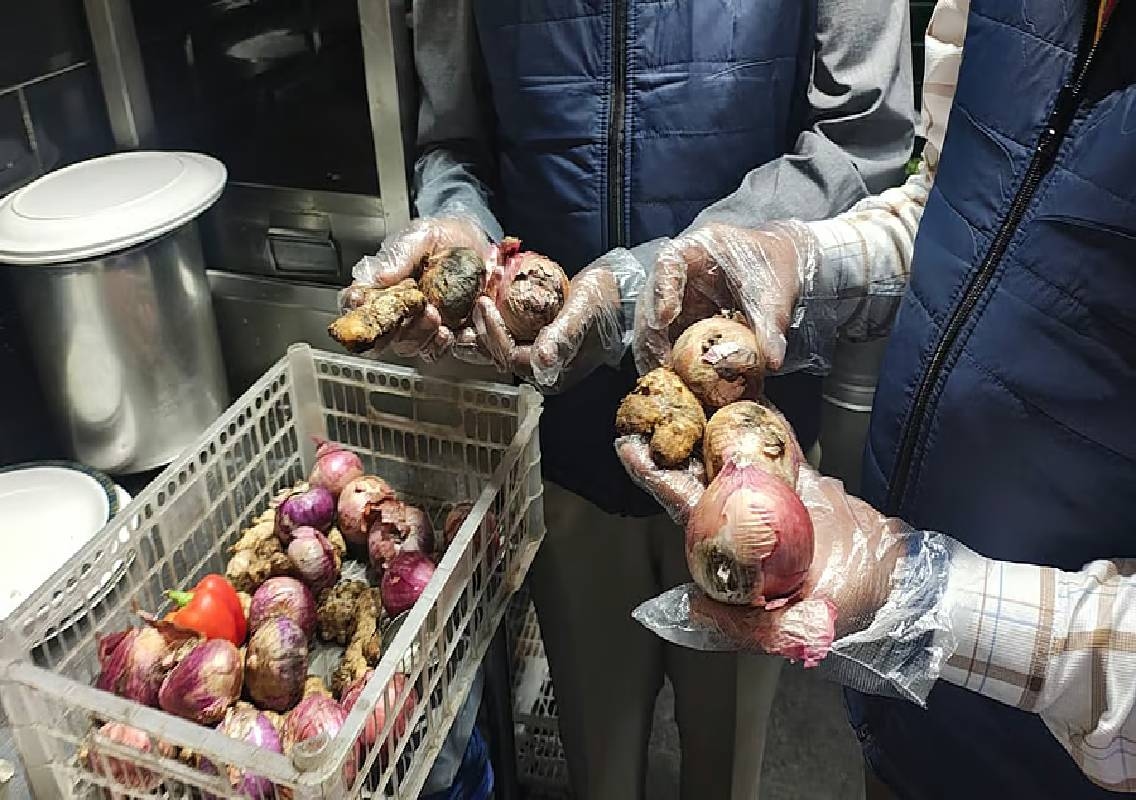


Bengaluru: A food safety inspection drive at prominent clubs in the city has triggered mixed responses, with some establishments accepting the observations and others rejecting the allegations made by officials.
The inspections, conducted on August 25 following directions from Karnataka Health and Family Welfare Minister U.T. Khader, covered eight prominent clubs. Food safety officials reported a range of violations, including cockroach infestation, unhygienic conditions, expired food products, improper storage and labelling lapses. Notices were subsequently issued to all eight establishments.
The inspections have placed Bengaluru’s elite clubs under increased scrutiny over food safety standards and kitchen hygiene. The development comes shortly after authorities began a wider crackdown on food safety violations across the city.
Clubs give different responses
The clubs have not responded uniformly to the findings.
While some establishments have acknowledged specific shortcomings and said corrective measures are being implemented, others have disputed the inspection observations.
The Karnataka State Cricket Association (KSCA) Club has reportedly accepted the need for improvements and committed to addressing issues identified by officials. It has also indicated that steps will be taken to improve segregation and food-handling practices within the specified timeframe.
Bowring Institute has also responded to the inspection findings, including action relating to a storage area where officials detected cockroach infestation.
However, Century Club has denied the allegations and described the reports as false. Catholic Club has also said it takes the observations seriously while disputing the suggestion that its kitchens are generally unhygienic.
The differing responses have added another dimension to the ongoing debate over food safety standards at Bengaluru’s private clubs.
What did FDA inspections find?
Food safety officials inspected eight clubs as part of the August 25 drive.
The establishments included Century Club, KSCA Club, Bowring Club, Catholic Club, Tennis Club, Vijayanagara Club, Mahalakshmi Layout Club and Malleshwaram Club.
Officials reported several types of violations during the inspections.
These included poor hygiene, pest infestation, expired food products and deficiencies in food labelling. In some locations, officials also raised concerns over food storage practices and kitchen maintenance.
Earlier reports from the inspection drive said officials found vegetarian and non-vegetarian food stored together at some establishments, along with unhygienic frozen storage areas, blocked drains and other sanitation issues.
The findings have raised questions about whether establishments that maintain strict standards for members and visitors are giving equal attention to the conditions inside their kitchens.
Expired food and labelling lapses
Expired food products were among the concerns raised during the inspections.
Food safety regulations require establishments to ensure that ingredients and prepared food are stored under appropriate conditions and that products are properly labelled.
Officials also found labelling deficiencies at some clubs.
During the inspection at KSCA Club, for instance, officials reportedly found a packet of toor dal without required details such as the packing date, batch number and maximum retail price.
Such lapses can make it difficult to establish the origin and shelf life of food products.
For establishments serving large numbers of members and guests, proper documentation and labelling are an important part of maintaining food safety.
Pest infestation raises concern
Pest control has emerged as another major issue.
Officials detected cockroach infestation at some of the inspected clubs, including concerns involving food storage areas.
At Bowring Club, officials reportedly found unhygienic conditions and cockroach infestation in a food storage area, following which a notice was issued.
The presence of pests in areas where food is stored or prepared can pose a direct food safety risk.
Clubs are expected to maintain regular pest-control measures and ensure that food preparation and storage areas remain clean and protected from contamination.
Clubs begin corrective action
Some establishments have said they are taking steps to address the observations made during the inspections.
KSCA Club has reportedly committed to improving kitchen segregation within 15 days. Bowring Institute has taken action regarding the affected storage area.
Such corrective measures could include improving sanitation, strengthening pest-control systems, reviewing food storage practices and ensuring that food products carry the required labels.
The FDA is expected to monitor compliance and take further action where necessary.
Minister U.T. Khader stresses kitchen hygiene
The controversy comes after Health Minister U.T. Khader urged Bengaluru’s clubs to prioritise food safety rather than focusing excessively on dress codes for guests.
Khader pointed out that some clubs enforce strict rules about what members and visitors can wear, but said similar attention should be given to kitchen conditions and food safety.
The minister’s remarks followed the inspection findings and highlighted the Government’s focus on improving hygiene standards in private establishments.
He has also indicated that meetings with hotel associations would be held over the following 15 days, along with training programmes aimed at improving food safety practices.
Food safety crackdown expands in Bengaluru
The club inspections form part of a wider food safety enforcement drive in Bengaluru.
Authorities have been inspecting hotels, restaurants, eateries and other establishments across the city.
The latest club inspections have drawn particular attention because several of the establishments are well-known and cater to large numbers of members and guests.
The findings show that food safety concerns are not limited to roadside eateries or smaller establishments.
Even premium clubs with established reputations can face problems involving kitchen hygiene, storage, pest control and food labelling.
Water and cooking oil samples collected
The inspection process also included collection of samples where officials suspected potential issues.
According to the Karnataka Food Safety and Drugs Administration, samples of drinking water and used cooking oil that appeared suspicious were collected and sent to the Government Food Laboratory for analysis.
The laboratory results could determine whether further legal action is required.
This means the inspection process does not end with the initial observations. Authorities can use laboratory findings along with inspection reports to determine the next steps.
Notices issued to all eight clubs
All eight clubs inspected during the August 25 drive received notices from the authorities.
The notices give the establishments an opportunity to respond to the observations and comply with food safety requirements.
Depending on the nature and seriousness of the violations, further action could follow.
The authorities have indicated that legal action would be taken based on the findings, including the results of laboratory tests where applicable.
Mixed reactions from club managements
The different responses from club managements demonstrate that the inspection findings remain contested in some cases.
Some clubs have accepted that improvements are necessary, while others have challenged the characterisation of their kitchens as unhygienic.
This distinction is important because an inspection finding does not automatically establish that an entire establishment is unsafe.
Authorities must assess individual violations and determine whether corrective measures have been implemented.
At the same time, clubs are expected to cooperate with regulators and address any genuine shortcomings identified during inspections.
Why kitchen hygiene matters
Food safety involves more than the quality of ingredients used in a dish.
It also depends on how food is stored, handled, prepared and served.
Proper refrigeration, segregation of raw and cooked food, pest control, clean equipment, safe water and appropriate staff hygiene all play an important role.
Failure in any of these areas can increase the possibility of contamination.
The Bengaluru inspections have therefore highlighted the need for clubs to treat kitchen management as a core part of their operations.
Dress codes versus food safety
Khader’s remarks about dress codes have also brought attention to the priorities maintained by private clubs.
Many premium clubs have formal rules governing the clothing and appearance of members and visitors.
The minister’s argument is that maintaining such standards should not come at the expense of basic food safety.
A well-maintained dining area and a clean kitchen are equally important to the overall experience and safety of members.
The comments have added a broader public-interest angle to the inspection findings.
Need for regular inspections
The latest inspections could encourage more regular monitoring of kitchens at private clubs.
Food safety standards can deteriorate if establishments do not maintain consistent cleaning and maintenance schedules.
Regular inspections can help identify problems before they become serious.
They can also encourage food businesses to maintain documentation, conduct pest-control activities and monitor the condition of ingredients more carefully.
Accountability for food establishments
The controversy has also highlighted the importance of accountability.
Food businesses have a responsibility to ensure that food served to customers meets prescribed safety standards.
At the same time, establishments that dispute inspection findings have the opportunity to present their responses through the regulatory process.
The role of the FDA is to verify compliance, examine evidence and take action where violations are established.
What happens next?
The immediate focus will be on how the eight clubs respond to the notices and whether the identified deficiencies are corrected.
Laboratory analysis of the water and cooking-oil samples could also influence further action.
The FDA is expected to continue monitoring the establishments and may conduct follow-up inspections.
For the clubs that have acknowledged lapses, the coming weeks will be important for demonstrating compliance.
Those that have denied the allegations may have to substantiate their responses through the appropriate regulatory process.
Conclusion
Bengaluru: Food safety inspections at eight prominent clubs have resulted in a mixed response, with some establishments acknowledging lapses and beginning corrective measures while others have disputed the findings. Officials reported issues including cockroach infestation, unhygienic conditions, expired food and labelling violations, and notices were issued to all eight clubs.
The inspections have also prompted Health Minister U.T. Khader to call on clubs to focus on kitchen hygiene and food safety instead of giving disproportionate attention to guest dress codes.
With water and cooking-oil samples sent for laboratory analysis, further action could follow depending on the results. The episode has reinforced the need for consistent food safety practices, proper kitchen maintenance and regular monitoring even at Bengaluru’s most established private clubs.