









Bengaluru: Artificial Intelligence (AI) is steadily transforming everyday life, often in subtle yet impactful ways, and a recent example from the city has drawn widespread attention online. A Bengaluru-based entrepreneur has demonstrated how an AI tool called Clawdbot can be used to fully automate food and grocery ordering by integrating it with Swiggy, turning a daily chore into a seamless, hands-free process.
AI moves beyond chat to daily tasks
Unlike conventional chatbots that are largely limited to answering questions or generating text, Clawdbot is designed to act more like a digital personal assistant. It can read and respond to emails, manage files, send reminders and perform real-world tasks such as placing online orders. The entrepreneur described food ordering as one of his “biggest headaches” and said Clawdbot helped eliminate the repetitive decision-making involved in the process.
By connecting Clawdbot to Swiggy, he enabled the AI to handle routine food and grocery orders automatically. According to his post, the setup takes barely a minute. Once configured, the system runs independently, learning the user’s habits and preferences over time.
How the Swiggy automation works
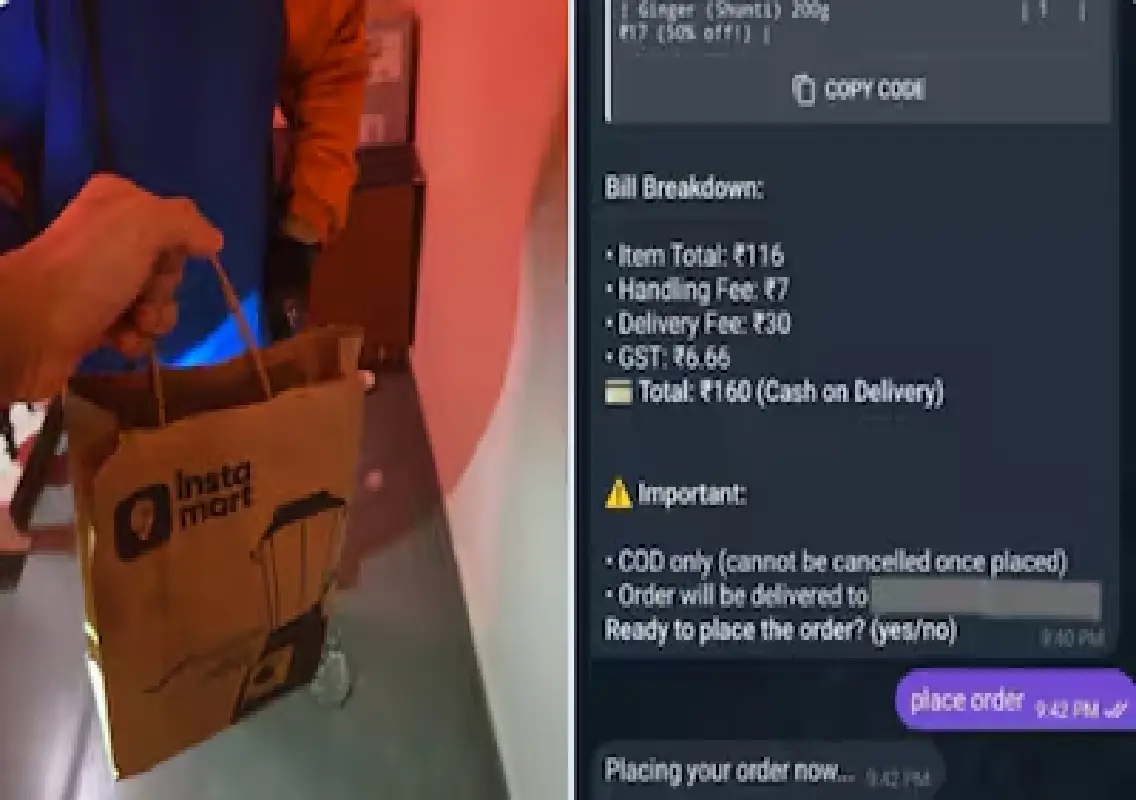
The entrepreneur shared screenshots showing how Clawdbot handles Swiggy orders step by step. Before placing an order, the AI displays a detailed summary on screen, including the list of items, quantities, individual prices, delivery charges, taxes and the final payable amount. In the shared example, the total bill came to ₹160, with cash on delivery selected as the payment mode.
The interface also clearly mentioned that the order could not be cancelled once placed, ensuring transparency. Importantly, the AI did not act autonomously without consent. It sought final approval from the user before proceeding. Once the entrepreneur typed a simple command to confirm, Clawdbot instantly placed the order and updated the screen with a confirmation message.
Learning routines and preferences
What has intrigued many users is Clawdbot’s ability to learn and adapt. The entrepreneur said the bot understands his daily schedule, such as delivering chai to his doorstep at 5 pm every day. It can automatically build grocery carts based on planned meals and even suggest dinner options depending on what he is craving.
In his post on X (formerly Twitter), he wrote: “Connected Swiggy to Clawdbot and automated my biggest headache. Now it knows my schedule, chai delivered to my door at 5 pm, auto builds carts and orders groceries for meals I cook, dinner recommendations based on what I’m craving. Setup takes 1 minute. Just ask Clawdbot to set up the Swiggy skill I’ve published, everything else runs on autopilot.”
This level of personalisation highlights how AI tools are increasingly moving from generic assistance to context-aware automation tailored to individual lifestyles.
Mixed reactions from social media
The post sparked a lively discussion on social media, with users expressing a mix of excitement, curiosity and caution. Many welcomed the idea of AI taking over mundane household tasks. One user commented, “Oh, this is super smart. This is what I want AI to do — solve my real day-to-day problems and take care of household chores.”
Another user praised the concept but discussed broader challenges in the AI ecosystem, writing about difficulties in finding cost-effective models and reliable tool integrations. Some users saw such innovations as part of a fast-evolving phase, with one remarking that “these things will fade away in another two to three years.”
Others shared their struggles with implementation. A user noted that while the idea was appealing, setting up Clawdbot had not worked smoothly for them, and tutorials often restarted from scratch rather than addressing specific issues. At the same time, several users highlighted the convenience factor, saying it saves time otherwise spent endlessly browsing menus and deciding what to order.
However, not all reactions were positive. One user raised concerns about losing awareness of spending habits, cautioning that automation could make it easier to overspend. “Some things are better done manually with choice every single time,” the user wrote.
What is Clawdbot?
Clawdbot was created by Peter Steinberger, founder of PSPDFKit. It differs from traditional AI chatbots by maintaining memory of past interactions and proactively acting on them. The tool can send reminders, alerts and updates without being prompted every time, making it closer to a virtual executive assistant than a conversational bot.
Clawdbot is accessible through popular messaging platforms such as Telegram, iMessage, WhatsApp and Discord. This familiarity lowers the barrier to entry, as users interact with it much like they would with a human assistant over chat, rather than navigating a complex standalone application.
A glimpse into AI-driven living
The Swiggy automation example offers a glimpse into how AI could increasingly manage routine aspects of daily life, from meals to shopping and scheduling. While such tools promise convenience and time savings, they also raise questions around control, spending behaviour and over-dependence on automation.
Conclusion
The Bengaluru entrepreneur’s experiment with Clawdbot underscores a broader shift in how AI is being used — not just to inform or entertain, but to actively manage everyday tasks. As AI assistants become more capable and personalised, they may redefine convenience in urban living. Whether this trend leads to smarter lifestyles or new challenges will depend on how consciously users choose to balance automation with human decision-making.
Bengaluru entrepreneur automates food orders using AI-powered Clawdbot
#ArtificialIntelligence #Clawdbot #BengaluruTech #AIAutomation #NewsKarnataka