







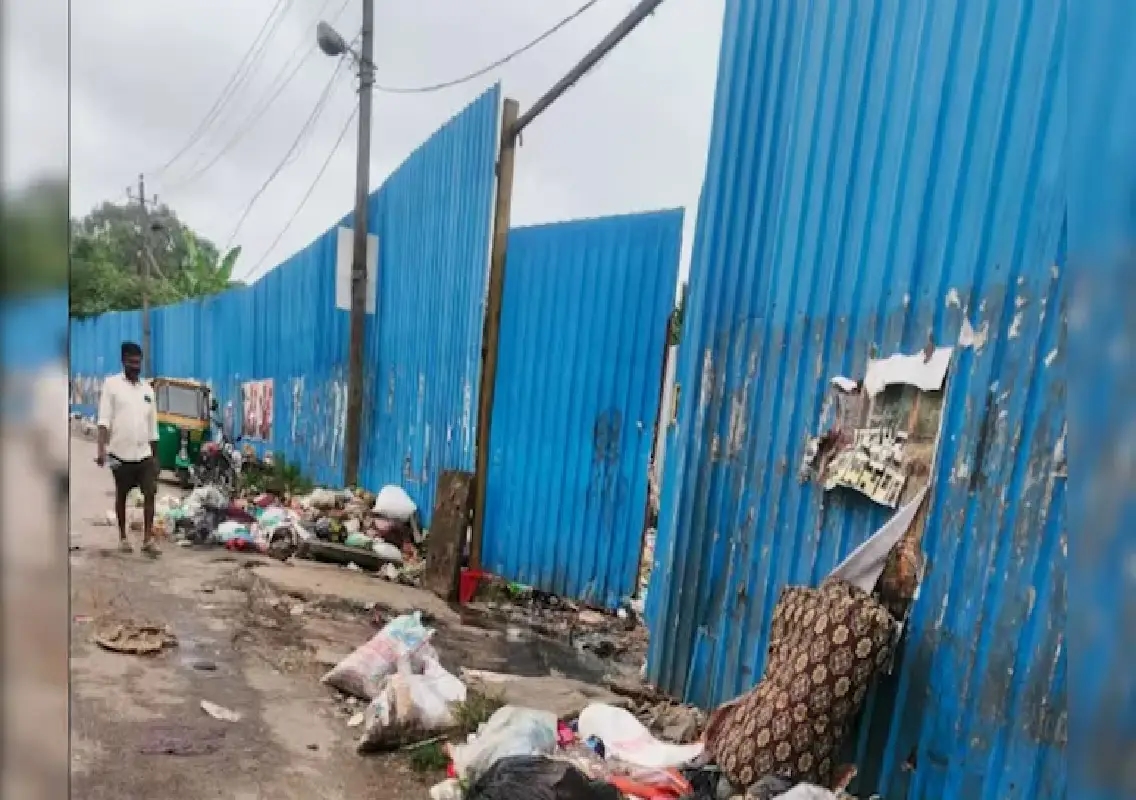


Bengaluru: The city is staring at a fresh garbage crisis as residents near key waste-processing plants and dumping sites intensify protests, blocking truck movement and disrupting disposal operations, bringing the waste management system to a near standstill.
Residents, supported by local political leaders, have stopped garbage trucks from entering major processing facilities, alleging that the plants are being burdened beyond their permitted capacity. The standoff has raised fears that uncollected waste could soon pile up on city streets if the impasse continues.
Protests at key processing centres
Resistance was first reported from Mittaganahalli and Bellahalli, where hundreds of garbage trucks have reportedly remained stranded since the previous day. With entry blocked, authorities attempted to divert vehicles to a waste-processing unit in Doddaballapur.
However, trucks sent towards the Doddamankala area in Doddaballapur also encountered stiff opposition from residents, who claimed that the MSGP waste-processing unit in the region was already operating under immense pressure.
Locals argued that additional truckloads would worsen environmental and health concerns in the area, including foul odour, groundwater contamination and increased vehicular congestion.
BJP MLA joins agitation
The protest in Doddaballapur gained political momentum when BJP MLA Dheeraj Muniraju joined residents in blocking garbage trucks.
Muniraju accused the government of diverting hundreds of additional vehicles to the MSGP plant without prior consultation. He claimed the facility already receives waste from the East and West corporations and a limited quantity from Mahadevpura.
“Due to a strike at another waste collection unit in Mahadevpura, trucks are being diverted here. We are struggling to manage the existing load and will not allow extra trucks beyond what was originally allotted,” he said.
The MLA, along with local residents, reportedly sent back several trucks and summoned Regional Transport Office (RTO) officials to inspect vehicles allegedly operating without valid fitness certificates.
Deputy CM issues stern warning
Reacting sharply to the protests, Deputy Chief Minister DK Shivakumar accused legislators of using the garbage issue as a pressure tactic.
“All MLAs are blackmailing us. They say work should not be done unless funds are released. They must behave with dignity; otherwise, I will act in my own style,” Shivakumar said.
He further stated that waste disposal was being carried out as per existing arrangements and questioned where the garbage should go if not to designated processing units. Referring to earlier protests by BJP leaders, he warned that the government could consider dumping garbage in front of the residences of protesting MLAs or party offices if disruptions continued.
His remarks have added a political edge to what began as a civic standoff over waste management capacity.
Structural concerns flagged by activists
Civic activist Vinay Sreenivasa said the crisis reflects deeper structural issues in Bengaluru’s waste management system.
“This garbage problem has been waiting to happen. It will not end until we reduce consumption at the ward level,” he said, pointing to the growing volume of daily waste generated in the city. He highlighted the surge in online food deliveries and increased consumerism as contributing factors.
Activists have long argued that decentralised waste processing, segregation at source and reduction in bulk waste generation are essential to prevent recurring crises.
City on edge
With trucks stranded at multiple locations and no immediate resolution in sight, Bengaluru appears to be on the brink of a full-blown sanitation crisis. If disposal operations remain paralysed for an extended period, residents across several wards could soon face overflowing bins and mounting public health risks.
Officials are expected to hold discussions with local representatives and community leaders to find a temporary arrangement, even as long-term solutions remain elusive.
The unfolding situation underscores the fragile balance between urban waste generation and processing capacity in a rapidly expanding metropolis. Without structural reforms and consensus among stakeholders, experts warn that such flashpoints are likely to recur.