







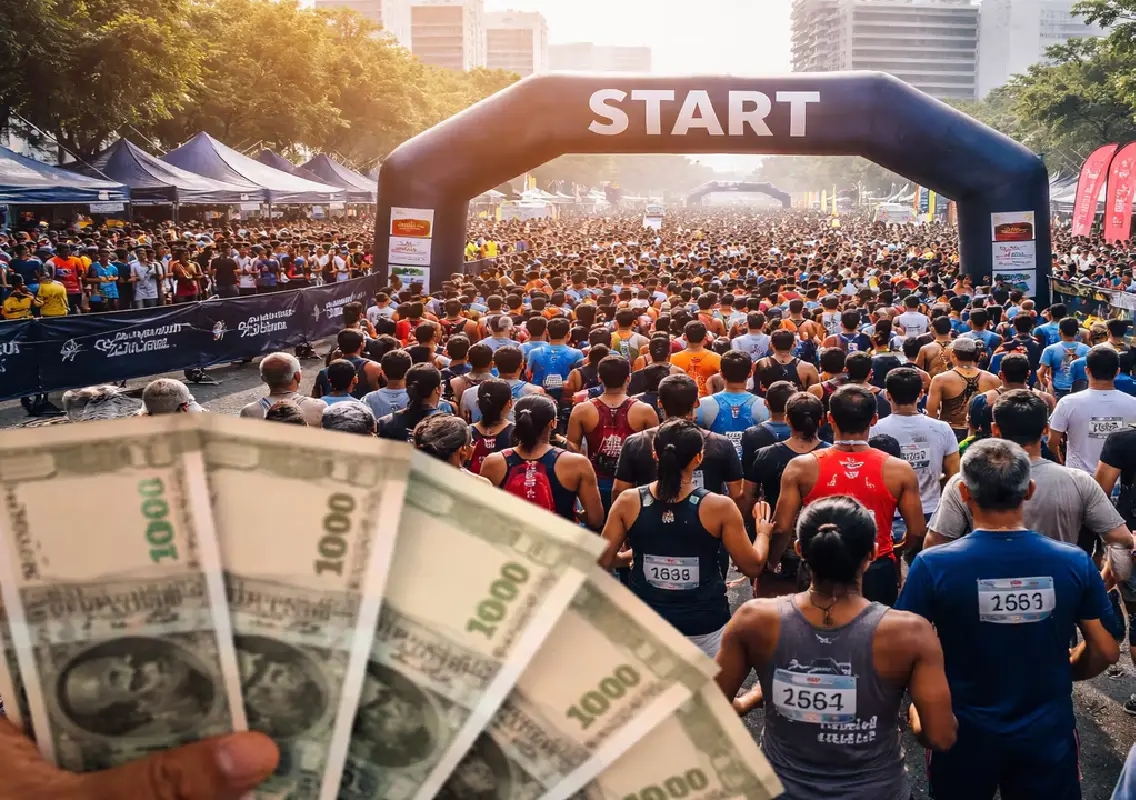


The rising popularity of marathons and fitness events in urban India, especially in Bengaluru, has sparked fresh online debate after a viral social media post questioned the high cost of participation and the economics behind such events.
The discussion began after an X post by Ankit Kedia highlighted the pricing of the recent HYROX event in Bengaluru. According to the user, nearly 9,000 participants registered for the event, with each allegedly paying around Rs 9,000 as an entry fee.
By that estimate, the total revenue from registrations alone would amount to nearly Rs 8.1 crore, leading many online users to debate whether fitness events are becoming overly commercialised.
Internet divided over value and pricing
The post quickly gained traction, with users expressing mixed reactions. Some criticised the steep fee structure, saying wellness activities should remain accessible to a wider public rather than becoming premium experiences.
Others defended the organisers, pointing out that global-standard events involve major costs including venue arrangements, logistics, staffing, branding, medical teams, security, timing systems, merchandise and participant kits.
Several users also noted that such events are voluntary, and participants choose to pay for the experience, networking and motivation associated with premium fitness competitions.
Bengaluru’s booming fitness culture
Bengaluru has emerged as one of India’s leading cities for marathons, cycling events, running clubs and structured fitness competitions. A growing young professional population and increasing health awareness have fuelled demand for such events.
Industry observers say premium fitness experiences are becoming part of lifestyle spending in urban centres, much like concerts, travel or sporting leagues.
Larger question on accessibility
The viral debate has also raised broader questions on whether organised wellness events should offer more affordable participation tiers to encourage inclusivity.
As India’s fitness economy grows rapidly, the balance between premium experiences and public accessibility is likely to remain a talking point.