







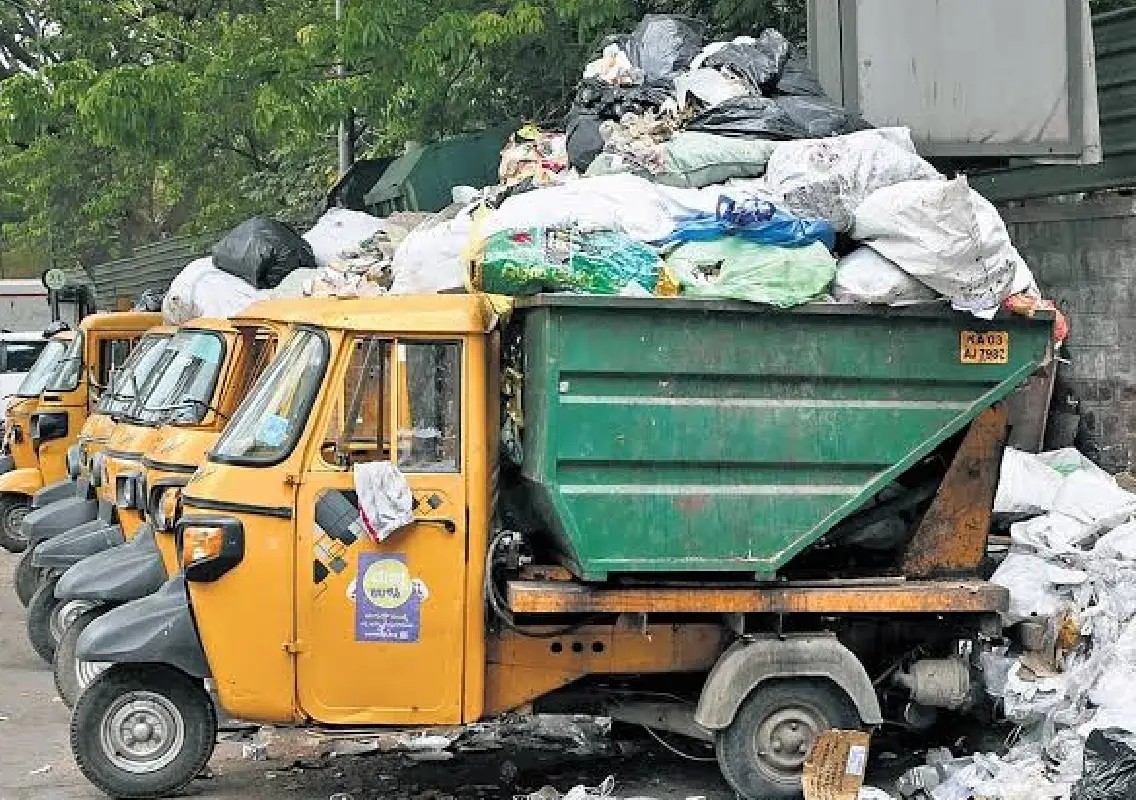


Bengaluru: Bengaluru’s door-to-door garbage collection system is facing a major accountability challenge, with none of the city’s 5,150 auto-tippers fitted with GPS tracking devices, according to Bengaluru Solid Waste Management Ltd (BSWML).
The agency said the absence of GPS monitoring has made it difficult to track garbage collection vehicles, contributing to frequent complaints of uncollected waste, irregular collection schedules and illegal dumping across the city.
Lack of tracking affects waste management
Bengaluru generates approximately 5,800 to 6,000 tonnes of solid waste every day, making an efficient collection and monitoring system essential.
Without GPS-enabled tracking, authorities are unable to verify whether collection vehicles are following their designated routes or completing daily waste collection schedules. This has also limited the city’s ability to respond effectively to complaints from residents.
Officials believe GPS integration would improve operational transparency, enable real-time monitoring of vehicle movement and help identify lapses in garbage collection services.
Illegal dumping remains a concern
The lack of monitoring has also been linked to instances of illegal waste dumping, as authorities cannot accurately track the movement or disposal locations of garbage collection vehicles.
Residents across several parts of Bengaluru have repeatedly complained about delayed waste collection, overflowing bins and waste being dumped in unauthorised locations, leading to sanitation and environmental concerns.
Plans to improve accountability
BSWML has indicated that introducing GPS tracking for the entire fleet would strengthen oversight of door-to-door waste collection and improve service delivery. Real-time monitoring would also help officials address complaints more quickly and ensure contractors adhere to assigned routes and schedules.
The move is expected to form part of broader efforts to modernise Bengaluru’s solid waste management system and improve cleanliness across the city.