









Bengaluru: From parks and libraries to community halls, farms and parents’ homes, a growing number of children in Bengaluru are learning beyond conventional classrooms through homeschooling networks that place flexibility, shared experiences and individual interests at the centre of education.
For these families, homeschooling is not necessarily an isolated experience involving only parents and children. Instead, community groups are creating opportunities for peer interaction, collaborative activities, workshops, field trips, treks and skill-building sessions. Parents are pooling resources and sharing their experiences, while children are finding friends and learning together outside the traditional school system.
The activities range from informal meet-ups and parent-led science clubs to webinars, mentoring sessions, market days and sports events. These initiatives are helping families create an alternative learning environment that combines independent study with social interaction.
Community becomes a support system
Supriya Narang, mother of 13-year-old homeschooler Sam and curator of the Bangalore Homeschooling and Unschooling Community, said the group has around 700 members on WhatsApp.
The community organises activities that allow children to explore practical skills and interact with others. Narang recently organised a market day where children could display and sell handmade products, giving them an opportunity to experience activities beyond textbook learning.
For 12-year-old Dhruv Dangarikar of Whitefield, a smaller local group of five to six children and their parents has become an important part of his homeschooling experience.
Dhruv said activities are planned jointly by children and parents rather than being dictated entirely by adults. This approach gives children a say in what they want to explore and allows learning to develop through shared interests.
His family opted for homeschooling during the Covid pandemic after finding that he responded well to learning through play, reading and everyday experiences.
His mother, Unmeshi, was then a homemaker and spent considerable time supporting his learning. She now runs a drug-testing laboratory and a cosmetics business, and Dhruv sometimes accompanies her to work.
The family does not follow a fixed curriculum. Instead, learning is organised around Dhruv’s interests, which include cricket, chess, board games, science, history and geopolitics.
Before the pandemic, community gatherings at Cubbon Park provided children with opportunities to meet, play and learn together. Such interactions have helped families recognise that homeschooling need not mean social isolation.
Learning at an individual pace
For Nisha Purushothaman, mother of two daughters aged 18 and 13, Bengaluru’s homeschooling community offers the kind of collective support often associated with the saying that it takes a village to raise a child.
Her elder daughter was homeschooled for two years after the Covid pandemic, while her younger daughter continues to follow the approach.
Purushothaman said the community has connected her children with tutors who offer lessons in a wide range of activities, including crocheting, painting, clay modelling, cooking, baking, singing, drumming and French.
She believes the network also benefits parents, who can interact with like-minded families and seek guidance on supporting their children’s education.
Homeschooling families follow different approaches to academic learning. While some refer to established curricula, many do not strictly adhere to the National Institute of Open Schooling (NIOS), Cambridge International General Certificate of Secondary Education (IGCSE) or state board syllabi.
Textbooks are often used as reference material for structured learning, while children are encouraged to read widely and explore subjects beyond prescribed lessons.
Unmeshi said textbooks provide a framework, but a significant part of Dhruv’s education comes from reading and exploring topics that interest him. Families planning for higher education can also consider recognised pathways such as IGCSE and NIOS, which provide options for further studies, including professional courses.
Practical experiences become lessons
For Purushothaman’s daughters, Ronika and Tashi, learning has often taken place through practical experiences rather than conventional classroom exercises.
During a visit to a farm, they learnt how dragon fruit is cultivated, packaged and marketed. Such visits introduce children to the processes behind everyday products and help them understand how different activities are connected.
Tashi said homeschooling gave her the freedom to study at her own pace. She chose commerce subjects, including statistics, accounting and business studies, and was able to pursue self-study without much difficulty.
She believes the approach has helped her develop research and analytical skills by allowing her to explore subjects independently.
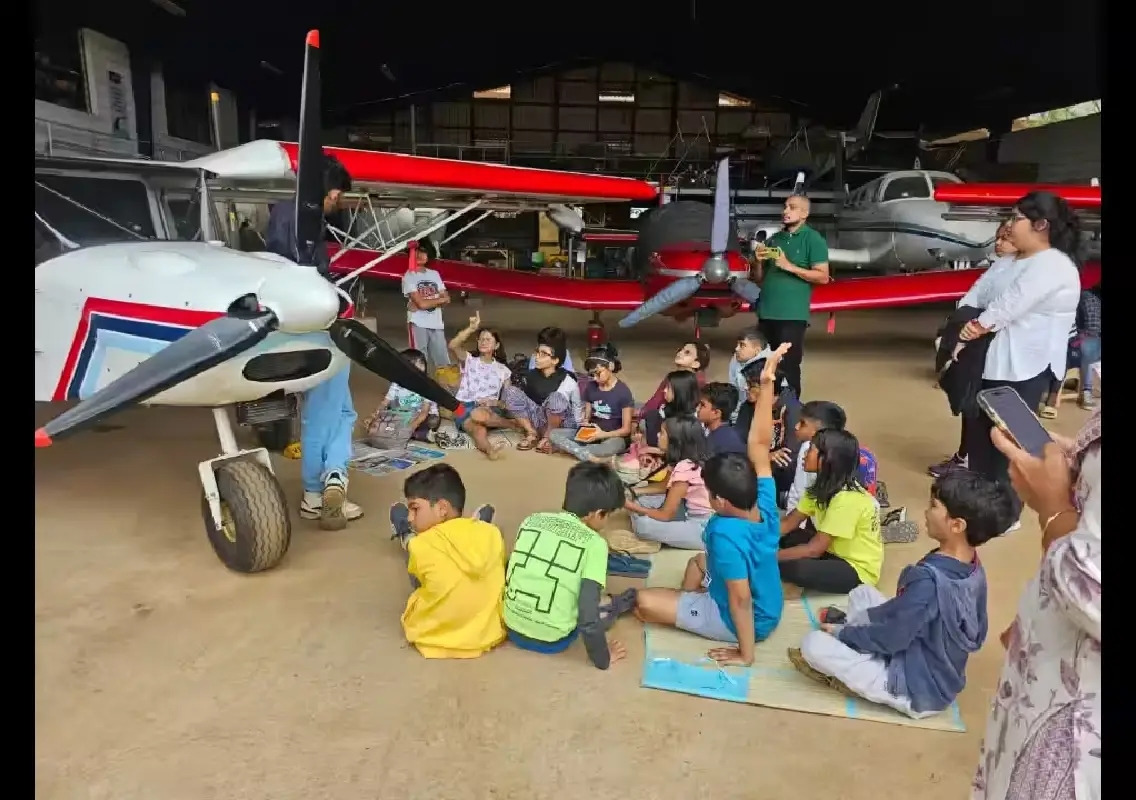
Other activities organised by homeschooling groups have also introduced children to areas such as aviation, food production and technology. An aviation workshop at Jakkur Aerodrome, for instance, gave participants an opportunity to learn about aircraft components, instruments, the cockpit, runway operations and pre-flight checks.
A noodle-making project at a hydroponics farm combined lessons in hydroponic cultivation, cooking and teamwork. These activities demonstrate how practical experiences can connect several subjects in a single learning exercise.
Encouraging children to follow their interests
For many parents, one of the main attractions of homeschooling is the freedom it provides children to discover and develop their interests.
Tejaswini, mother of an 11-year-old homeschooler and a member of several homeschooling groups in Bengaluru, said the process becomes more natural when parents are willing to unlearn established assumptions about education and remain open to new approaches.
She believes children are naturally curious and that the responsibility of adults is to recognise and nurture that curiosity.
Bengaluru fitness trainer Suma has homeschooled her nine-year-old son, Yuvaan, from the beginning. Rather than following a rigid plan, she encourages him to explore interests as they emerge.
Yuvaan enjoys Lego and Hot Wheels and has also been exploring dance and painting. He is learning about aeroplanes from an older homeschooled student.
Suma said interactions with experienced homeschooling parents have helped reassure families who are new to the approach. Being part of a community allows parents to exchange information, discuss challenges and discover activities that may benefit their children.
Markets, sports and shared projects
Community-led events are also providing children with opportunities to develop skills that are not always part of formal academic instruction.
Homeschool markets allow children to sell handmade products, introducing them to basic business concepts, communication and money management. Sports days help them understand teamwork, participation and competition.
Narang said the community has introduced children to activities such as carpentry and rocket-building. These experiences allow them to learn through experimentation and practical involvement.
She also supports Swashikshan, a nationwide homeschooling network that helps families connect and exchange resources. According to her, such networks make homeschooling more sustainable by offering parents access to ideas, guidance and reassurance.
For children, the benefits extend beyond academic flexibility. Group activities provide opportunities to build friendships, work together and learn from people with different interests and experiences.
A different approach to education
Bengaluru’s homeschooling networks reflect a growing interest among some families in education that is not restricted to fixed classroom schedules and prescribed syllabi. Their approach varies from family to family, depending on children’s interests, academic goals and the resources available to them.
For some, homeschooling is a way to give children more time for creative pursuits and independent study. For others, it is an opportunity to combine structured academic learning with practical experiences and community participation.
The support of other families appears to be an important factor in making the approach workable. Through shared activities, mentoring and access to tutors, children can interact with peers while exploring subjects at their own pace.
For parents such as Purushothaman, the experience has strengthened their conviction. She said that, given the choice, she would not have it any other way.
As these networks continue to organise workshops, field visits, markets and group activities, homeschooling in Bengaluru is increasingly taking shape as a collective effort rather than an individual family pursuit.