







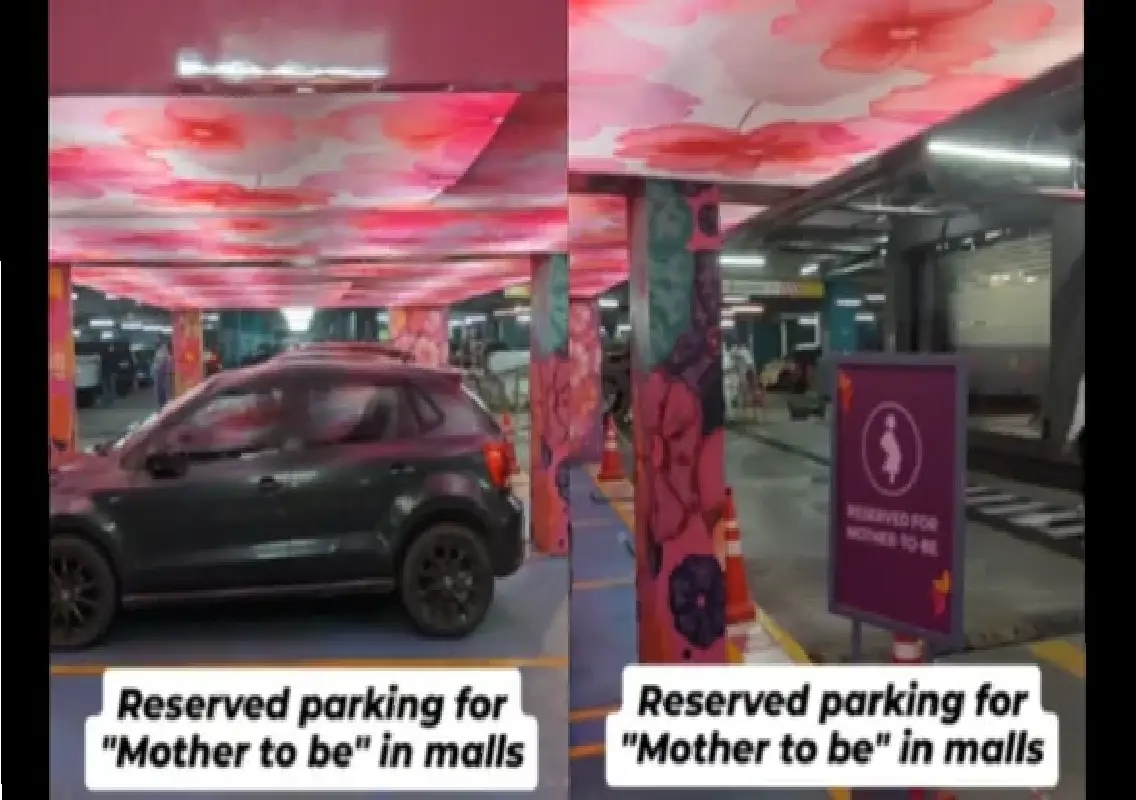


Bengaluru: A shopping mall in the city has drawn widespread public attention after a video showcased a dedicated parking space reserved exclusively for pregnant women, triggering praise as well as debate on social media. The initiative, spotted at a Nexus Mall outlet, has been described by many users as a thoughtful and practical step towards making public spaces more inclusive and less stressful for expecting mothers.
Viral video highlights thoughtful design
The now-viral video, recorded in the basement parking area of the mall, shows a pastel-pink parking bay clearly marked for “mothers to be”. The space is positioned close to the mall entrance and appears wider than regular parking slots, allowing easier movement and door access.
The visitor who shared the video on Instagram said that navigating large and crowded mall parking areas can be physically exhausting and mentally taxing for pregnant women. He praised the mall management for introducing the facility and urged other commercial establishments to adopt similar measures.
“Very nice concept and I loved it,” he said in the video, adding that small interventions like this can significantly reduce stress for women who require additional care during pregnancy.
Online appreciation pours in
The video quickly gained traction on social media, with many users applauding the initiative as long overdue. Several comments highlighted how pregnancy affects mobility and balance, making long walks from distant parking spots uncomfortable and sometimes risky.
One user explained, “As pregnancy progresses, a mother’s centre of gravity shifts, making it harder to balance and walk long distances. These spots are placed closer to the entrance to prevent physical strain and are usually wider so they can open the car door fully to get out comfortably. It’s just a small gesture to make a public space safer for both the mother and the baby.”
Others called the initiative a sign of growing sensitivity in urban infrastructure, especially in cities like Bengaluru where malls often attract large crowds and have expansive parking facilities.
Similar facilities in other cities
Several commenters from other parts of the country noted that such reserved parking spaces already exist in malls and commercial complexes in their cities. Users mentioned locations such as Vijayawada and a few other urban centres where parking spots for pregnant women or parents with infants have been introduced.
“Very helpful,” one user wrote, while another said the practice should be standardised across malls, airports and hospitals. Some users also suggested that such spaces should be clearly regulated to prevent misuse.
Criticism and scepticism emerge
Despite the largely positive response, the initiative also attracted criticism and sarcasm. A section of social media users questioned whether the parking space could be misused by others, similar to how spots reserved for senior citizens or persons with disabilities are often occupied illegally.
A few users mocked the idea or dismissed it as unnecessary, while others alleged that it was a marketing tactic aimed at appealing to a specific customer segment. Some questioned how security staff would verify eligibility and whether enforcement would be consistent.
However, supporters countered these arguments by pointing out that the possibility of misuse should not discourage inclusive design. They argued that the intent behind the initiative matters and that societal attitudes need to evolve alongside infrastructure.
Growing focus on inclusive urban spaces
Urban planners and accessibility advocates have increasingly stressed the importance of designing public spaces that cater to diverse needs, including those of pregnant women, senior citizens and persons with disabilities. Wider parking bays, proximity to entrances, seating areas and barrier-free access are often cited as simple yet effective measures.
In Bengaluru, where malls serve as major social and recreational hubs, such initiatives are being seen as part of a broader shift towards people-centric design. While there are no uniform regulations mandating parking spaces for pregnant women, some private establishments have begun adopting voluntary measures.
Conclusion
The dedicated parking space for pregnant women at a Bengaluru mall has sparked a wider conversation about inclusivity, empathy and responsible urban design. While opinions remain divided, the initiative has succeeded in drawing attention to the everyday challenges faced by expecting mothers in public spaces. As cities continue to grow and commercial spaces expand, such small but meaningful steps could play a crucial role in making urban life more accessible and humane.