







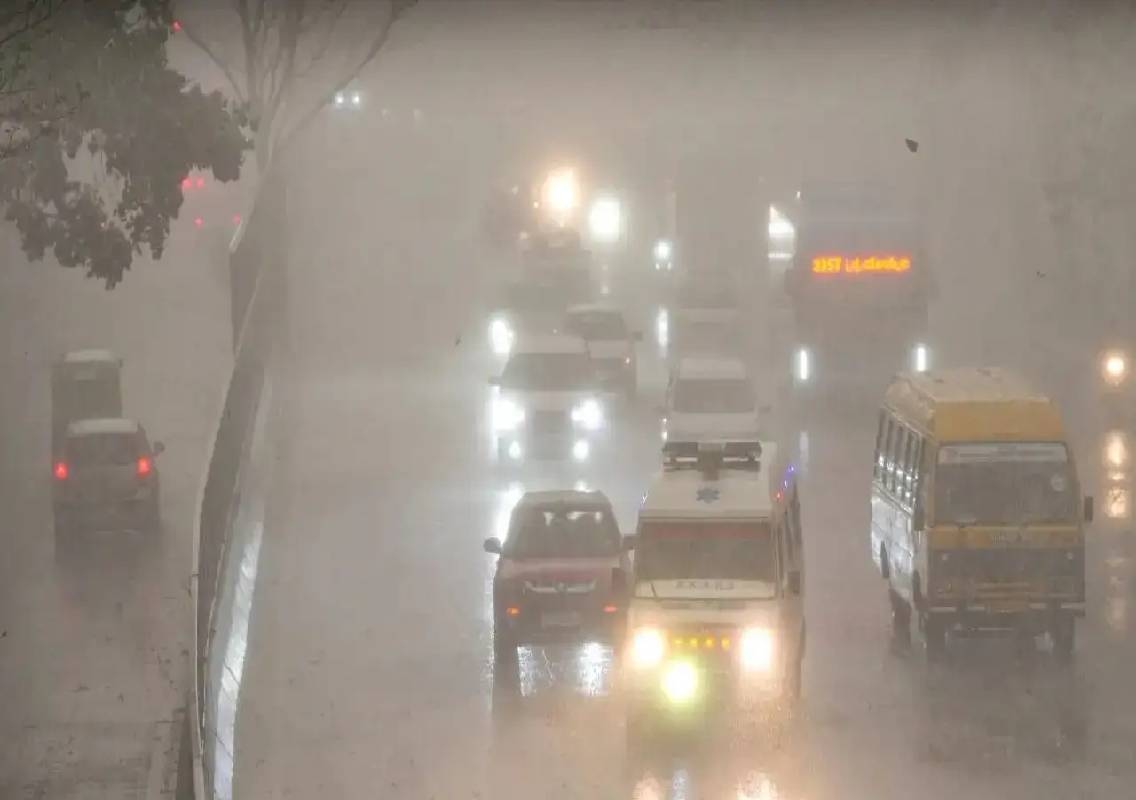


Bengaluru: A brief but intense spell of rain brought Karnataka’s capital to a standstill on Wednesday evening, leaving at least 10 people dead and causing widespread flooding, power outages, and severe infrastructure damage across the city.
The sudden storm, which lasted less than an hour, included heavy rainfall, hail, and gusty winds reaching up to 50 kmph. What was expected to offer relief from rising temperatures instead triggered chaos, with roads submerged, trees uprooted, and essential services disrupted.
The India Meteorological Department (IMD) has warned of more rainfall and strong winds over the next 48 hours, raising concerns about further disruption.
Fatalities reported across multiple incidents
The rain-related incidents claimed 10 lives in different parts of the city. The most severe tragedy occurred near Bowring and Lady Curzon Hospital in Shivajinagar, where a compound wall collapsed on roadside vendors who had taken shelter during the storm.
Seven people were killed in the incident, including a six-year-old girl, a tourist from Kerala, and a cloth trader. The sudden collapse highlighted the dangers posed by ageing infrastructure during extreme weather conditions.
In separate incidents, two individuals died due to electrocution in waterlogged areas, while another person lost their life after being struck by a metal sheet blown away by strong winds.
Karnataka Chief Minister Siddaramaiah visited the affected areas and acknowledged the scale of the disaster.
City infrastructure severely hit
The storm caused extensive damage to Bengaluru’s infrastructure, exposing vulnerabilities in the city’s urban planning and drainage systems.
Central parts of the city recorded up to 77 mm of rainfall within a short span, leading to severe flooding in major areas such as MG Road, Indiranagar, Koramangala, Silk Board, Banashankari, and BTM Layout.
Roads turned into streams, with water levels rising up to three feet in several locations, severely disrupting traffic and daily life. Commuters were stranded for hours as vehicles struggled to navigate flooded streets.
Power outages and civic breakdown
The impact on the city’s power infrastructure was significant. Bangalore Electricity Supply Company (BESCOM) reported receiving nearly 25,000 distress calls between 4 pm and 8.30 pm, of which around 18,000 went unanswered due to the overwhelming volume.
More than 50 electric poles were uprooted, and at least 17 transformers were damaged, plunging large parts of the city into darkness.
Emergency crews worked through the night to restore power, but several areas continued to face outages.
Flooding affects public spaces and transport
The heavy downpour also impacted key public infrastructure and transport systems. Metro station premises at Silk Board and Jayadeva Hospital were flooded, disrupting commuter movement.
Under-construction stretches along Bannerghatta Road were particularly affected, with open manholes and dug-up roads worsening the situation and posing safety risks to the public.
Authorities have deployed emergency teams to clear debris, pump out water, and restore normalcy, but the scale of the damage has made recovery challenging.
Cultural loss as bookstore hit
Apart from infrastructure damage, the storm also caused cultural and economic loss. A well-known Church Street bookstore, The Bookworm, reported that between 4,000 and 5,000 books were damaged due to flooding.
The store’s owner, Krishna Gowda, popularly known as the “Bookman of Bengaluru”, said the financial impact is yet to be fully assessed.
Questions over preparedness
The incident has once again raised concerns about Bengaluru’s preparedness to handle extreme weather events. Despite repeated flooding incidents in recent years, experts have pointed to inadequate drainage systems, encroachments, and poor urban planning as key issues.
Civic authorities are under increasing pressure to implement long-term solutions to prevent such disasters, especially as climate variability leads to more intense and unpredictable rainfall patterns.
Conclusion
The 40-minute downpour has left a lasting impact on Bengaluru, exposing critical gaps in infrastructure and emergency response systems. With more rain forecast in the coming days, authorities face an urgent challenge to mitigate further damage and ensure public safety. The incident serves as a stark reminder of the need for improved urban resilience in one of India’s fastest-growing cities.