







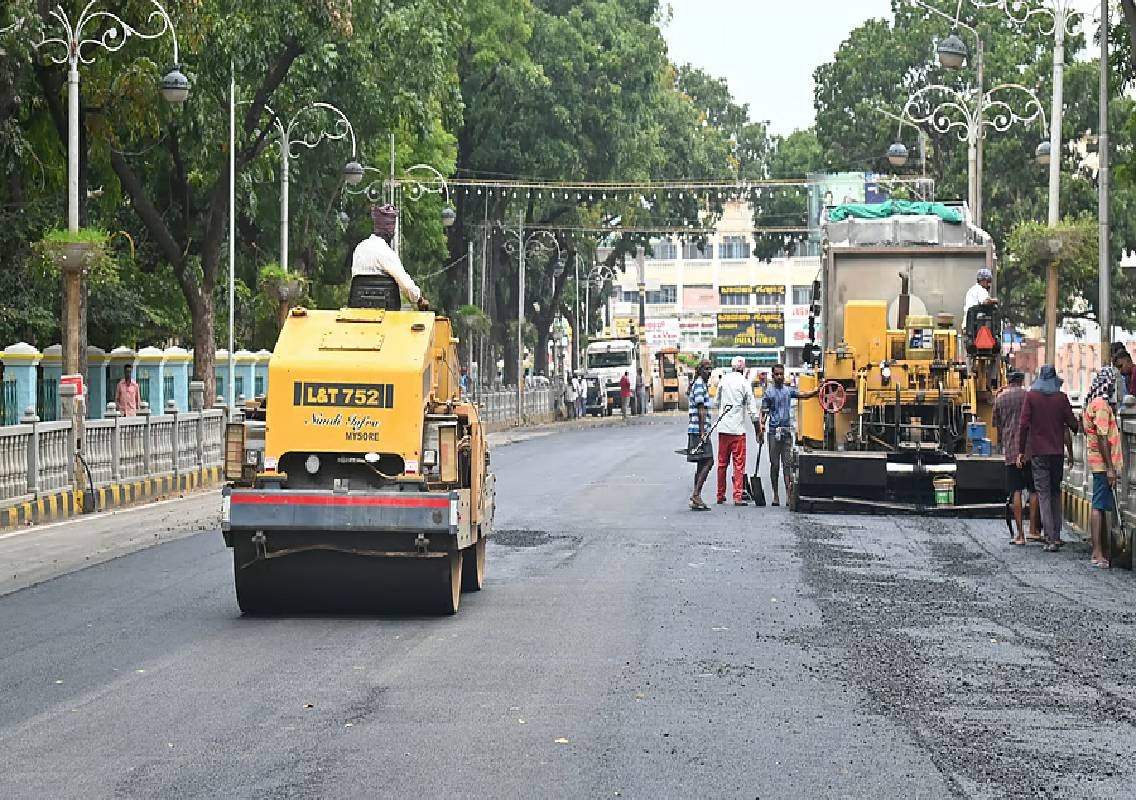


Bengaluru: Several road and infrastructure projects in Bengaluru are facing delays as a shortage of construction materials has disrupted supplies following Tamil Nadu’s ban on transporting rough stone and aggregates to other states. The situation has been further complicated by a shutdown of stone quarries, crushers and M-Sand units across Karnataka over a dispute involving royalty collection.
Tamil Nadu imposed a three-month ban in July on the interstate transportation of rough stone and construction aggregates, including M-Sand, metal jelly and crushed stone. Karnataka is among the neighbouring states that rely on supplies from Tamil Nadu, making the restriction a concern for construction activity in Bengaluru.
The supply disruption comes at a time when Bengaluru is already dealing with rising construction costs and delays affecting civic infrastructure works.
Tamil Nadu ban disrupts material supplies
The Tamil Nadu government introduced the transport restriction in July 2026, citing rising domestic demand for construction material and concerns over excessive mining and transportation.
The ban covers several categories of material used extensively in road construction, including rough stone, crushed stone, M-Sand, metal jelly, ballast and road construction stone. The order also directed authorities in border districts to strictly monitor the movement of minerals to other states.
According to the Tamil Nadu government, local demand for construction materials has increased because of infrastructure, housing and industrial development. The government said large-scale movement of aggregates to neighbouring states had contributed to a supply-demand imbalance within Tamil Nadu.
The order also cited concerns about heavily loaded trucks damaging roads leading to interstate border check-posts, creating traffic bottlenecks and contributing to road accidents.
For Bengaluru, however, the restriction has created another challenge because construction projects in and around the city depend on a steady supply of aggregates.
Road projects face shortage of key materials
M-Sand, crushed stone and jelly are essential materials for several types of road and civic works, including road laying, repairs, drainage works and concrete construction.
Earlier reports had already highlighted material shortages and rising input costs affecting Bengaluru’s civic projects. A report in August said nearly Rs 1,000 crore worth of road and infrastructure works across five civic corporations had been affected by rising construction costs and material shortages.
Contractors had reported difficulties executing projects at rates fixed when tenders were originally awarded. The increase in prices of bitumen, cement, steel, crushed stone and M-Sand had added to the financial pressure on contractors.
The shortage has also pushed up the cost of construction aggregates. Reports in August said M-Sand prices that had earlier been around Rs 250–300 per tonne were being quoted at roughly Rs 450–800, while prices of other grades of sand and jelly had also increased.
Karnataka quarry shutdown adds to pressure
The supply situation has become more complicated with the statewide shutdown announced by quarry and crusher operators in Karnataka.
Stone quarries, jelly stone crushers and M-Sand units began shutting operations in September following protests over what operators describe as double royalty collection. The Union of Karnataka Quarry and Stone Crusher Owners’ Associations has demanded an end to the practice and sought clarification from the state government.
The association said royalty was being collected at two stages for the same mineral product. It announced that supplies of jelly and M-Sand would be stopped during the agitation.
The operators also indicated that they could prevent mineral resources from outside Karnataka from entering the state through check-posts, potentially adding another layer of disruption to an already strained supply chain.
Contractors caught between rising costs and delays
For road contractors, the combination of higher material prices and reduced availability creates difficulties beyond simply procuring supplies.
Road projects are generally executed according to tender rates and schedules. When the cost of essential materials increases significantly after a contract is awarded, contractors may face higher expenditure while still being required to complete work under existing contractual conditions.
The Greater Bengaluru Civic Contractors’ Association had previously sought revision of contract rates, arguing that contractors could not absorb the additional costs. The Greater Bengaluru Authority had also ordered a temporary ‘star rate’ for asphalting works, although contractors sought greater clarity over its implementation and its applicability to projects already tendered.
A prolonged shortage could therefore affect both the pace and cost of road works across Bengaluru.
Impact could extend to civic and private construction
The disruption is not limited to government road projects. Aggregates such as M-Sand, jelly and crushed stone are also widely used in residential, commercial and infrastructure construction.
Tamil Nadu’s July order was aimed at ensuring adequate material availability within the state, but the restriction has had implications for neighbouring markets dependent on interstate supplies. The state government itself noted that rough stone is available in neighbouring states such as Karnataka, Kerala and Andhra Pradesh.
In Karnataka, however, the ongoing issues affecting local quarry and crusher operations could make it difficult to immediately compensate for the reduction in supplies from Tamil Nadu.
The situation also comes as Bengaluru continues to undertake large-scale road and drainage improvements. Delays in procuring basic construction materials could consequently affect project schedules if alternative supply sources are not secured.
Supply situation remains a concern for Bengaluru
The current disruption highlights Bengaluru’s dependence on a wider regional supply chain for construction materials. Tamil Nadu’s restrictions have reduced one source of aggregates, while Karnataka’s own quarry and crusher shutdown has placed additional pressure on local availability.
The Tamil Nadu ban was announced for three months, while Karnataka’s quarry and crusher operators have said their agitation will continue until their concerns over royalty collection are addressed.
For Bengaluru, the immediate concern is whether sufficient quantities of M-Sand, jelly and other aggregates can reach construction sites at stable prices. If supply constraints persist, road repairs, asphalting and other infrastructure works could face further delays and cost pressures.