







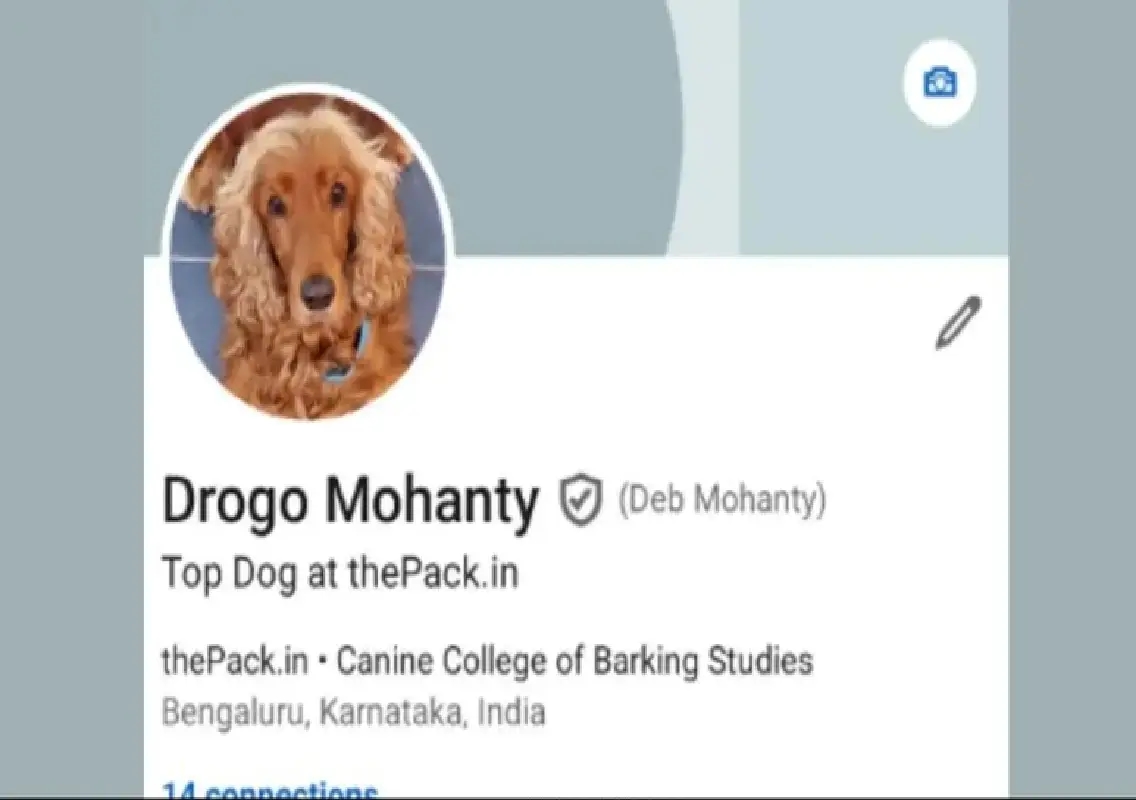


Bengaluru: Bengaluru A startup founder’s attempt to showcase his office dog as a “professional” on LinkedIn has gone viral and triggered a lively online conversation about pet-friendly workplaces, digital branding and platform moderation. The founder, Mohanty, claimed that his dog Drogo’s profile activity may have been “shadow-banned” by LinkedIn, joking that the platform may not yet be ready for “professional dogs”.
The light-hearted remark has drawn widespread attention across social media platforms, especially among pet parents, startup founders and workplace culture advocates. The episode has also brought renewed focus on thePack.in, a Bengaluru-based pet services platform founded by Mohanty, which aims to support dog owners with expert guidance and verified services.
“Not ready for professional dogs,” says founder
According to Mohanty, Drogo — who is closely associated with the company’s branding and culture — had recently begun gaining traction online through professional-style posts and interactions. Shortly after, he noticed a sharp drop in visibility and engagement and suggested that the account may have been shadow-banned.
“They are probably not yet ready to have professional dogs on their platform,” he said in a humorous remark, which was widely shared and quoted online.
While there has been no official confirmation from LinkedIn regarding any restriction, the comment resonated with users who often joke about algorithmic moderation and unexplained drops in reach on social platforms.
Drogo, meanwhile, has become something of a mascot figure — representing both the brand and a broader shift toward more relaxed and pet-inclusive startup environments.
Drogo inspired creation of thePack.in
Mohanty said Drogo played a central role in inspiring the launch of thePack.in, a pet-focused platform started in 2020. The venture was created during a period when pet adoption surged, but access to reliable pet care knowledge and verified experts remained limited.
“Our goal is to educate people who have dogs and ensure they raise them better. We started thePack in 2020 at a time when so many people were getting dogs, but had no access to dog trainers, behaviourists, vets and nutritionists and hence struggled during their initial days,” he said.
The platform connects pet parents with professionals and resources across training, behaviour, nutrition and healthcare, aiming to reduce early-stage confusion and mistakes in pet parenting.
Large WhatsApp pet parent community built
The founder said that since its launch, thePack.in has built what he describes as India’s largest pet parent community on WhatsApp, with more than 15,000 members.
According to him, the community handles a high daily volume of support queries and peer discussions.
“We help at least 2,000 to 5,000 pet parents every day get answers to their pet parenting issues, find the right experts and discover the best products for their dogs,” he said.
The groups function as moderated communities where pet owners can ask questions, share experiences and receive guidance from both experts and experienced owners. Topics range from puppy training and diet plans to medical concerns and behavioural challenges.
Rise of pet-friendly workplace culture
The viral attention around Drogo also highlights a growing trend — pet-friendly offices and animal-inclusive workplace culture, especially within startups and technology firms.
Many young companies now allow employees to bring pets to work, citing benefits such as:
- Reduced employee stress
- Improved workplace morale
- Better team bonding
- More relaxed office atmosphere
Supporters say the presence of pets can positively influence mental wellbeing and create a more human-centred work environment. Critics, however, note that such policies require clear guidelines around hygiene, allergies, safety and consent of all employees.
Similar cases gaining attention
Drogo is not the only office dog to gain public attention. Recently, a startup in Hyderabad made headlines after appointing a golden retriever named Denver as its “Chief Happiness Officer (CHO)”, a symbolic role aimed at promoting employee wellbeing and positive culture.
Such stories often gain traction online because they blend humour, workplace culture and animal affection — three elements that tend to resonate strongly with digital audiences.
Conclusion
What began as a playful experiment in giving an office dog a professional online persona has turned into a broader conversation about pets in workplaces, digital identity and startup culture. Whether or not any actual platform restriction occurred, Drogo’s story has succeeded in drawing attention to responsible pet parenting and the services built around it.
For the founder, the episode has ultimately served as unexpected publicity — both for Drogo and for the pet support ecosystem his company is trying to build.