







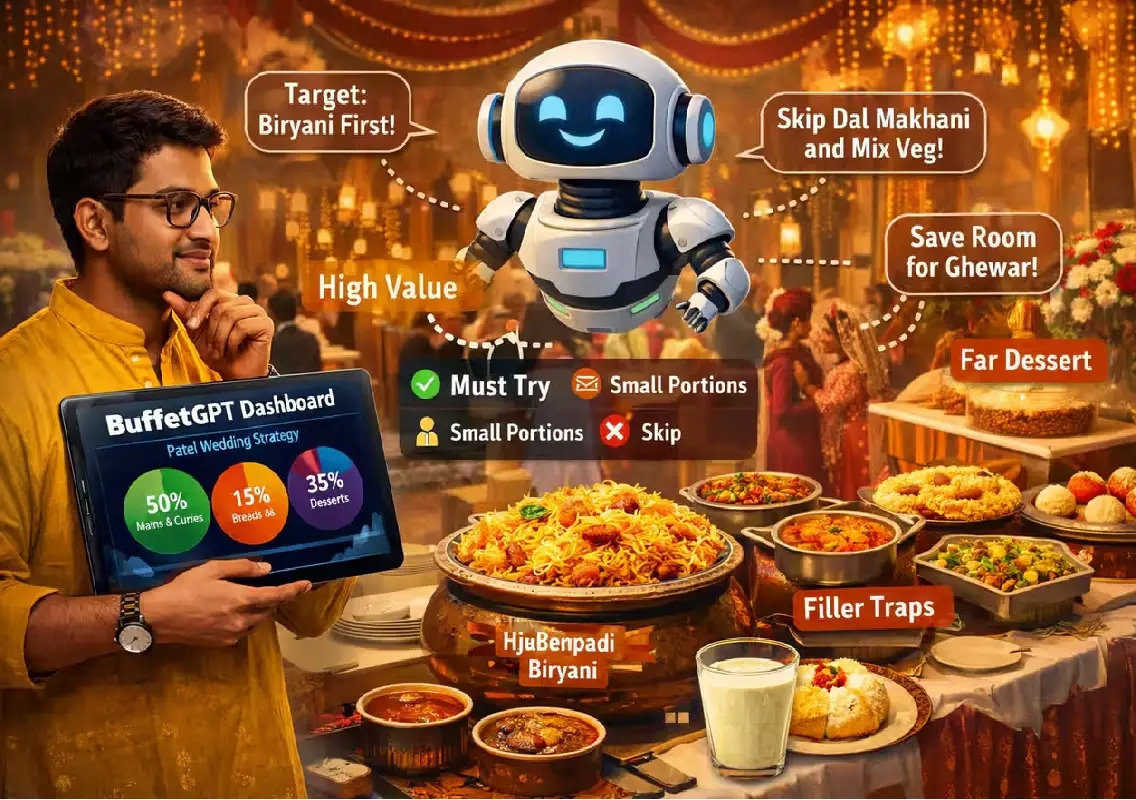


A 27-year-old tech professional from Panathur has turned a common Indian wedding dilemma into an AI-powered solution. His tool, called BuffetGPT, scans buffet spreads and creates a personalised “game plan” for diners.
Pankaj Tanwar shared the idea on X last week, where the post quickly went viral, garnering 1.8 million views and nearly 6,900 likes. “It came purely out of frustration,” Tanwar said, recalling how guests at weddings often overload their plates early and miss out on better dishes later.
Built in a day, tested at a wedding
Tanwar developed the prototype in a single day after attending a friend’s haldi ceremony and tested it at the reception the next day. Following the AI’s recommendations, he sampled around 13–14 dishes.
“There was a funny moment when it suggested I skip the raita because it might fill me up — but since there was biryani, that didn’t quite work,” he laughed.
How BuffetGPT works
The tool uses computer vision and pre-trained AI models to identify dishes from photographs uploaded by users. Tanwar primarily uses the YOLO v8 vision model for object detection.
Users can input details such as weight, daily calorie intake and food preferences. The system then ranks dishes, recommends portion sizes and suggests an optimal order of consumption.
He admitted that “large language model hallucination” can occur when the tool struggles to identify unfamiliar regional dishes.
What’s next?
Currently in its alpha stage, BuffetGPT is expected to open for public trials next week. Online feedback has encouraged Tanwar to add calorie and macro tracking features, and possibly expand the concept to restaurant buffets and food festivals.
While some social media users questioned the need for such a tool, Tanwar sees it as a fun, practical application of AI in everyday life.