







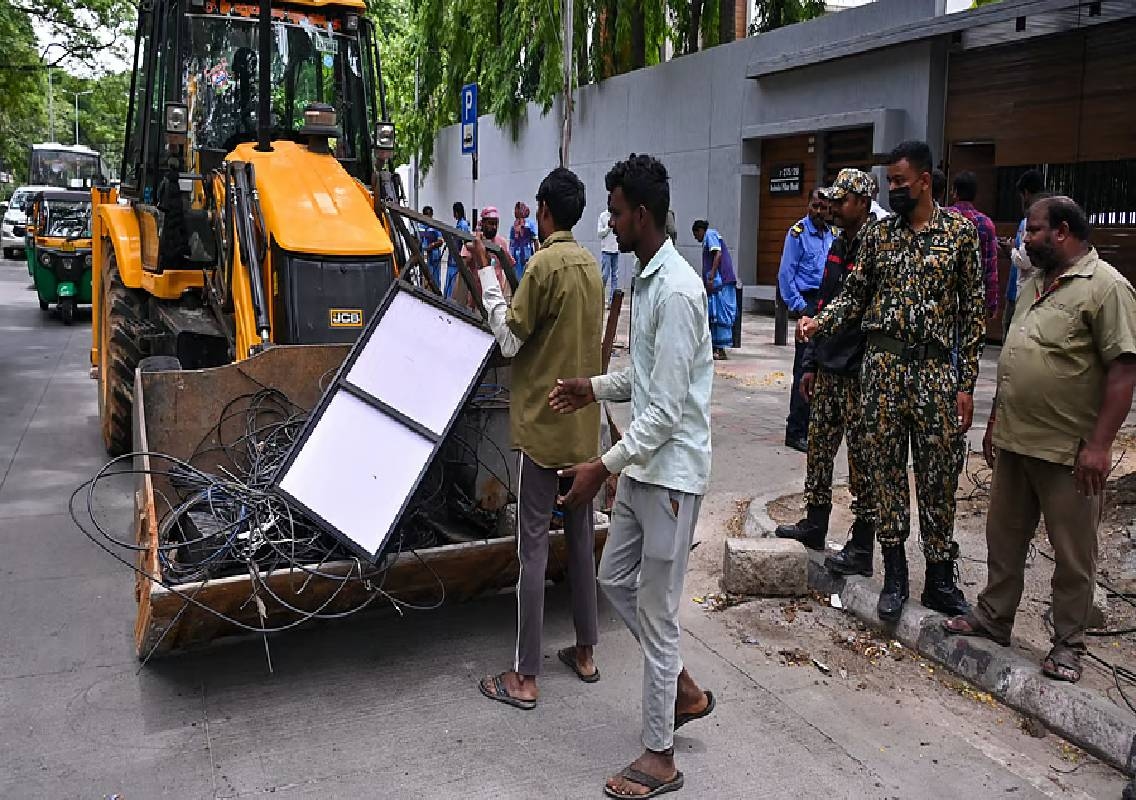


Bengaluru: Street vendors and pourakarmikas, or sanitation workers, gathered in Bengaluru to raise concerns over alleged evictions, contract employment and working conditions, demanding greater protection for informal workers and action on their long-pending grievances.
The protest and open-letter campaign brought together representatives of street vendors and sanitation workers, who submitted a set of demands to Chief Minister D.K. Shivakumar and Bengaluru Development Minister Krishna Byre Gowda. The workers also sought an apology from the minister over remarks that they said were insulting to contract pourakarmikas.
The developments come amid continuing discussions over the rights of street vendors and the working conditions of sanitation workers in Bengaluru.
Workers raise six key demands
According to the open letter submitted by the workers, six major demands were raised.
These include a public apology from Minister Krishna Byre Gowda to pourakarmikas, immediate regularisation of contract sanitation workers and guaranteed fair and dignified working conditions.
The workers also demanded the reinstatement of street vendors who had been evicted from their original vending locations. They called for a zero-eviction policy for street vendors across Karnataka and sought a comprehensive survey to identify and document street vendors operating across the State.
Activists supporting the workers said street vendors and sanitation workers play an important role in the functioning of Bengaluru and should be included in policy decisions concerning their livelihoods.
Pourakarmikas seek regularisation
One of the central issues raised by sanitation workers is the demand for regularisation of those employed through contracts.
According to the workers’ account, some contract pourakarmikas had approached Minister Krishna Byre Gowda seeking regularisation. The minister reportedly referred to attendance levels of around 70% in some wards while responding to concerns about workers’ performance.
The workers have disputed the interpretation of the attendance figures, arguing that shortcomings in attendance should be examined in the context of broader systemic issues rather than being attributed entirely to individual workers.
The demand for regularisation is linked to concerns over job security, wages, working conditions and access to statutory benefits.
Rules provide for welfare and safety measures
Bengaluru’s solid-waste management bye-laws already contain provisions concerning the welfare and occupational safety of pourakarmikas.
The BBMP Solid Waste Management Bye-laws, 2019 state that the civic body should ensure compliance with labour and welfare regulations relating to wages, working hours, holidays and statutory benefits such as provident fund, employee state insurance and maternity benefits. The bye-laws also provide for regular medical check-ups for pourakarmikas and other eligible waste workers.
The regulations also provide for protective equipment, including uniforms, protective footwear, reflective jackets, raincoats, gloves and masks.
The bye-laws further state that salaries of street sweepers or pourakarmikas covered by the provisions should be paid directly by BBMP. In cases of injury or death during service, provisions for monetary compensation are also included.
These provisions form an important backdrop to the workers’ demands for better working conditions and employment security.
Street vendors seek protection from evictions
Street vendors participating in the campaign also raised concerns about eviction from their traditional vending locations.
The workers’ representatives have demanded that vendors removed from their original vending sites be reinstated. They have also called for a statewide zero-eviction policy and a comprehensive survey of street vendors.
A survey could help civic authorities identify vendors, their locations and their requirements while also providing a basis for implementing applicable street-vending regulations.
The issue is significant for Bengaluru because street vending provides livelihoods for a large number of people while also contributing to the availability of low-cost goods and services in neighbourhoods.
Activists question treatment of workers
Activists associated with the campaign have criticised what they describe as inadequate recognition of the contribution of sanitation workers and street vendors.
Activist Vinay Sreenivasa, cited in the report, questioned whether government policies adequately reflect the interests of workers who clean and service the city and those who depend on street vending for their livelihoods.
The activists have also argued that discussions about the functioning of the city should include workers whose daily activities are directly connected to sanitation, waste management and neighbourhood commerce.
Civic rules recognise pourakarmika welfare
The existing waste-management framework also recognises the need to protect sanitation workers from occupational risks.
Apart from medical examinations and protective equipment, the relevant bye-laws cover statutory benefits and other welfare measures. The provisions are intended to address the health and safety risks associated with waste collection and street sweeping.
The Karnataka Municipalities Solid Waste Management Model Bye-laws, 2019 similarly provide for compliance with labour and welfare regulations, regular medical check-ups and protective equipment for pourakarmikas and other eligible waste-management workers.
Bengaluru’s civic plans also include vendor welfare
The welfare of street vendors and pourakarmikas is also reflected in some recent civic planning initiatives.
The Bengaluru East City Corporation’s 2026–27 budget document includes proposals aimed at economically empowering street vendors, including distribution of e-vending vehicles and development programmes. It also includes measures aimed at supporting pourakarmikas and their families.
The presence of such programmes alongside the current demands highlights the gap between policy provisions and the concerns being raised by workers on the ground.
Workers seek concrete action
The latest protest has brought together two groups whose livelihoods are closely linked to Bengaluru’s urban economy: street vendors who operate in public spaces and sanitation workers responsible for essential civic services.
Their demands centre on employment security, dignity at work, protection from eviction and clearer implementation of welfare provisions.
The workers are now seeking action from the State Government and civic authorities on their demands, including regularisation of contract pourakarmikas, protection of street vendors and a comprehensive survey of vendors across Karnataka.
The response from the authorities and any further discussions with worker representatives are expected to determine the next steps in addressing the concerns raised by the protesting groups.