







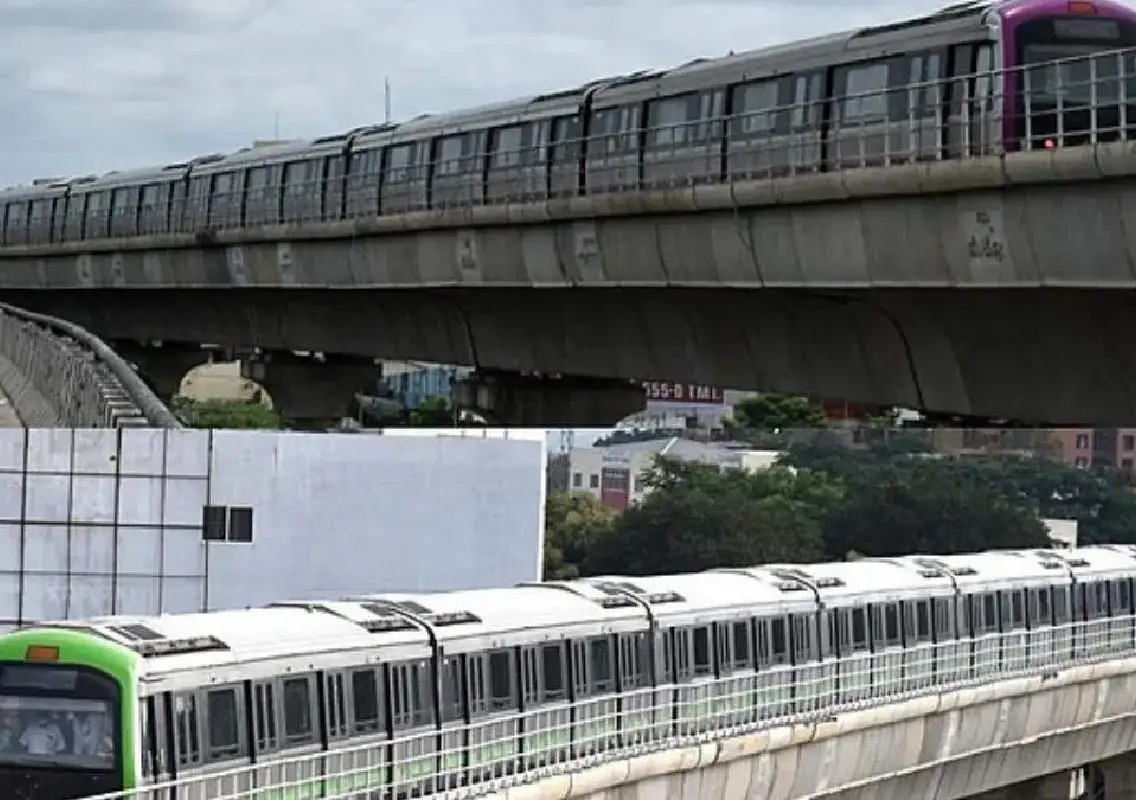


Bengaluru‘s ambitious plan to build a double-decker Metro corridor has received a significant boost, with a fresh assessment finding the project economically viable despite a massive increase in costs.
Double-decker design clears crucial test
The 44.65-km Namma Metro Phase 3 project had been stuck after the Centre raised concerns over the addition of a double-decker structure, which combines a Metro line and flyover along the same corridor. The design was introduced later at an additional cost of nearly ₹9,700 crore to tackle future traffic congestion and reduce the need for road widening.
However, a draft report prepared by RITES Ltd has now concluded that the project’s Economic Internal Rate of Return (EIRR) stands at 15.9 per cent, comfortably above the 14 per cent benchmark required for metro projects.
Why the Centre raised questions
The Ministry of Housing and Urban Affairs had questioned whether constructing a flyover alongside the Metro could reduce passenger numbers and affect the project’s overall social and economic benefits.
The latest findings, however, indicate that the project remains beneficial even with the expensive double-decker component. Officials believe the report could pave the way for long-awaited central approval.
A game-changing project for Bengaluru
Phase 3 will feature two corridors connecting JP Nagar 4th Phase to Kempapura via the Outer Ring Road and Hosahalli to Kadabagere along Magadi Road.
The project is expected to significantly improve connectivity across key growth corridors while addressing one of Bengaluru’s biggest challenges—traffic congestion.
Meanwhile, Chief Minister D. K. Shivakumar has urged the Centre to fast-track approvals for Metro expansion projects, including Phase 3A and new regional rapid transit corridors linking Bengaluru with neighbouring cities.