







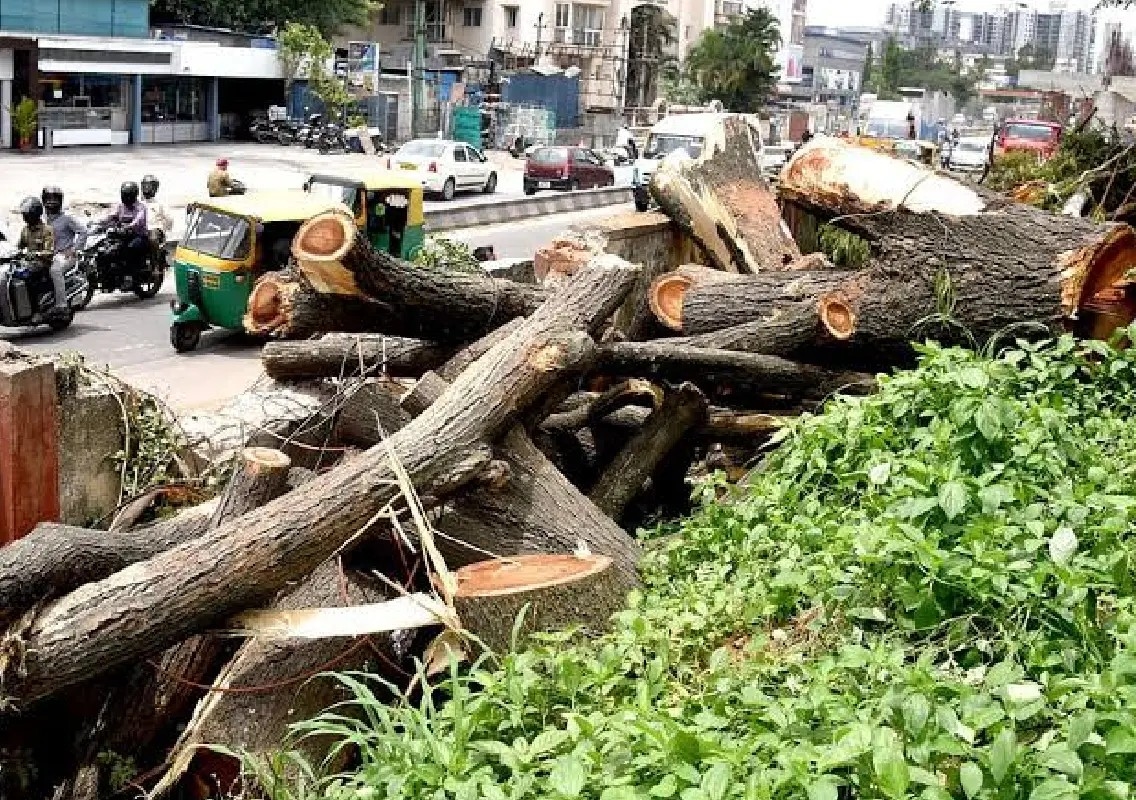


Bengaluru: Bengaluru’s shrinking green cover has once again come under scrutiny as environmental experts and citizen groups call for urgent reforms to the Karnataka Tree Preservation Act, 1976, warning that the city’s existing legal framework has failed to protect thousands of trees from rapid urban development.
The renewed debate comes amid concerns over a proposed elevated corridor by Bengaluru Smart Infrastructure Limited (B-SMILE) in Indiranagar, which has triggered widespread opposition over its potential environmental impact.
Elevated corridor sparks fresh concerns
According to official estimates, the proposed project connecting Old Madras Road and Hosur Road would require the felling of 89 trees and trimming of another 70. However, a citizen-led survey has claimed that more than 749 trees along the alignment could be affected, with activists arguing that the ecological cost far outweighs the expected traffic benefits.
Several citizen groups have also questioned the project’s detailed report, claiming it contains inconsistencies and noting that the corridor does not feature in Bengaluru’s Comprehensive Mobility Plan 2020.
Experts seek stronger tree protection
Environmental experts say Bengaluru’s trees play a vital role in reducing urban heat, improving air quality, managing stormwater and capturing carbon emissions. They argue that the Karnataka Tree Preservation Act has remained largely ineffective due to the absence of functioning tree authorities across municipal bodies.
Experts have proposed decentralising the law by creating ward-level tree authorities with active participation from resident groups. They believe citizen-led tree audits and community involvement could strengthen enforcement and improve accountability.
Tree inequality across the city
Studies have highlighted a significant imbalance in Bengaluru’s tree distribution. While the ideal ratio is estimated at seven trees per person, the city currently has only one tree for every seven residents. The disparity is even greater across wards, with densely populated localities such as Shivajinagar, Chickpete and Padarayanapura having far fewer trees than greener neighbourhoods like Bellandur, Jakkur and Varthur.
Environmentalists say future urban planning should prioritise equitable tree cover and legally enforce minimum green standards to safeguard Bengaluru’s ecological future. #Bengaluru #Environment #Trees #UrbanDevelopment #Climate #Karnataka #NewsKarnataka