







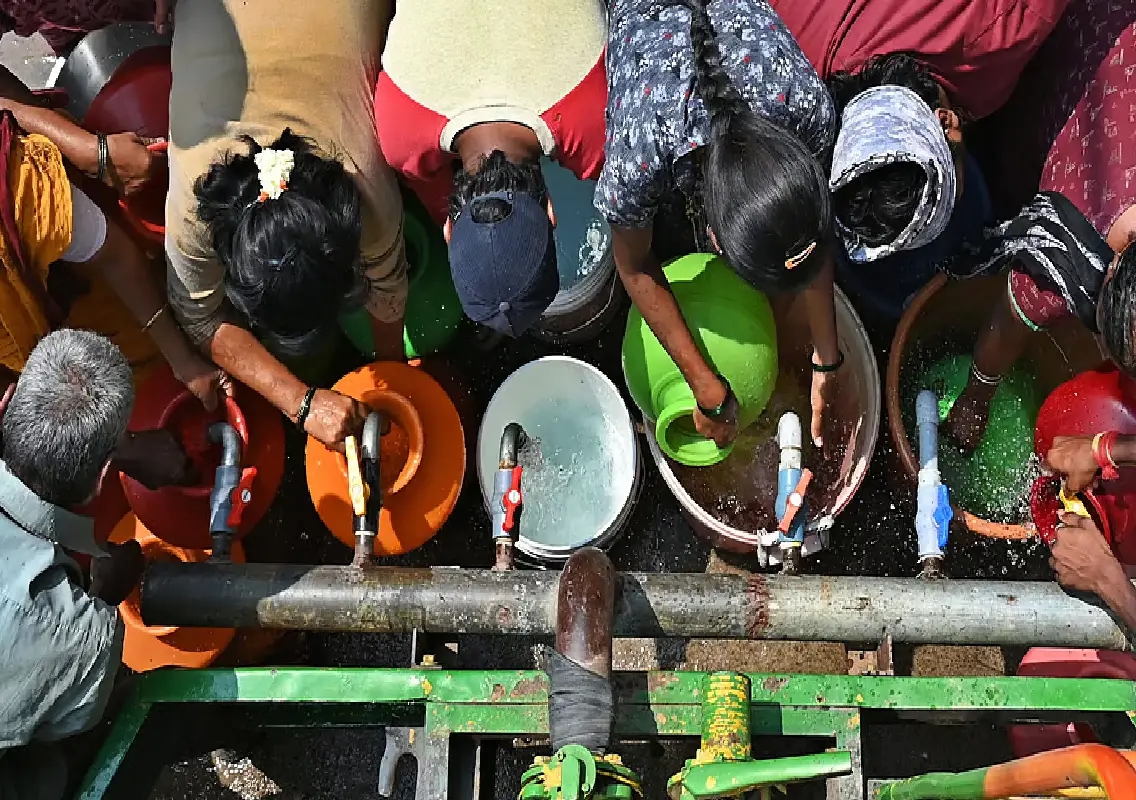


Bengaluru: The Bangalore Water Supply and Sewerage Board (BWSSB) has announced that it is fully prepared to handle potential water shortages during the upcoming summer months, with a focused action plan targeting high-demand and water-stress pockets across the city. BWSSB Chairman Ramprasath Manohar V said the board has stepped up advance planning and ground-level monitoring to ensure uninterrupted drinking water supply wherever possible.
He made the statement while chairing a high-level review meeting with senior BWSSB officials to assess summer preparedness, tanker deployment, and contingency infrastructure measures across Bengaluru.
With summer demand traditionally rising sharply due to heat and falling groundwater levels, the board has identified vulnerable zones and outlined mitigation steps including installation of mini water tanks, mobile tanker deployment, and mandatory field inspections by officers.
High-risk water stress areas identified
Bengaluru officials said detailed assessments have been conducted to map high-density residential areas and localities historically prone to seasonal shortages. These include rapidly urbanising layouts, peripheral zones, and areas heavily dependent on tanker supply and borewells.
According to the BWSSB chairman, the focus this year is on advance placement of infrastructure instead of reactive supply measures after shortages are reported.
“With summer approaching, BWSSB has stepped up its preparedness to effectively manage water demand and address potential scarcity in specific pockets of the city,” Manohar said during the review meeting.
Engineering and zonal teams have been asked to maintain updated ward-level risk lists and response plans.
Mini water tanks to be installed
As part of the summer mitigation strategy, BWSSB will install mini water tanks in identified water-stress areas to act as local buffer storage points. These tanks will be used to stabilise supply and reduce emergency gaps between tanker trips and pipeline distribution cycles.
Officials said the mini tanks will especially help in densely populated neighbourhoods where daily demand spikes and pipeline pressure fluctuations are common during peak summer weeks.
The board believes decentralised storage will improve response time and reduce public hardship during short-term supply disruptions.
Tanker fleet deployment plan
The BWSSB has also prioritised the use of its own tanker fleet to manage summer demand. The chairman directed officials to first deploy BWSSB tankers and the board’s mobile supply units known as ‘Sanchari Cauvery’ tankers before turning to private contractors.
“Priority must be given to BWSSB tankers and Sanchari Cauvery mobile tankers. Private tankers should be hired only if necessary,” he instructed officials.
This approach is intended to maintain quality control, pricing discipline, and equitable distribution. In previous summers, dependence on private tankers in some areas had led to complaints about cost escalation and uneven supply.
Officials said GPS tracking and trip logging systems will be used to monitor tanker movements and delivery points.
Mandatory daily field inspections
In a key operational directive, the BWSSB chairman instructed officers to conduct daily field visits in their respective jurisdictions throughout the summer period. The goal is to ensure real-time assessment instead of relying only on office-level reports.
“Officers must visit their respective jurisdictions, assess the ground situation and ensure that water reaches the identified areas without fail,” he said.
Field teams will check supply points, tanker turnaround time, local storage conditions, and complaint patterns. Senior officials are expected to review these reports regularly and adjust deployment plans accordingly.
Demand management and monitoring
Apart from supply-side measures, BWSSB is also expected to intensify demand management efforts. These typically include public advisories on responsible water use, monitoring of high-consumption connections, and enforcement against misuse of potable water for non-essential purposes.
Technical teams are also reviewing pipeline pressure management and leakage control measures, since distribution losses tend to worsen supply stress during peak demand months.
Apartment clusters and bulk consumers may be asked to maintain backup storage and reuse treated water for non-drinking purposes wherever systems are available.
Focus on continuity over crisis response
Bengaluru has faced recurring summer water stress in recent years due to rapid urban expansion, falling groundwater tables, and uneven infrastructure growth in outer zones. Learning from past shortages, BWSSB officials say this year’s approach focuses more on continuity planning than crisis response.
Advance identification of shortage-prone pockets, decentralised mini storage, controlled tanker deployment, and officer-level accountability are central to the strategy.
Civic observers say the effectiveness of the plan will depend on execution speed, transparency in tanker allocation, and responsiveness to citizen complaints.
Conclusion
BWSSB’s summer preparedness plan signals an early and structured approach to managing seasonal water stress across Bengaluru. With mini tanks, mobile Cauvery tankers, and field inspections forming the backbone of the strategy, the board aims to reduce disruption and ensure equitable access.
Residents are expected to be urged to use water judiciously and report shortages promptly as the summer demand curve rises.