







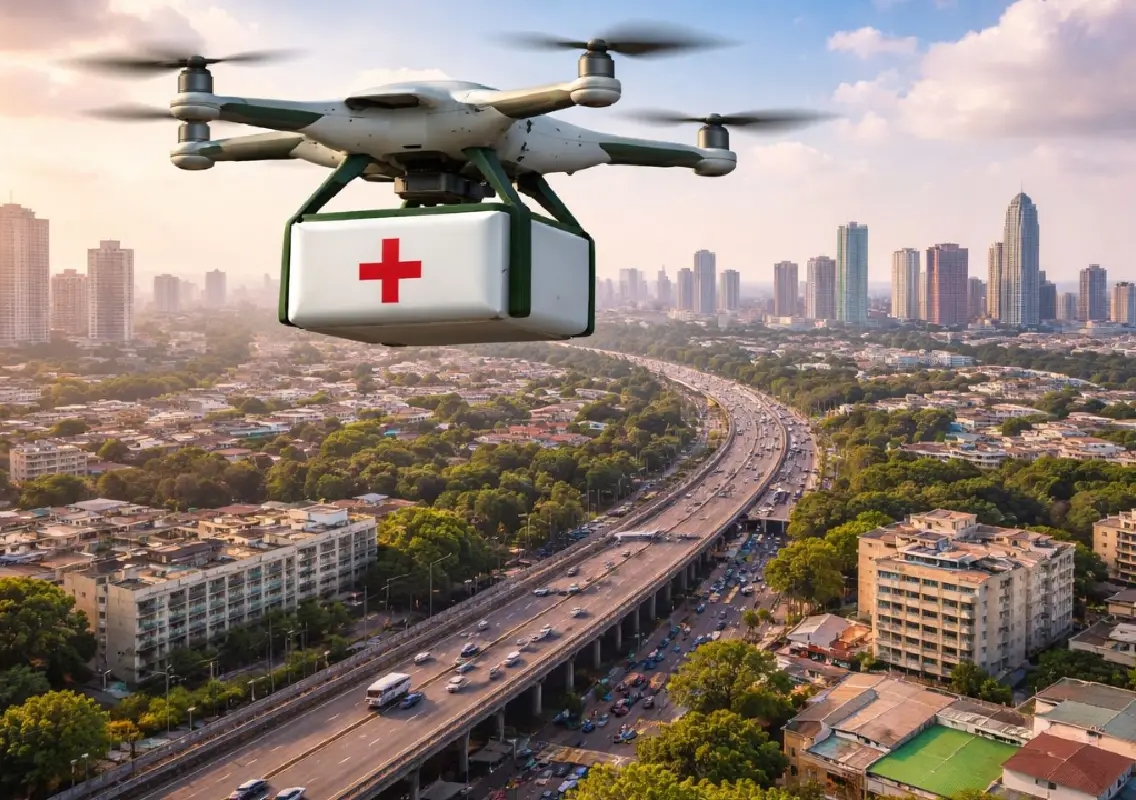


A pilot project in Bengaluru has showcased how drone technology can significantly improve healthcare logistics by enabling faster and more efficient transport of diagnostic samples.
Faster delivery through aerial route
The initiative connected a clinic in Chandapura to a central laboratory in Narayana Health City, Electronic City, covering a distance of 4 km in just 10 minutes. This marked a major improvement over traditional road transport, often delayed by traffic congestion.
High success rate in pilot phase
Conducted over 54 consecutive days, the project completed more than 700 drone flights without any failure. Each trip carried up to 40 diagnostic samples, ensuring timely delivery and continuous processing.
The system replaced a multi-step road transport process with frequent, on-demand aerial deliveries, improving overall efficiency.
Boost to patient care and diagnostics
Faster transportation of samples allows quicker testing and diagnosis, directly benefiting patient care. The streamlined process also reduces delays, which are critical in time-sensitive medical cases.
Potential to lower healthcare costs
Experts believe such innovations could reduce the cost of diagnostics and improve accessibility. The initiative reflects a growing push towards integrating technology into healthcare systems to make services more efficient and inclusive.
Plans for expansion
Following the success of the pilot, plans are underway to establish a drone corridor connecting Electronic City with an upcoming hospital in Banashankari. Further expansion across Bengaluru and other cities like Kolkata is also being considered.
A step towards future-ready healthcare
The project highlights how emerging technologies like drones can reshape urban healthcare delivery. By reducing dependency on road transport, such systems could play a key role in building faster and more accessible healthcare networks.