







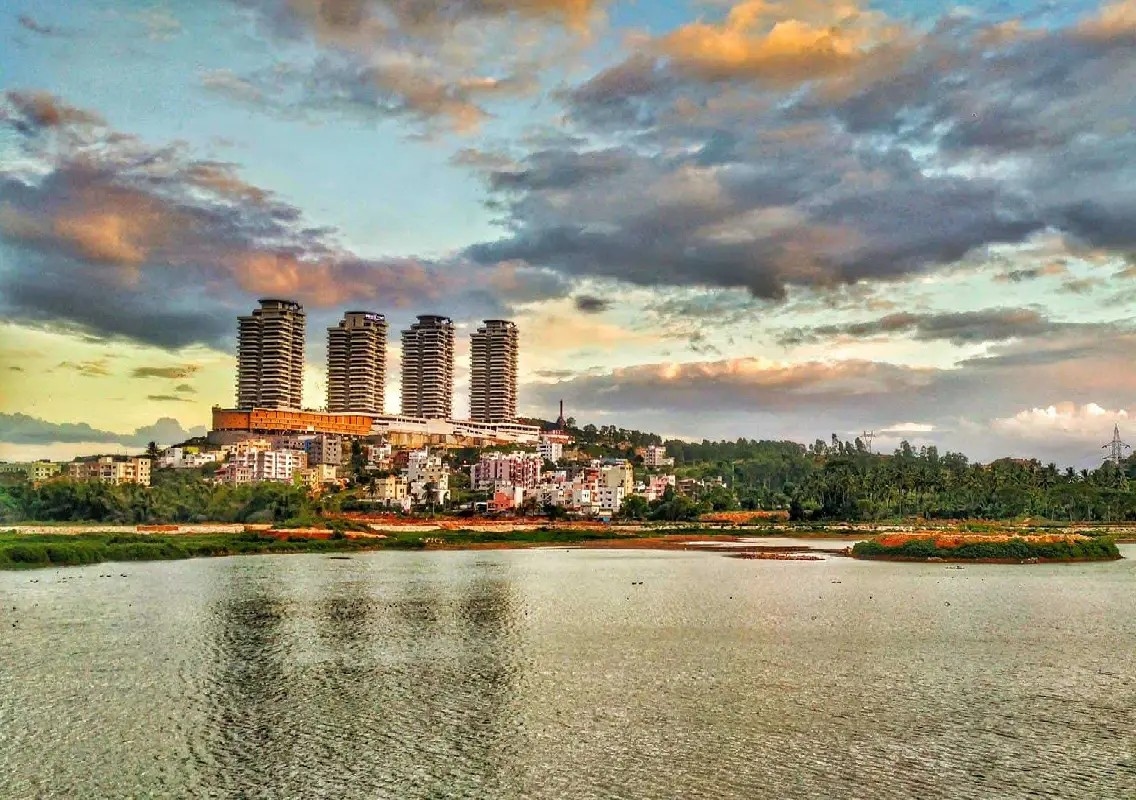


A Lake Walk organised at Ulsoor Lake by Drop Talk brought together citizens, researchers and environmental advocates to discuss the growing need for stronger collaboration between science and society in conserving Bengaluru’s lakes.
The session, part of the Lake-Pond and Water Education series led by Dr Mansee Bal Bhargava, featured T. V. Ramachandra of the Indian Institute of Science, who described lakes as the “kidneys of the city” and warned about the consequences of their continued decline.
Bengaluru’s disappearing lakes
Prof. Ramachandra highlighted Bengaluru’s dramatic transformation from a city with 452 water bodies in the 1800s to just 216 today. He noted that green cover has fallen below 3 per cent, contributing to rising temperatures, groundwater depletion and ecological degradation.
According to research presented during the session, Karnataka’s 39,000 lakes generate ecosystem services worth an estimated ₹7,320.6 billion annually. Each hectare of lake contributes services valued at approximately ₹10 lakh per year, underscoring the economic importance of protecting water bodies.
The rejuvenation of Sarakki Lake was cited as a successful example, with groundwater levels reportedly improving by 300 feet and local temperatures falling by 2–3°C within a year.
Climate and health concerns grow
Experts pointed to satellite data showing a sharp increase in paved surfaces and a decline in vegetation and water bodies over the past five decades. Encroachment remains a major challenge, affecting nearly all remaining lakes.
The environmental impact has also translated into public health concerns. Declining groundwater quality and contaminated water sources have contributed to an increase in kidney-related illnesses in some communities.
Community action makes a difference
Successful restoration efforts at Jakkur, Varthur and Bellandur lakes demonstrated the effectiveness of nature-based solutions and citizen participation. Environmental campaigns led by local communities have played a crucial role in pushing for policy action and lake rejuvenation.
The session also emphasised the need to improve environmental literacy through school programmes, biodiversity mapping and community-led monitoring initiatives.
A shared responsibility
Participants agreed that protecting Bengaluru’s lakes requires a combination of scientific research, public awareness and citizen engagement. Economic valuation, stronger environmental education and community participation were identified as key pathways to ensuring the long-term survival of the city’s water bodies.