


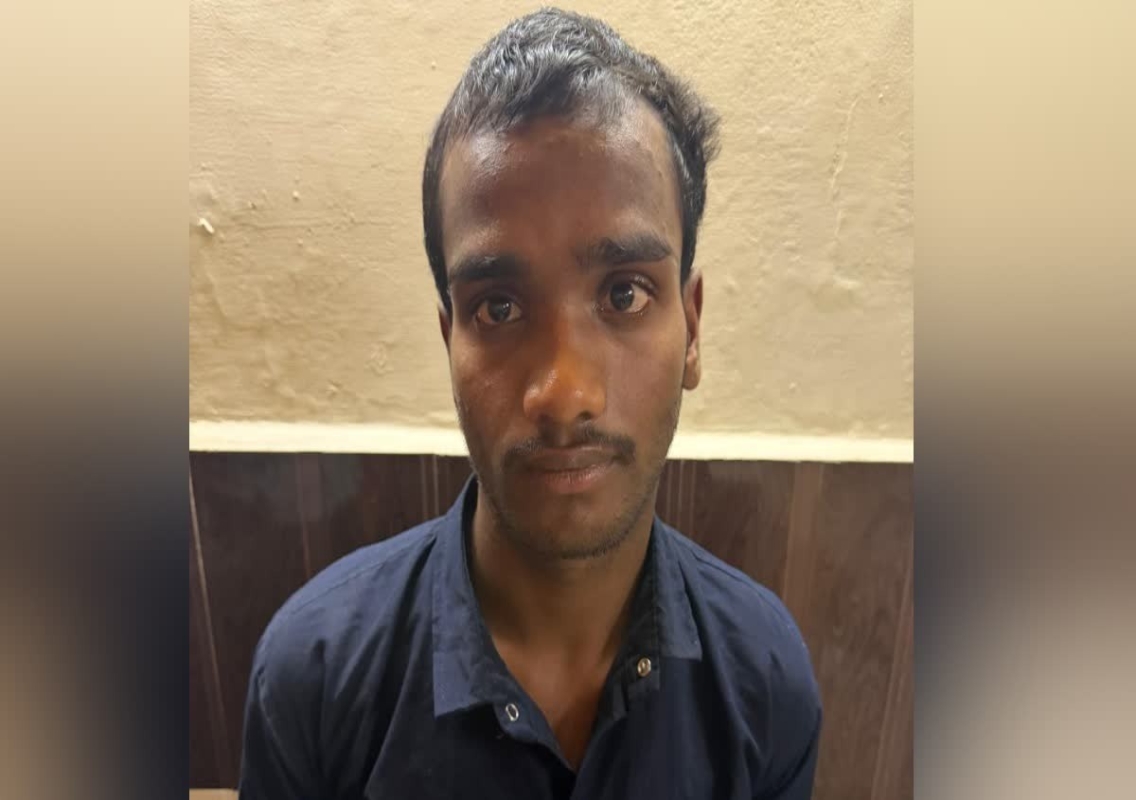


Bengaluru: A 25-year-old migrant worker from Bihar has been arrested for allegedly creating an artificial intelligence-generated video depicting a fake bomb blast at Vidhana Soudha and uploading it to Instagram, Bengaluru police said.
The accused, identified as Ali, hails from Araria district in Bihar and had been working as a daily-wage pipe fitter in Bengaluru for the past few months. According to investigators, the video was uploaded on October 20 through an Instagram account bearing the username ‘jnx_king_h_g’.
The footage showed what appeared to be the exterior of Vidhana Soudha, Karnataka’s seat of government, along with the road outside the imposing building. AI-generated visuals were then used to depict a massive explosion, creating the misleading impression that the prominent government complex had been targeted in a bomb attack.
The video reportedly carried a caption suggesting that Vidhana Soudha had been destroyed in an explosion. However, police said the blast shown in the footage was fabricated using artificial intelligence.
Police detect misleading video during social media monitoring
The video came to the attention of Bengaluru police during their routine social media monitoring exercise. Officials treated the matter seriously because fabricated footage depicting an attack on a major government institution could trigger public anxiety, spread misinformation and create confusion about public safety.
Vidhana Soudha is one of Karnataka’s most prominent government buildings and houses key offices of the state administration and legislature. A video falsely portraying an explosion at the complex could therefore mislead viewers into believing that a serious security incident had occurred.
With AI tools increasingly capable of generating realistic images and videos, distinguishing fabricated footage from genuine recordings can be difficult, particularly when the content is shared without context or verification.
Police initiated an investigation to establish the source of the video and identify the person responsible for uploading it. Investigators examined information associated with the Instagram account and traced the suspected uploader to Bengaluru.
Case registered under Bharatiya Nyaya Sanhita
Following a complaint lodged by the inspector of Vidhana Soudha police station, a case was registered under Sections 353(1)(b) and 353(2) of the Bharatiya Nyaya Sanhita (BNS).
The provisions concern offences involving statements or information that may cause public alarm or promote enmity, hatred or ill will, depending on the circumstances and the specific ingredients of the alleged offence.
Police subsequently arrested Ali in Bengaluru in connection with the case. The investigation is focused on determining the circumstances in which the video was created, the reasons behind its publication and the accused’s precise role in producing and circulating the misleading content.
The allegations remain subject to investigation, and the applicable legal provisions will be assessed through the due process of law.
Investigators probe motive and possible involvement of others
Police are questioning the accused to determine why he allegedly created and shared the fabricated video. Investigators are also examining whether anyone else assisted in producing the footage or played a role in circulating it online.
The probe is expected to examine the available digital evidence associated with the Instagram account and the creation and publication of the video. Officials are seeking to establish whether the incident was an isolated act or whether other individuals were involved.
At this stage, police have not established a wider conspiracy or confirmed the involvement of additional suspects. Further details about the motive and the circumstances surrounding the video’s creation are expected to emerge as the investigation progresses.
The case highlights the importance of examining digital evidence carefully when investigating content generated using artificial intelligence. Although AI technology can be used for creative and legitimate purposes, it can also be misused to create realistic but entirely fabricated depictions of serious incidents.
Growing concern over AI-generated misinformation
The alleged fake Vidhana Soudha blast video has drawn attention to the potential risks posed by AI-generated misinformation, particularly when it involves sensitive public locations, government buildings or claims of terrorist attacks.
Realistic-looking videos can spread rapidly through social media, messaging platforms and online communities. When viewers encounter such footage without reliable information about its origin, they may mistake fabricated scenes for genuine events and share them further.
False reports of explosions, attacks or other emergencies can cause unnecessary fear and divert attention from verified information issued by authorities. They can also complicate the work of police and emergency services, who may need to respond to public concerns generated by misleading online material.
The incident also underscores the need for social media users to verify the authenticity of dramatic footage before forwarding or reposting it. Checking credible news reports and official police statements can help prevent fabricated content from gaining wider circulation.
Bengaluru police are continuing their investigation to determine the full circumstances of the case. Authorities have urged the public to exercise caution when encountering online videos that claim to show bomb blasts, attacks or threats to public safety, and to avoid spreading unverified material.
The case serves as a reminder that AI-generated content, despite its increasingly realistic appearance, should not be treated as evidence of a real-world event without independent verification.