







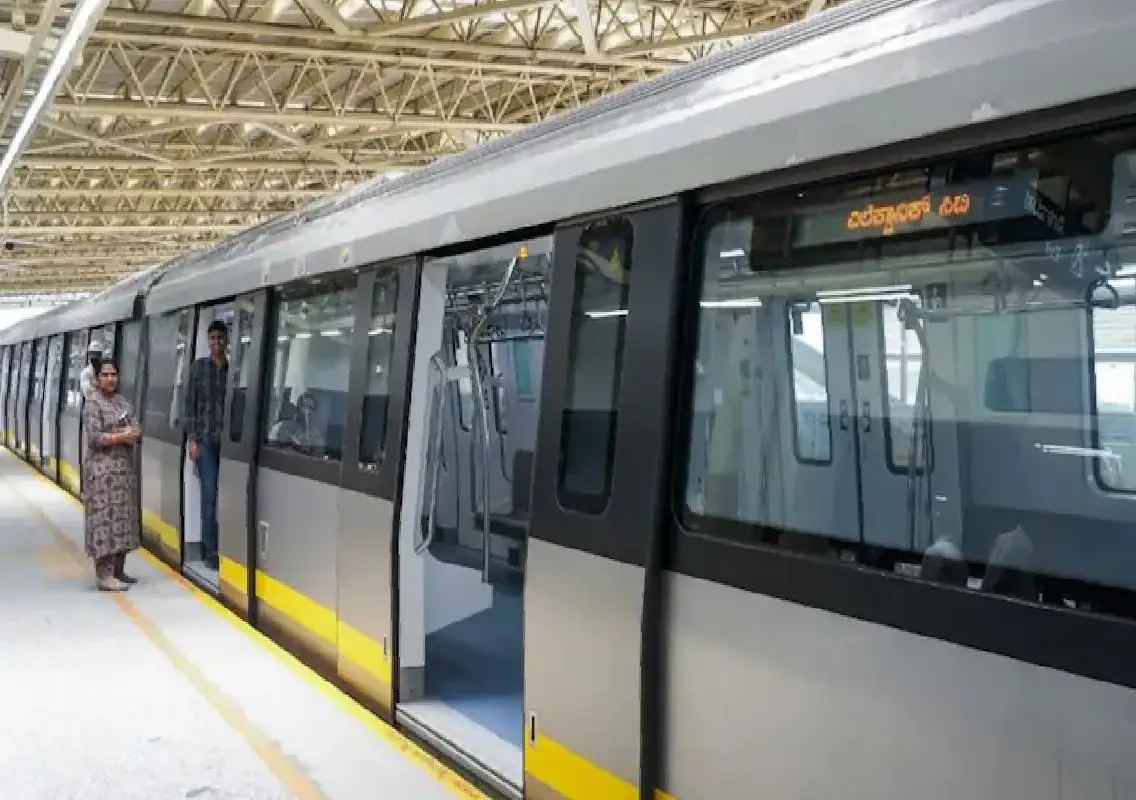


Bengaluru: A social media post by a Bengaluru-based entrepreneur has triggered widespread discussion online after he shared his observations from an early morning metro ride in the city. The post highlighted how deeply social media has become embedded in people’s daily routines, particularly during everyday activities like commuting.
The observation was shared by Vasant Shetty on the social media platform X, where he described what he noticed while travelling in the Bengaluru Metro early in the morning after returning from a family event in Udupi.
Early morning metro ride after Udupi visit
According to Shetty, he had travelled to Udupi to attend a family function and returned to Bengaluru early the next morning.
After arriving in the city, he got down at Goraguntepalya at around 5 am and boarded a metro train to continue his journey.
During the ride, he said he began observing the behaviour of fellow passengers inside the metro coach. What he noticed, he later explained in his post, reflected the growing influence of smartphones and social media on people’s everyday habits.
His observations quickly gained attention online and sparked conversations among users about the role of social media in modern life.
Three categories of passengers
In his post, Shetty said he noticed three distinct types of passengers inside the metro coach during the early morning journey.
According to him, around 10 per cent of the passengers appeared to be trying to catch up on sleep while travelling. Some had their eyes closed or were leaning against the seats in an attempt to rest during the ride.
Another 10 per cent of passengers were either talking with companions or sitting quietly without using their phones.
However, the majority of passengers were engaged with their smartphones.
Majority absorbed in mobile screens
Shetty observed that nearly 80 per cent of the passengers inside the coach were looking at their phone screens throughout the journey.
Based on the scrolling movements of their thumbs, he said it appeared that many of them were watching short-form videos or browsing content on social media platforms.
He specifically mentioned that many passengers seemed to be scrolling through Instagram reels.
The observation led him to reflect on how social media platforms have become an integral part of everyday routines, even during short commutes.
Post triggers online discussion
After Shetty shared his observation on X, the post quickly attracted attention from other users who began sharing their own views and experiences.
Some social media users agreed with his observation, stating that smartphone usage during travel has become increasingly common in cities where commuters often spend long periods on public transport.
Others pointed out that commuting time is often used by people to catch up on messages, social media updates, or entertainment content.
The discussion also extended to broader questions about digital habits, screen time, and the growing role of social media in shaping daily behaviour.
Growing influence of social media
Experts say that the widespread use of smartphones and high-speed mobile internet has significantly increased the consumption of short-form video content in recent years.
Platforms that feature short videos and reels have become particularly popular among urban commuters who use them for quick entertainment during travel.
While some people view such usage as a convenient way to relax during commutes, others have raised concerns about the potential impact of excessive screen time on productivity and mental well-being.
Reflection on modern commuting habits
Shetty concluded his post by saying that the experience made him realise how common social media dependence has become.
According to him, the scene inside the metro coach served as a small example of how digital platforms have quietly become a routine part of daily life for many people.
The post continues to circulate widely on social media, prompting users to reflect on their own smartphone habits during everyday activities such as commuting.