







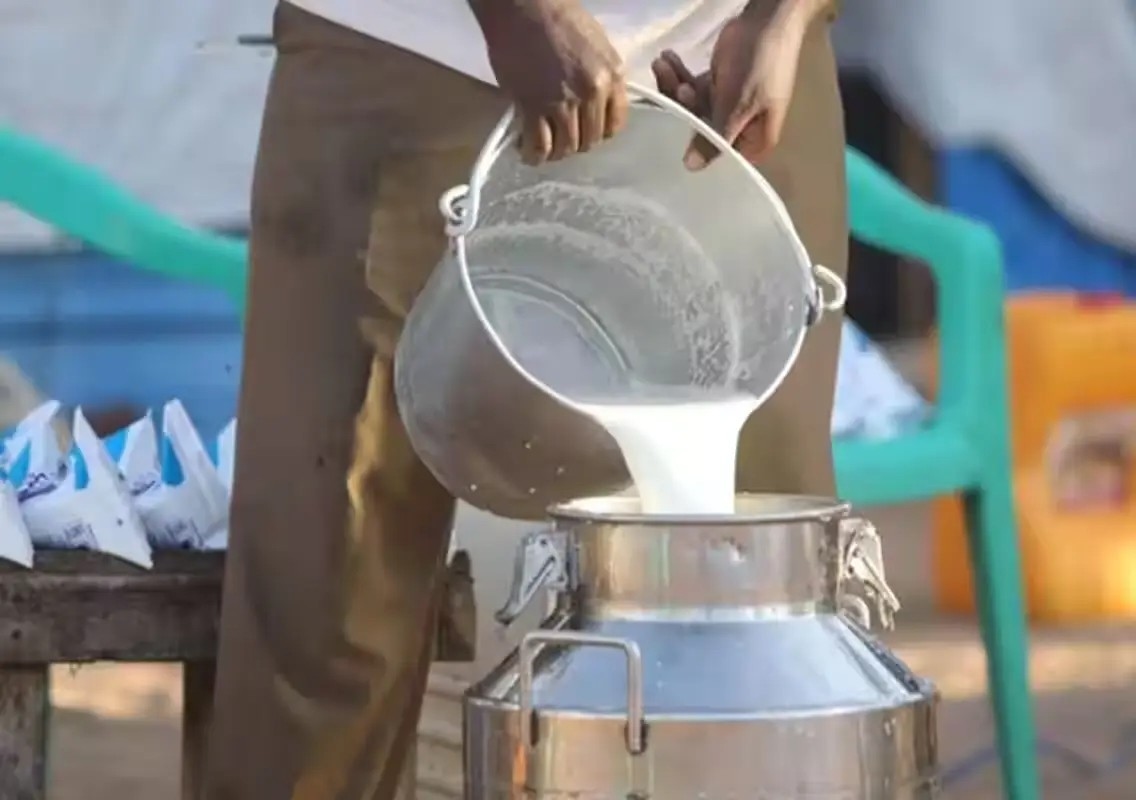


Food safety authorities have launched a major crackdown on the influx of low-cost milk entering Bengaluru from neighbouring Tamil Nadu after uncovering what they suspect is an unregulated supply chain operating outside established food safety norms.
In a coordinated operation conducted during the early hours of Saturday, officials intercepted more than 30 vehicles transporting milk consignments through key entry points into the city.
Raids conducted at major entry points
The inspections were carried out simultaneously at Hoskote, Attibele and Hosur check-posts by a special team from the Food Safety and Standards Authority of India (FSSAI).
Officials examined milk tankers and transport vehicles entering Bengaluru and collected samples for laboratory analysis amid concerns about possible adulteration and quality violations.
According to authorities, the operation revealed that many of the consignments were being transported without valid FSSAI licences and lacked proper documentation regarding their source and handling.
Cheap milk raises safety concerns
Investigators found that much of the milk originated from private dairies in Tamil Nadu before being supplied to distributors in Bengaluru.
Officials alleged that large quantities were being sold as loose, unpasteurised milk at prices significantly lower than those offered by the Karnataka Milk Federation (KMF).
The milk was reportedly later repackaged under lesser-known local labels before reaching consumers and businesses.
Authorities said the unusually low pricing made the product attractive to commercial buyers despite concerns over quality and traceability.
Bakeries, eateries among key buyers
Preliminary findings suggest that the milk was primarily supplied to bakeries, tea and coffee stalls, small restaurants, sweet shops and food manufacturers seeking to reduce operational costs.
Officials noted that many consignments lacked proper traceability mechanisms, making it difficult to verify their origin, quality standards and transportation history.
Visual inspections also raised concerns about purity, prompting laboratory testing to determine whether the milk contains chemical adulterants or harmful bacterial contamination.
Cold-chain violations detected
Food safety officers further observed that several vehicles lacked mandatory refrigeration systems required for transporting perishable dairy products over long distances.
Experts warn that inadequate cold-chain infrastructure can significantly increase the risk of bacterial growth and foodborne illnesses.
Authorities have issued show-cause notices to several distributors and operators for alleged violations related to licensing, transportation and storage requirements.
Investigation continues
FSSAI, in coordination with local authorities, is continuing its investigation to determine the full extent of the network and assess potential risks to public health.
Officials said further action will be taken based on laboratory test results and ongoing enquiries