







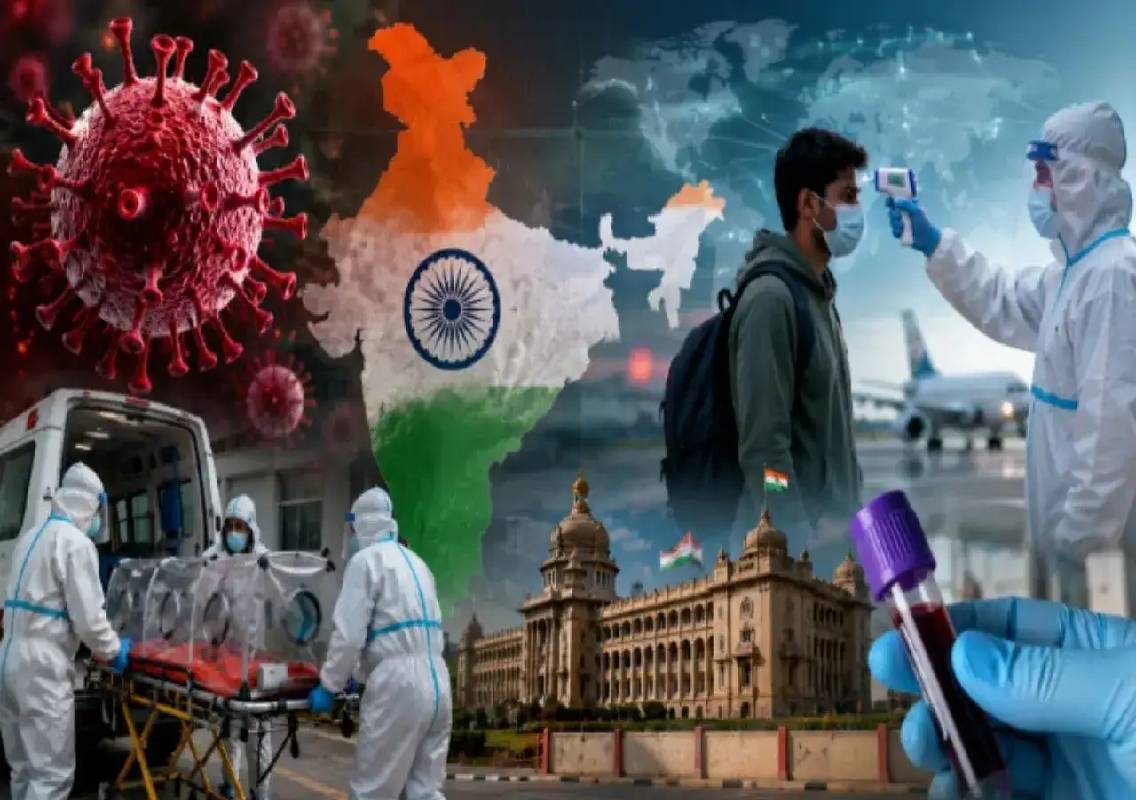


Bengaluru: India has intensified health surveillance and precautionary monitoring after a traveller with recent travel history from Uganda was isolated in Bengaluru amid growing global concern over the latest Ebola outbreak in parts of Africa.
Health authorities clarified that no confirmed Ebola case has been detected in India so far. Officials said the traveller, who reported mild symptoms including body ache, was admitted to the State-run Epidemic Diseases Hospital in Bengaluru for observation as part of standard precautionary protocols.
According to the Union Ministry of Health and Family Welfare, the patient is stable and under medical supervision. Samples have been sent to the National Institute of Virology for testing, and the results are awaited.
Government increases monitoring after African outbreak
The heightened surveillance comes after recent outbreaks of Ebola Virus Disease were reported in parts of Africa, particularly involving the Bundibugyo strain of the virus.
Indian authorities said airport surveillance, isolation preparedness and testing systems are being strengthened to prevent any possible imported infection from spreading.
Officials stated that all measures are being implemented in line with guidelines issued by the World Health Organization.
The Centre has advised state governments and healthcare institutions to remain vigilant while ensuring that unnecessary panic is avoided.
Why Ebola remains a major global concern
Ebola is considered one of the world’s deadliest infectious diseases, with outbreaks historically concentrated in Central and East African countries.
Health experts said the present outbreak has triggered concern because the Bundibugyo variant currently has no fully approved vaccine or targeted treatment.
The disease spreads through direct contact with infected blood, body fluids or contaminated surfaces. Unlike COVID-19, Ebola is not considered an airborne disease.
Doctors explained that early symptoms usually include fever, severe headache, muscle pain, weakness, vomiting and diarrhoea. In severe cases, patients may also experience unexplained bleeding.
Public health experts warned that rapid isolation, contact tracing and early medical intervention are critical to containing Ebola outbreaks and preventing wider transmission.
Bengaluru isolation reflects post-COVID preparedness
Health officials said India’s quick response demonstrates the stronger surveillance systems developed after the COVID-19 pandemic.
Authorities have particularly focused on identifying travellers arriving from affected regions and isolating symptomatic individuals at the earliest stage.
The Bengaluru case has been treated as a preventive measure rather than a confirmed medical emergency.
Medical experts stressed that the risk to the general public currently remains low because no Ebola infection has been confirmed in the country.
However, they urged people not to ignore symptoms if they recently travelled from affected African countries.
Government urges citizens not to spread misinformation
Officials have appealed to citizens to rely only on verified information issued by government health departments and international public health agencies.
Authorities warned that misinformation and rumours on social media can create unnecessary fear and panic.
Doctors advised travellers returning from affected regions to immediately inform healthcare providers if they develop symptoms such as fever, severe body pain or unexplained illness.
Measures currently being implemented
The Ministry of Health and Family Welfare, along with state authorities, is continuing preparedness activities across airports, hospitals and laboratories.
Key preventive measures currently include:
- Enhanced airport screening and surveillance
- Isolation facilities for suspected patients
- Laboratory testing through NIV
- Coordination with WHO health protocols
- Public awareness advisories and monitoring systems
Health experts said preparedness remains essential in an interconnected world where infectious disease outbreaks can quickly cross international borders through global travel.
While India remains Ebola-free at present, the Bengaluru isolation case has highlighted the importance of rapid response systems and coordinated public health monitoring.