







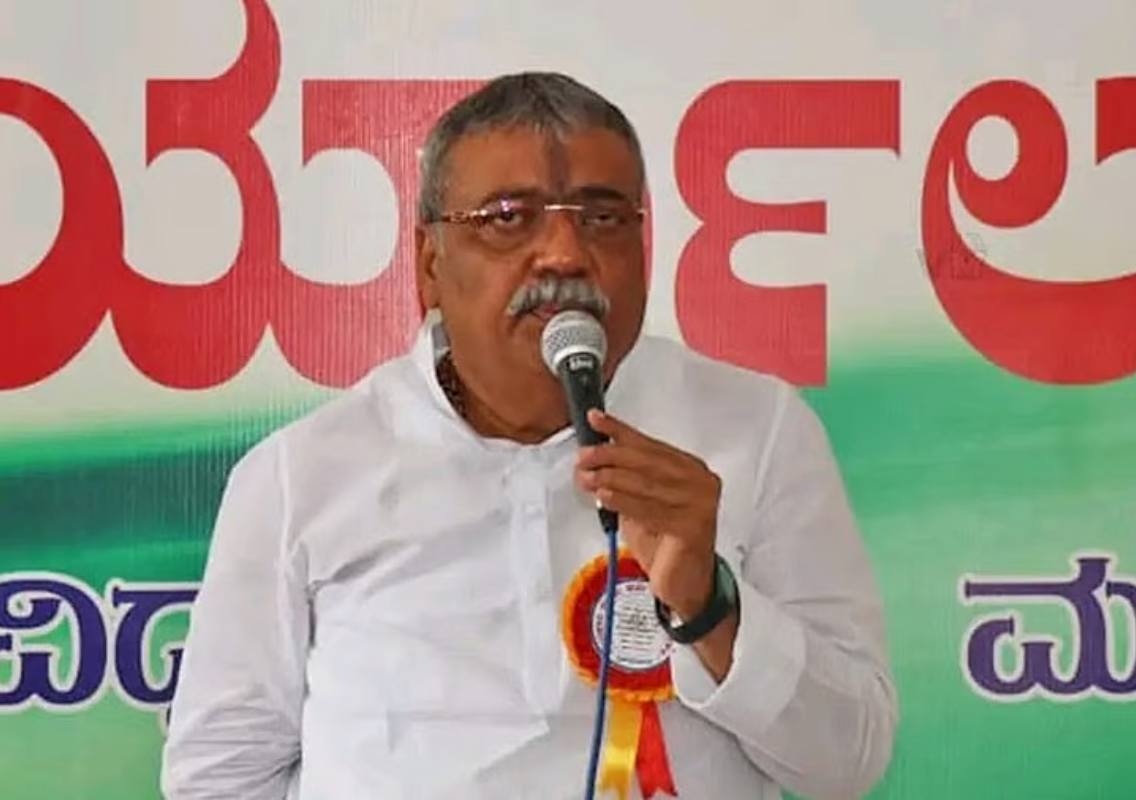


Bengaluru: Congress MLA Yashwanthrayagouda Patil’s resignation over the exclusion of his Indi constituency from Karnataka’s drought-hit list triggered a political row in the Assembly on Wednesday, with the Opposition targeting the state government over its handling of the drought situation.
Patil, who represents the Indi Assembly constituency in Vijayapura district, submitted his resignation to Speaker G S Patil on September 22, saying he was unable to meet the expectations of people in his constituency amid crop losses and water shortages.
The Speaker, however, told the Assembly that he had rejected the resignation on the ground that it did not comply with the prescribed rules. Chief Minister D K Shivakumar also met Patil and attempted to persuade him to withdraw the resignation.
Indi MLA cites crop losses and water shortage
In his resignation letter, Patil said farmers initially borrowed money to purchase seeds and fertilisers after receiving some rainfall and proceeded with sowing. However, he said the subsequent lack of timely rainfall resulted in crops withering and drying up.
He also cited shortages of drinking water and fodder affecting people and livestock in Indi.
Patil said he had submitted a representation to the state government on August 28 seeking drought-hit status for Indi. According to reports, he pointed out that Indi and Chadchan were among the taluks in Vijayapura district that had not been included in the drought-hit list at the time.
“I’m resigning on my own volition as I haven’t been able to meet the expectations of the people of my constituency,” Patil stated in his letter.
He also expressed frustration at what he described as the limited influence of MLAs who raise issues without applying political pressure.
“As an MLA from the ruling party, I didn’t want to cause embarrassment to the government and adopted a nuanced approach. There’s no value to my words or feelings,” Patil said.
He added that the political environment appeared to favour those who were powerful or used pressure tactics, saying there was “no place for gentle-natured people like me.”
Speaker rejects resignation
Patil’s resignation came as the Karnataka Assembly was holding a special discussion on drought conditions across the state.
While the resignation was formally tendered, Speaker G S Patil rejected it, citing procedural requirements. Chief Minister D K Shivakumar subsequently met the MLA in the Assembly in an effort to persuade him to reconsider his decision.
The episode added to pressure on the Congress government over demands from legislators for more taluks to be declared drought-affected.
The number of drought-hit taluks has been revised in phases as the government conducts assessments. Recent reports said further field assessments were under way in several taluks, with the list potentially being expanded based on the findings.
Opposition targets Congress government
The resignation triggered heated exchanges between the Opposition and Treasury benches.
Leader of Opposition R Ashoka raised Patil’s resignation in the Assembly and criticised the Congress government over its handling of the drought issue. He questioned the government’s response to the concerns being raised by its own legislators.
The development also comes amid a separate warning from senior Congress MLA H K Patil, who has said he would consider resigning if Gadag is not declared drought-affected by October 10. H K Patil has cited rainfall deficiency and crop losses in Gadag while pressing for drought-hit status.
Government cites drought declaration parameters
Deputy Chief Minister G Parameshwara defended the government’s position and blamed the BJP-led Union government for restrictions under the existing drought assessment framework.
Parameshwara said the state government had written multiple letters to the Centre seeking relaxation of the drought manual so that more areas could qualify for drought relief.
Chief Minister D K Shivakumar said the government was not discriminating between constituencies based on the political affiliation of their representatives.
“I can’t decide on declaring drought taluks. There are parameters. Many MLAs are asking us to declare their constituencies drought-hit,” Shivakumar said.
He described Patil’s decision as an emotional response and said he had pacified the MLA.
The government has maintained that drought declarations are based on prescribed parameters and field assessments rather than individual political demands.
Resignation adds to pressure over drought relief
Patil’s move is significant because it comes from a legislator belonging to the ruling Congress at a time when the Assembly is debating drought conditions and the government is reviewing additional areas for possible inclusion in the drought-hit list.
For now, the Speaker’s rejection means Patil’s resignation has not been accepted. The dispute over Indi and Chadchan’s exclusion, however, has added another layer to the ongoing political debate over drought assessment, relief measures and the criteria used to identify affected taluks across Karnataka.