









Bengaluru: Karnataka has sought around Rs 7,500 crore in drought relief from the Centre after estimating losses of nearly Rs 46,000 crore across two phases of drought assessment in the State.
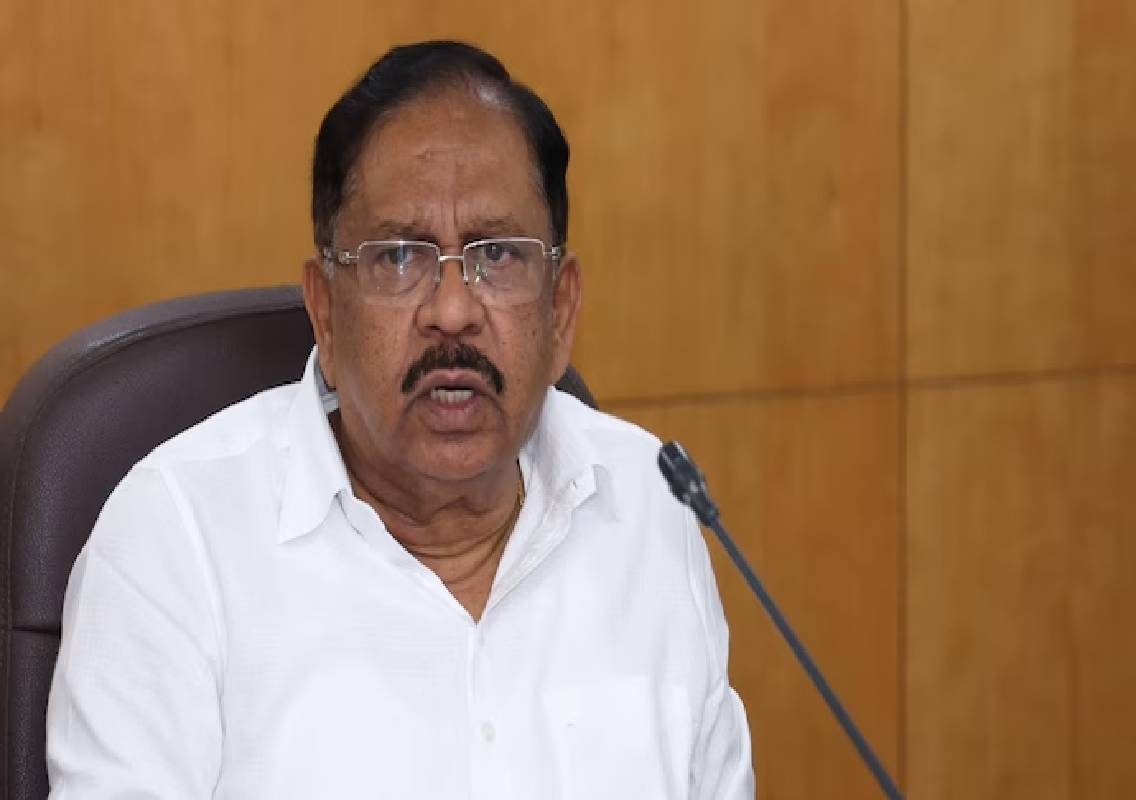
Deputy Chief Minister and Revenue Minister G. Parameshwara said the State government has submitted two drought memoranda to the Union government and briefed a high-level Central assessment team on crop losses, rainfall deficit, drinking water availability, fodder stocks and measures being taken to prevent distress migration.
The Inter-Ministerial Central Team, led by Union Agriculture and Farmers Welfare Ministry Joint Secretary Ajit Kumar Sahu, has arrived in Karnataka to assess the ground situation. The team is expected to visit drought-affected regions over the next four days before preparing its assessment.
Rs 46,000 crore losses estimated in two phases
According to Parameshwara, the first phase of the drought assessment estimated losses of around Rs 18,000 crore. Based on the Union government’s prescribed guidelines, Karnataka sought approximately Rs 3,700 crore in relief for this phase.
In the second phase, crop losses in 77 additional drought-affected taluks were estimated at around Rs 27,000 crore. The State has sought another Rs 3,500 crore under the applicable relief norms.
Together, the two phases account for estimated losses of nearly Rs 46,000 crore, while the total relief sought from the Centre is around Rs 7,500 crore.
The State government has maintained that the relief amount has been calculated according to the drought assessment procedures prescribed by the Union government.
Central team begins ground assessment
The Central team has been asked to assess the drought situation on the ground rather than relying only on figures submitted by the State.
Officials have been divided into three groups to assist the Central team in inspecting North Karnataka, Central Karnataka and other affected regions. The assessment will cover crop damage, rainfall shortages, drinking water conditions, reservoir and lake storage, fodder availability and other consequences of the drought.
Chief Minister D.K. Shivakumar has also urged the Central team to make a fair assessment of the losses and provide assistance according to National Disaster Response Fund norms.
The State government has said that its drought assessment was carried out according to the Union government’s prescribed manual and guidelines.
217 taluks already declared drought-hit
The drought situation has spread across a large part of Karnataka. According to the latest assessment, 217 of the State’s 240 taluks have been declared drought-affected, while ground verification is still pending in the remaining 23 taluks.
The State government has said that the remaining taluks will also be assessed against the prescribed criteria and those meeting the requirements could subsequently be declared drought-affected.
The number of affected taluks has increased as the government carried out assessments in different phases.
The drought has affected agriculture in several parts of the State, with deficient rainfall contributing to crop losses and concerns over water availability.
Crop losses and farmer support
Agriculture is among the sectors most severely affected by the rainfall deficit.
The State government has informed the Central team about the extent of crop damage and the measures being taken to support farmers. These include crop insurance, input subsidies and employment-generation measures in drought-affected areas.
Parameshwara said a large number of farmers have enrolled for crop insurance and that the government has explained to the Central team how insurance benefits and input subsidies are being extended to affected farmers.
The government has also highlighted the need to protect rural livelihoods and prevent distress migration from drought-hit areas.
Drinking water and fodder concerns
The State’s memorandum also covers drinking water availability and fodder requirements for the coming months.
Officials have briefed the Central team about water levels in reservoirs and lakes, along with measures being taken to manage drinking water supplies.
In some areas, water resources are being prioritised for drinking purposes rather than agricultural use as authorities prepare for continuing shortages.
Fodder availability has also emerged as an important concern because prolonged drought conditions can affect livestock owners and rural households dependent on agriculture and animal husbandry.
The Central team is expected to examine these aspects during its field visits before finalising its assessment.
Recent rainfall unlikely to reverse crop damage
Responding to questions about rainfall received in some parts of Karnataka in recent days, Parameshwara said the Central team would take the rainfall into account while conducting its assessment.
However, he said the recent showers would not significantly change the crop losses that had already occurred because of the deficient monsoon during the earlier months.
The State has maintained that the drought assessment should primarily consider the rainfall deficit from June to September and the resulting crop damage.
The government has also pointed out that limited recent rainfall has not been sufficient to resolve wider drinking water concerns.
Karnataka seeks relief under Central guidelines
The State government has stressed that it is not seeking assistance outside the framework prescribed by the Union government.
Parameshwara said Karnataka had followed the Central drought assessment manual while calculating crop losses and determining the amount of relief requested.
He said the State was seeking only the assistance it was eligible to receive under the applicable rules and asked the Central team to assess the actual situation fairly.
The request comes amid renewed attention to the financial support available to drought-affected States under the national disaster response framework.
Central assessment to determine next steps
The Central team’s field assessment will be important in determining the extent of assistance that Karnataka may receive.
Officials will compare the State’s submissions with ground conditions before preparing their report. The final amount of assistance, if any, will depend on the assessment and the applicable Central government norms.
The State government has meanwhile continued measures related to drinking water, fodder, crop insurance, input support and rural employment.
With most of Karnataka’s taluks now classified as drought-affected, the assessment is being closely watched by farmers and rural communities facing crop losses and water-related challenges.
Conclusion
Karnataka has sought around Rs 7,500 crore from the Centre as drought relief after estimating losses of nearly Rs 46,000 crore in two phases. The Central assessment team led by Ajit Kumar Sahu is visiting drought-affected regions to verify the situation on the ground.
The State has stressed that its relief request was prepared according to Central guidelines, while the final assistance will depend on the Central team’s assessment and the applicable norms.