







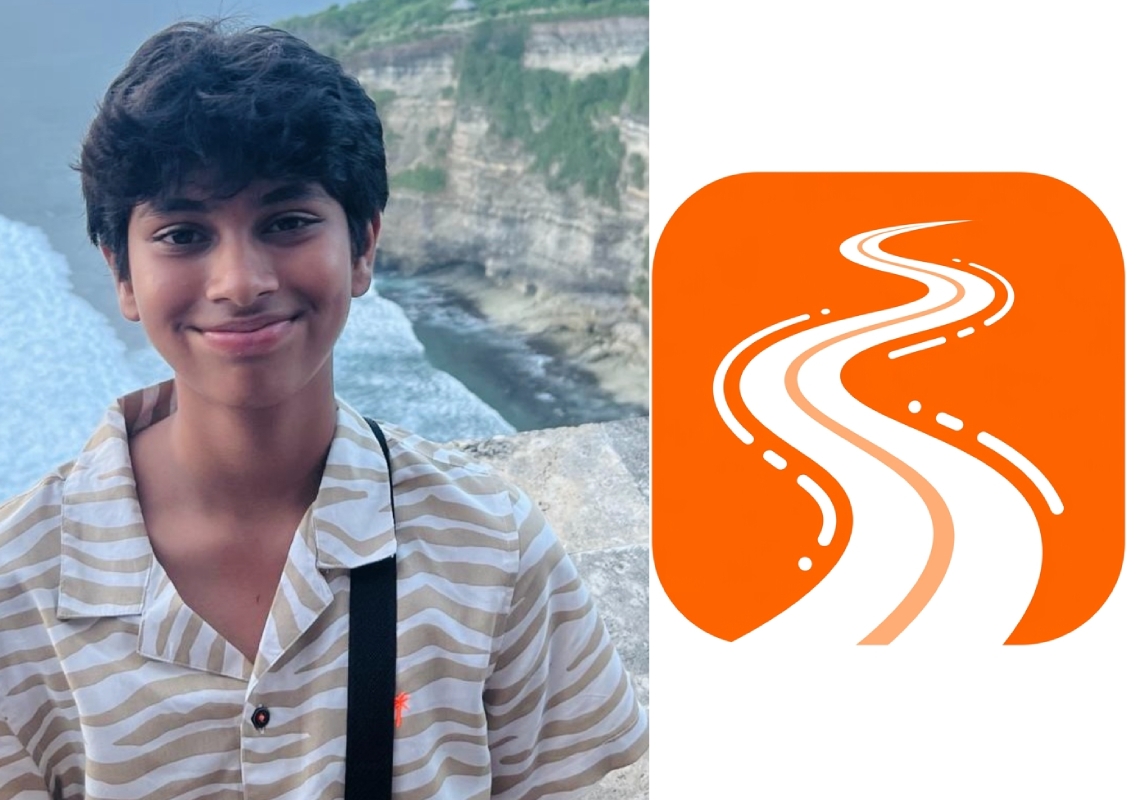


Bengaluru: What began as a personal response to a childhood road accident has grown into a youth-led civic movement for safer streets. Fourteen-year-old Bengaluru student Surya Uthkarsha, founder of The Marg Initiative, says his citizen-powered footpath reporting platform RASTHE has crossed 10,000 users and 2,000 reports, marking a significant milestone for the Karnataka-born civic-tech initiative.
The latest organisational update, dated July 24, 2026, also reports that The Marg Initiative has reached more than 100,000 people through road-safety activities, built a network of 30 volunteers across 12 cities, and generated over one million social-media impressions through its wider campaign. The initiative’s journey has also received coverage across more than 100 media outlets and social posts.
The latest figures, however, are organisation-reported numbers. The backgrounder notes that some publicly available pages still display earlier figures, including 1,000-plus RASTHE reports, and says the newer numbers should be treated as organisation-reported until those platforms are updated.
A childhood accident that shaped a mission
For Surya, road safety emerged from lived experience rather than simply an interest in technology.
After surviving a serious road accident as a young child, he began paying closer attention to the everyday risks faced by pedestrians — from children navigating busy roads to people being forced onto carriageways because of damaged, blocked or missing footpaths.
“I survived, but I never forgot the feeling of how unpredictable our streets are,” Surya says in the initiative’s backgrounder.
That experience eventually led to The Marg Initiative, a youth-led movement combining road-safety education, research, community action, advocacy and technology.
Its activities have included school and orphanage outreach, footpath clean-up drives, reflective-gear distribution, road-safety campaigns, public programmes and research into pedestrian behaviour and infrastructure.
The initiative also developed Roadyz, an interactive game designed to make road-safety education more engaging for children and teenagers. Rather than relying solely on conventional lectures, the programme seeks to help young people understand road safety through games, demonstrations and participation.
RASTHE turns citizens into footpath reporters
Surya’s latest project takes that mission into the civic-tech space.
RASTHE: The Footpath Reporter is designed as a crowdsourced platform where citizens can photograph and report damaged, blocked, missing or inaccessible footpaths.
Often described as “Tinder for Footpaths,” the platform uses swipe and voting interactions to encourage users to review and prioritise reported pedestrian problems.
A citizen who encounters a footpath problem can submit a photograph and location without a mandatory account. Other users can then review and prioritise reports, helping urgent or frequently identified problems gain visibility.
The resulting information is intended to contribute to a ward-linked picture of pedestrian hazards and potentially help identify areas where intervention is most urgently required. Valid reports can also be forwarded into relevant civic complaint workflows, including Bengaluru civic channels.
RASTHE was publicly introduced in May 2026, while its iOS version was launched on Apple’s App Store on June 10.
2,000 citizen reports could become more than complaints
The milestone of 2,000 reports is important not simply because of the volume of complaints, but because Surya wants the collected information to become a tool for identifying patterns.
Instead of treating every broken or obstructed footpath as an isolated case, RASTHE’s model could allow reports to be grouped geographically and examined for recurring problems.
The platform combines photographic and location evidence with community verification and prioritisation. The aim is to create structured civic data that could eventually assist authorities, community organisations, researchers and clean-up teams.
The backgrounder says the initiative has also previously examined pedestrian behaviour and infrastructure use, including a skywalk-usage study undertaken with academic input and more than 70 interviews aimed at identifying recurring road-safety problems.
Surya proposes three steps for government collaboration
The next stage of the project could depend on whether citizen-generated information can connect effectively with government systems.
Surya is seeking constructive collaboration with the Karnataka government, the Greater Bengaluru Authority and other relevant civic agencies around three proposals.
First, he wants authorities to analyse citizen-generated reports to identify repeat obstructions and recurring trouble spots, rather than repeatedly addressing the same problem without examining its underlying cause.
Second, he proposes publishing before-and-after photographs when reported obstructions are cleared. Such a system could give citizens visible evidence that their complaints have resulted in action and improve transparency around grievance resolution.
Third, Surya proposes developing ward-level footpath heatmaps using the geographic concentration of reports. These could potentially help authorities identify high-risk areas and prioritise staff, enforcement and resources accordingly.
The broader objective is to transform RASTHE from a citizen-reporting platform into a possible bridge between residents and civic agencies.
From individual awareness to collective action
The Marg Initiative’s model extends beyond the app. Its work is organised around five broad areas — learning, action, research, advocacy and building technological tools.
The initiative says it has conducted awareness programmes, footpath clean-ups, community campaigns and road-safety activities while attempting to understand why existing pedestrian infrastructure is sometimes avoided, inaccessible or unsafe.
Its reported growth to 30 volunteers across 12 cities indicates that the campaign is moving beyond a single-person project, even though its origins remain closely connected to Surya’s childhood experience in Bengaluru.
The organisation is now looking for collaboration not only with government bodies but also schools, universities, researchers, companies, resident groups and NGOs.
For civic agencies, the opportunity could lie in integrating verified citizen reports into official workflows. For researchers, the growing dataset could offer insights into pedestrian behaviour and infrastructure. Schools and youth organisations could meanwhile use the initiative’s educational programmes to encourage road-safety awareness from an early age.
A Karnataka idea with a wider civic ambition
Surya’s journey demonstrates how a personal experience can evolve into an attempt to solve a wider public problem.
From surviving a road accident and developing Roadyz to launching a platform now reporting more than 10,000 users, his focus has progressively moved from awareness towards citizen participation and data-driven civic action.
The bigger test for RASTHE will now be what happens after a citizen presses “report.”
If its growing pool of photographs, locations and community verification can be linked effectively with government response mechanisms, the initiative could provide authorities with another source of ground-level information on pedestrian infrastructure.
For the 14-year-old Bengaluru founder, the goal is ultimately larger than the number of downloads or reports: to build a system in which citizens can identify problems, authorities can act on evidence, and pedestrians can see whether the streets they depend on are actually becoming safer.