







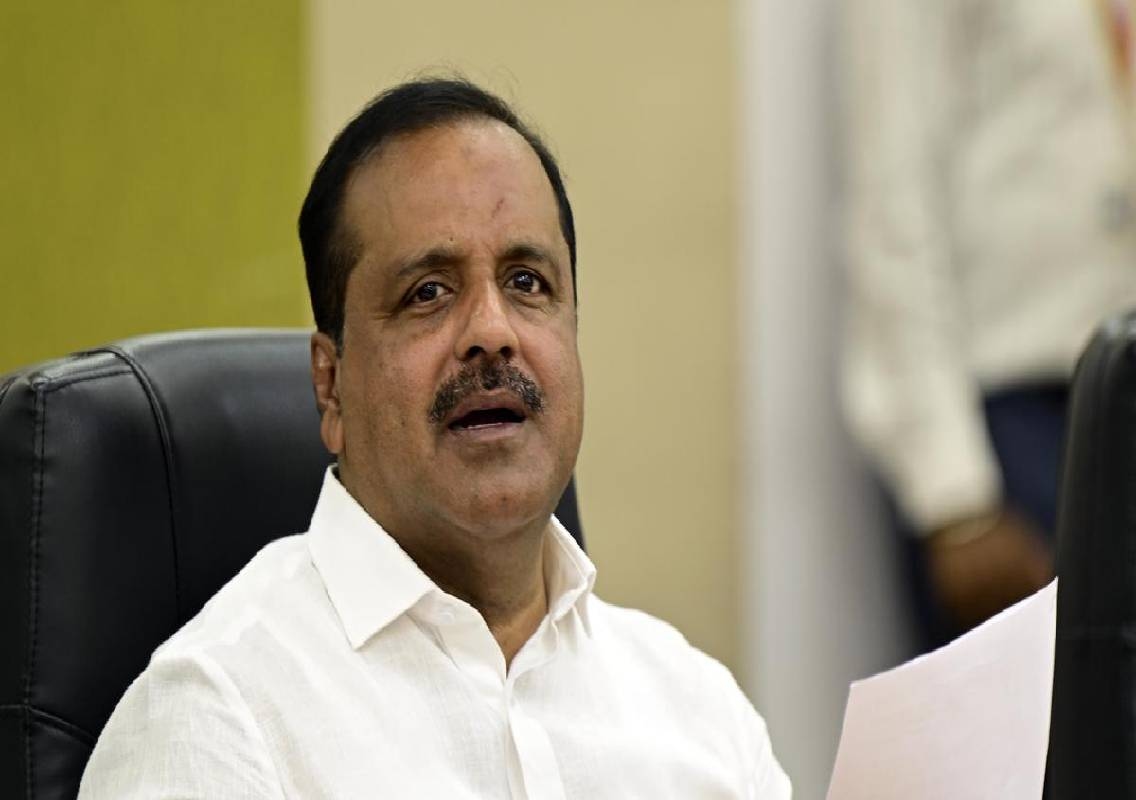


Bengaluru: The Karnataka government will clear approximately ₹100 crore in pending scholarships for students from minority communities, Minister for Minority Welfare, Waqf and Haj U.T. Khader has announced. The move is aimed at addressing delays in scholarship payments and easing financial difficulties faced by students pursuing their education.
The announcement was made on October 13, 2026, as the State government outlined measures to improve scholarship delivery, provide assistance to students and strengthen educational opportunities for minority communities.
The Minority Welfare Department plans to distribute ₹494.71 crore in scholarships and financial assistance to students from Class 1 to PhD level during the current year. The department’s allocation stands at ₹440 crore, with the government prepared to explore additional funding if applications exceed the available budget.
Online helpline to address scholarship complaints
To help students resolve issues related to delayed scholarships and applications, the department will introduce an online helpline. Students who have not received their financial assistance or have complaints regarding the process will be able to contact the department through this service.
The announced helpline number is 82777 99990.
The initiative is intended to make it easier for students to raise grievances and obtain information about their applications. The department is also planning to introduce a ‘Minority Mitra’ mobile application to improve access to information and services.
These measures are expected to provide students with additional channels to seek assistance when scholarship payments are delayed or administrative issues arise.
₹494.71 crore planned for scholarships and financial assistance
The department’s plan to distribute ₹494.71 crore this year covers scholarships and other financial assistance for students across educational levels, from primary schooling to doctoral studies.
The government’s stated allocation is ₹440 crore, and officials may explore additional resources if the number of eligible applicants exceeds the available funds.
Scholarships and educational assistance are intended to help students meet education-related expenses and continue their studies. Timely disbursement is particularly important for students who depend on government support to pay fees and manage other academic costs.
The proposed release of ₹100 crore in pending scholarships is expected to address a portion of the outstanding payments. Further details on the beneficiaries and the schedule for disbursement were not specified in the available report.
Financial assistance for students awaiting KSOU fee reimbursement
The government has also asked Karnataka State Open University (KSOU) to extend its fee-payment deadline for students awaiting reimbursement under a Minority Welfare Department scheme.
More than 13,000 students applied for assistance this year, with the total fee requirement estimated at around ₹30 crore. Of these applicants, 8,086 students have been selected for assistance, compared with approximately 5,000 in the previous year.
The scheme is intended to support minority students pursuing higher education through correspondence courses. However, the increase in applications and the continuing financial commitments associated with multi-year courses have placed pressure on the available budget.
Last year, around 5,328 students applied for assistance, with the financial requirement estimated at ₹10 crore to ₹12 crore against an allocation of ₹5 crore. Additional funds were arranged to meet the shortfall.
This year, the action plan again provided ₹5 crore, despite the increase in applications and the estimated fee requirement. The government has requested an extension of the payment deadline while working to determine the funding arrangements, subject to the necessary approvals.
Department to review eligibility criteria
The department is also planning to establish clearer eligibility criteria for the fee-reimbursement scheme to ensure that assistance is provided through a more sustainable system.
One of the issues under consideration is the relevance of a student’s postgraduate course to their undergraduate qualification. The department intends to clarify such requirements so that applicants understand the conditions before seeking financial assistance.
The minister acknowledged that some students had applied without being adequately informed about budgetary limitations. The government aims to address these issues while working towards a more sustainable approach to funding education.
New schools and educational initiatives planned
In addition to scholarship payments, the government has outlined initiatives to strengthen educational infrastructure and improve learning opportunities.
The department plans to lay foundation stones for 100 new Shishunala Sharif schools by November. Construction work on 77 schools taken up earlier is also nearing completion, with the schools expected to be inaugurated by the end of November.
Other initiatives include skill-development training, language laboratories, AI-based learning and offline NEET coaching for students in Classes 9 and 10.
These programmes are intended to expand educational access and provide students with additional academic and vocational support.
The proposed scholarship payments, grievance-redressal facilities and educational initiatives form part of the State government’s broader efforts to improve support for minority students. The pace of implementation will depend on funding arrangements, administrative processes and the resolution of outstanding reimbursement issues.